


Ask ChatGPT for the “best project management tool for small teams” and it won’t show you ten blue links. It will name two or three brands directly, sometimes with a short reason why. Ask Gemini a question about your industry, and it might describe your competitor’s product in detail while never mentioning yours at all. That isn’t necessarily bad luck. It can mean that the AI system doesn’t have enough reliable, accessible, or relevant information about your brand to include it in the answer.
AI Optimization (AIO) is a broad term used for improving how easily AI systems can discover, understand, retrieve, and accurately represent information about a brand, website, product, or topic.
Unlike traditional SEO, which primarily focuses on visibility in search results, AIO considers how information may be surfaced and represented across AI-powered search and answer experiences. This can involve strong technical SEO, clear content, structured data where appropriate, crawlability, consistent brand information, and credible third-party references.
The important distinction is that there is no single AIO technique that guarantees an AI model will learn, mention, recommend, or cite your brand. AI systems use different models, indexes, retrieval systems, and sources, so visibility depends on the system and context.

What Is AI Optimization (AIO)? A Simple Definition
AI Optimization is the practice of structuring your brand’s information, content, and online presence so that AI models can find it, understand it, and use it confidently when answering questions.
It sits at a different layer than most people expect. Traditional digital marketing channels, such as search engine optimization, content marketing, and paid advertising, are generally designed to help people discover and interact with a business.
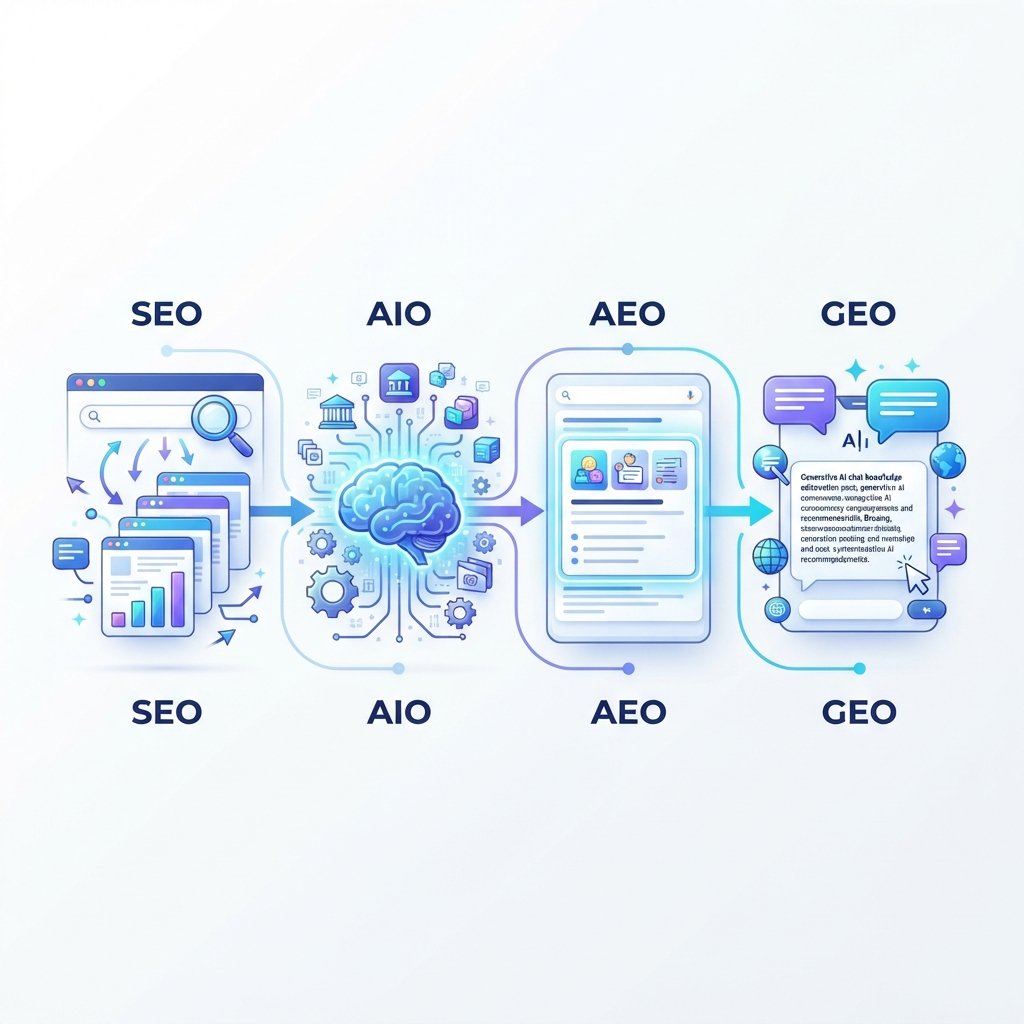
Here’s a simple way to separate the related concepts:
These terms overlap, and there is no universally accepted technical standard that separates them perfectly.
- SEO focuses on improving a website’s visibility and accessibility in search engines.
- AIO (AI Optimization) is a broader industry term for improving how clearly and reliably information about a brand or website can be discovered, understood, retrieved, and represented by AI systems.
- AEO (Answer Engine Optimization) is commonly used to describe strategies designed to make content more useful for answer-focused search experiences.
- GEO (Generative Engine Optimization) is commonly used for strategies aimed at improving visibility within generative AI experiences.
These areas overlap significantly, and there is no fixed hierarchy between them. In practice, strong technical SEO, helpful content, clear information architecture, accurate business information, and credible sources can support visibility across different search and AI-powered experiences. Think of it like being invited to speak on a topic — nobody invites an expert they’ve never heard of.
Why AI Optimization Matters in 2026
People are increasingly using AI-powered tools to research products, compare services, answer questions, and explore topics. At the same time, traditional search engines are adding their own generative AI experiences, making AI-assisted discovery an increasingly important part of how information can be found online. Google: AI Features and Your Website
Google has been clear that the underlying principle hasn’t changed much: creating content that people find unique, compelling, and useful is likely to be more important than any single optimization tactic.
But being useful still matters. Google’s current guidance emphasizes helpful, reliable, people-first content and the same fundamental SEO practices that support traditional Search. Clear organization and technically accessible content can make information easier for systems to process, but there is no special writing format required solely for generative AI.
For a business, this creates real risk in a few specific ways:
- Losing customers before they ever click. If an AI assistant answers a buyer’s question by naming three competitors and skips you completely, that potential customer may never visit a search engine or your website at all.
- No way to simply buy your way in. You can’t pay for placement inside a raw AI answer the way you can with a search ad. Visibility has to be earned through structure, clarity, and trust.
- Getting facts about your brand wrong. If information about your brand is unclear, incomplete, outdated, or inconsistent across sources, an AI system may misunderstand or misrepresent details such as your pricing, features, or category.
This connects directly back to Organic Search Optimization vs. Pay-Per-Click — AIO behaves much more like organic growth than paid advertising. It builds slowly, through consistent and trustworthy content, rather than through a budget you can switch on overnight.
What AIO Can and Cannot Do
AI Optimization can improve the clarity, accessibility, and consistency of the information available about your brand. It can also help you identify technical barriers that prevent search and retrieval systems from accessing important content.
What AIO cannot do is guarantee that ChatGPT, Gemini, Google AI features, or another AI system will mention your business.
AI systems can use different models, indexes, retrieval methods, ranking systems, and sources. The same question can therefore produce different answers across platforms or even at different times.
The goal is not to “hack” an AI answer. The goal is to build a web presence that gives search and AI systems accurate, useful, and verifiable information to work with.

How AI Models Actually Learn About Brands
Training Data vs. Real-Time Retrieval
AI systems can obtain information in different ways depending on the product and model.
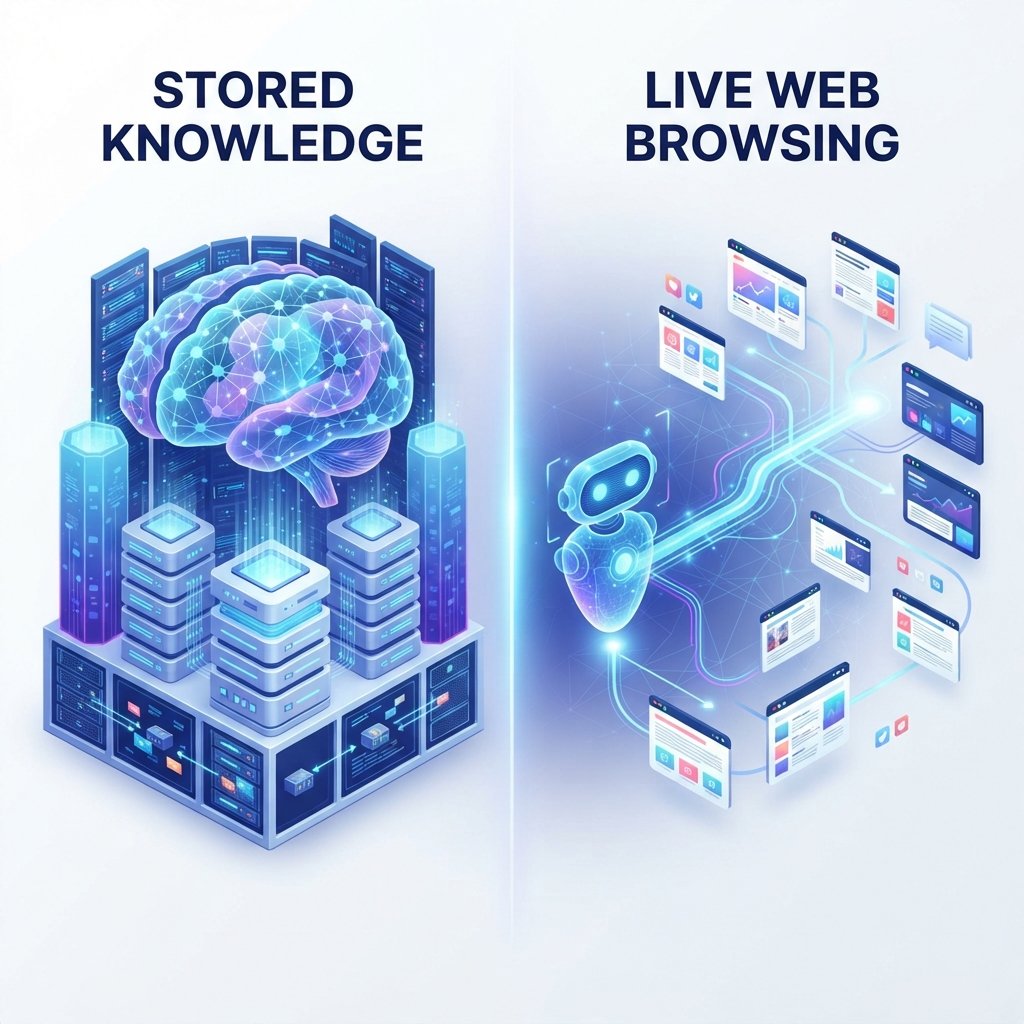
Some information may come from data used during model training, while AI-powered search experiences can also retrieve information from the web at query time.
These are fundamentally different processes. Information included in a model’s training data is not the same thing as information retrieved from a website during a live search. A brand can therefore work on its broader online presence while also making sure its website is technically accessible to the search and retrieval systems it wants to reach.
OpenAI specifically says that websites can be eligible for ChatGPT search by allowing OAI-SearchBot to crawl them, although allowing the crawler does not guarantee that a website will appear in a particular answer.
Source: OpenAI — Searching the web with ChatGPT

Structured, Machine-Readable Content
Clear content structure helps both people and search systems understand a page. Descriptive headings, concise explanations, logical sections, lists, and accessible HTML can make important information easier to discover and interpret.
Structured data can also help search engines understand entities and relationships on a page. Schema.org provides a shared vocabulary for representing information such as organizations, products, people, and other entities. However, structured data should not be treated as an AI visibility shortcut.
Google’s current guidance specifically says there is no special schema.org markup required for appearing in its generative AI search features. Structured data remains useful as part of an overall SEO strategy, but it should accurately represent visible page content rather than being added solely to influence AI systems.
Build a Presence on Trusted Platforms
Independent sources can provide additional context about a brand and may be encountered by search engines, retrieval systems, researchers, publishers, and AI systems.
The goal is not to create as many mentions as possible. Instead, focus on building a credible and consistent presence on sources that people actually trust.
Google also advises against pursuing inauthentic mentions simply to influence visibility in generative AI features.
Source: Google Search Central — Optimizing Your Website for Generative AI Features

Some Brands Are Easier for AI Systems to Describe
Well-established brands often have a large and consistent digital footprint. Their websites may contain detailed product information and documentation, while independent websites, reviews, publications, directories, and communities may describe the same products from different perspectives.
This creates a broader body of publicly available information that search and AI systems may be able to retrieve when answering questions about a brand.
The important lesson for smaller brands is not to copy a famous company’s exact tactics. Instead, make the basic facts about your business clear, accurate, consistent, and easy to verify across reputable sources.
Google’s guidance for generative AI search emphasizes creating helpful, unique content and maintaining a technically accessible website rather than trying to manipulate AI systems with special optimization tactics.
Source: Google Search Central — AI Features and Your Website

Step-by-Step: How to Optimize Your Brand for AI Models

Step 1: Publish a Clear, Direct Brand Definition
Every website should have a page that plainly states what the company does, who it serves, and what makes it different, written in direct, simple language rather than vague branding phrases. Avoid burying the actual definition of your product three paragraphs deep. A good test: could someone who has never heard of your brand read the first two sentences of your homepage and correctly explain what you do? If not, rewrite it.
Step 2: Use Structured Data Where It Actually Fits
Use relevant structured data when it accurately describes the visible content on your page. Depending on the website, this may include Organization, Product, Article, Breadcrumb, or other appropriate Schema.org types.
Don’t add structured data simply because you believe it will make an AI system mention your page. Google’s current guidance says there is no special schema.org markup required for generative AI features.
Step 3: Build a Credible Third-Party Presence
AI systems can encounter information about a brand outside its own website, so a strong independent web presence can be valuable.
Focus on legitimate sources that naturally document your business: reputable industry publications, relevant directories, product review websites, professional organizations, interviews, news coverage, and community discussions where appropriate.
If your company genuinely meets Wikipedia’s notability requirements, an accurate, properly sourced Wikipedia article may provide useful background information. However, businesses should not create Wikipedia pages simply as an SEO or AI-visibility tactic.
The same principle applies to other third-party databases: create and maintain profiles because they accurately represent your business, not because you expect a guaranteed AI ranking benefit.
Step 4: Keep a Consistent Brand Story Across the Web
If ten different websites describe your company ten different ways, a model has a harder time forming one clear, confident answer. Keep your name, description, and core facts consistent across your website, social profiles, directories, and press mentions. It helps to write down one official one-sentence description of your brand and reuse the same core description consistently, while adapting the wording naturally to each platform when appropriate.
Step 5: Make Your Content Accessible to Relevant Crawlers
Check your robots.txt rules and other access controls to make sure you’re not unintentionally preventing important search or AI crawlers from accessing pages you want discovered.
For example, OpenAI documents OAI-SearchBot as the crawler used to search and surface websites in ChatGPT search. Allowing the crawler makes a site eligible for inclusion, but it does not guarantee that the site will appear in a particular answer.
Step 6 — Build Credibility Through Digital PR
Digital PR can help your brand build a stronger presence across reputable websites and publications.
Instead of trying to create as many mentions as possible, focus on earning relevant coverage through useful contributions, expert commentary, interviews, industry publications, original research, and genuine newsworthy stories.
A credible, relevant mention can be more valuable than a large number of low-quality or irrelevant mentions. The goal is to build a trustworthy digital footprint that accurately represents your brand.
Avoid creating artificial or inauthentic mentions simply to influence how AI systems perceive your business. Google recommends focusing on helpful, reliable content rather than tactics designed to manipulate search or generative AI visibility.
Source: Google Search Central — Optimizing Your Website for Generative AI Features
Step 7 — Ask AI Models What They Already Know About You
This step is often skipped, but it can be useful. Open ChatGPT, Gemini, and other AI tools, and ask them to describe your brand. Compare their answers with the information on your website and other trusted sources.
If the response is vague, outdated, or incorrect, that gap can help you identify which brand information may need clarification or updating. This could include improving your website copy, reviewing structured data, or correcting outdated information on third-party websites.
Keep in mind that AI responses can be incomplete or incorrect, so use them as a diagnostic tool rather than as a definitive measure of your brand’s visibility.
For example, OpenAI explains that ChatGPT search can use information retrieved from the web, while search visibility is not guaranteed.
Source: OpenAI — Searching the web with ChatGPT


14. AIO vs. AEO vs. GEO — How They Relate
These terms are often used together, but they are not universally defined as separate stages or a fixed technical hierarchy.
- SEO (Search Engine Optimization) generally focuses on improving a website’s visibility and accessibility in traditional search engines.
- AIO (AI Optimization) is a broad industry term for improving how clearly and reliably information about a brand, website, product, or topic can be discovered, understood, retrieved, and represented by AI systems.
- AEO (Answer Engine Optimization) is commonly used for strategies that make content useful for answer-focused search experiences, such as providing clear explanations and direct answers to specific questions.
- GEO (Generative Engine Optimization) is commonly used for strategies focused on visibility within generative AI experiences.
In practice, these areas overlap significantly. Strong technical SEO, helpful content, clear information architecture, crawlability, accurate business information, and credible sources can support visibility across both traditional search and AI-powered experiences.
There is no guaranteed sequence such as AIO → AEO → GEO. The best approach is to focus on creating useful, accessible, accurate, and trustworthy information that different search and AI systems can understand and retrieve.
Google’s current guidance also confirms that traditional SEO best practices remain relevant for its AI search features and that there is no special optimization requirement for appearing in generative AI results.
Source: Google Search Central — AI Features and Your Website

Common Mistakes Brands Make With AI Optimization
- Inconsistent brand descriptions across the website, social bios, and directories, which confuses both readers and machines.
- Blocking AI crawlers by accident, often through an outdated or overly restrictive robots.txt file.
- Vague “About Us” pages that talk around what a company does instead of stating it plainly.
- Ignoring credible third-party sources and assuming a company website alone is always enough.
- Treating AIO as a one-time project instead of an ongoing habit of publishing clear, consistent, well-structured content.
- Never checking what AI models already say about the brand, which means small factual errors can sit uncorrected for months.
Tools That Help With AI Optimization
- Schema markup generators — help add structured data without needing to write raw code by hand.
- Google Search Console — still useful for confirming your pages are crawlable and indexed correctly.
- AI citation monitoring tools — These tools can be useful for monitoring, but their measurements are third-party estimates and shouldn’t be treated as direct data from AI providers.
- Server log analyzers — help confirm whether AI crawlers, like OpenAI’s search bot, are actually visiting your site.
- A simple spreadsheet — sounds basic, but tracking every place your brand is described online, and whether that description matches your official one-liner, is one of the most effective (and free) AIO habits a small team can build.


Frequently Asked Questions
Is AI Optimization the same thing as SEO?
No, though they overlap. Traditional search engine optimization focuses primarily on improving a website’s visibility and accessibility in search engines. AIO is a broader term for improving how clearly and reliably information about a brand can be discovered, retrieved, understood, and represented by AI systems.
How long does it take for an AI model to learn about a brand?
There is no fixed timeline. AI search systems that retrieve information from the web can potentially use recently available content, while information incorporated into a model’s training data depends on the model’s data sources, training process, and future updates. Improving your website and online presence therefore does not guarantee that a brand will be recognized or mentioned by a particular AI system within a specific timeframe.
Can a small business realistically compete here?
A smaller business can still build a strong AI-search presence by providing clear, useful information and establishing a credible online footprint.
Do I need to block or allow every AI crawler?
That depends on your goals. If visibility inside AI-powered search experiences matters to your business, review your crawler settings and consider allowing the relevant crawlers rather than blocking them unintentionally.
Does AI Optimization replace regular content marketing?
No. It builds on it. The clearer and more consistent your existing content already is, the easier the transition into AIO becomes.
How do I know if my AIO efforts are actually working?
The simplest test is the one mentioned earlier: ask AI models directly what they know about your brand every few weeks, he simplest test is the one mentioned earlier: ask AI models directly what they know about your brand every few weeks, and treat these tests as directional rather than a definitive measurement of AI visibility.

Key Takeaways
AI Optimization is about making important information about your brand easier for AI-powered systems to discover, understand, and represent accurately. That means writing clear, direct content, using structured data, showing up consistently on trusted third-party platforms, and making sure AI crawlers can actually access your site.
Start by auditing how your brand is currently described across the web. If the story is inconsistent or vague, that’s the first thing to fix — everything else, from AEO to GEO, builds on that foundation.


