
Saving your first $1,000 is one of the most important financial milestones you can achieve. Whether you are building an emergency fund, paying off debt, preparing for an unexpected expense, or simply trying to improve your money habits, reaching this goal gives you confidence and safety.
The good news? You do not need a high-paying job or years of saving. With a solid plan and a few smart daily decisions, anyone can save $1,000 in as little as 30 to 60 days.
In the real world, think of this first $1,000 as a physical buffer between you and life. When you have no savings, a flat tire or a broken appliance feels like a massive crisis. You end up using credit cards, taking loans, and falling into a loop of expensive interest payments. But with $1,000 sitting safely in the bank, an emergency is no longer a disaster—it is just an inconvenience.
In this complete guide, you will discover practical, realistic, and highly effective strategies to hit your savings goal fast. We will cover everything from quick lifestyle shifts to boosting your income, plus real-world lessons on how to stay motivated.
Why Saving Your First $1,000 Matters
Your first $1,000 acts as a financial safety net. It helps cover unexpected expenses like:
- Sudden car repairs
- Medical bills or dental emergencies
- Home maintenance issues (like a leaking roof)
- Emergency travel to see family
- A sudden drop in work hours or job loss
When life happens, having cash on hand keeps you calm. Financial experts often point out that money is deeply tied to your daily peace of mind. If you are constantly stressed about a low bank balance, it affects your work, your health, and your relationships.
Starting a savings goal is a double victory. First, you get the actual cash in your account. Second, you prove to yourself that you can control your money instead of letting your money control you.

How to Rank in Google and AI Search Results
If you want this information to stand out online, it needs to do more than just rank on a standard Google search page. Today, search engines use advanced AI models to give direct answers to users. To make sure this content shows up inside Google AI answers, it must follow specific rules:
- Provide Direct Answers First: AI engines look for clear, direct answers to user queries. Always state the “how-to” clearly before expanding into long explanations.
- Use Clean Structure: Use clear headings, bullet points, and numbered lists. AI systems scan text easily when it is broken down into simple sections.
- Focus on EEAT: This stands for Experience, Expertise, Authoritativeness, and Trustworthiness. Share real stories, clear numbers, and practical steps that prove the advice works in the real world.
- Write Simply: Use plain, clear English. Avoid overly complex words or corporate jargon. AI models favor content that is easy for any reader to understand.
1. Set a Clear Savings Deadline
Saving becomes much easier when you have a specific target date. If you just say, “I want to save $1,000 soon,” it is easy to procrastinate. But when you give yourself a hard deadline, you can break the big goal into small, daily pieces.
Let’s look at the numbers:
| Goal Amount | Timeframe | Daily Amount to Save | Weekly Amount to Save |
| $1,000 | 30 Days | About $34 per day | About $233 per week |
| $1,000 | 60 Days | About $17 per day | About $116 per week |
| $1,000 | 90 Days | About $12 per day | About $77 per week |
Breaking the goal into smaller daily or weekly amounts makes it feel much more achievable. It is much easier to think about how to find $17 today than it is to worry about finding $1,000 all at once.

2. Create a Simple Budget
The fastest way to save money is to know exactly where your income goes. Many people do not realize how much money leaks out of their bank accounts on things they do not even care about.
To build a simple budget, list your cash flow into two columns:
Income
- Your main job salary (take-home pay)
- Freelance or side hustle earnings
- Any extra cash from odd jobs
Monthly Expenses
- Fixed Expenses: Rent or mortgage, car payments, insurance, utilities.
- Flexible Expenses: Groceries, gas, dining out, entertainment, clothing.
- Subscriptions: Streaming platforms, gym memberships, apps.
Expert Budgeting Tip: When you sit down to write your first budget, it might feel tough or messy. That is completely normal! It usually takes about three months of practice to get into a perfect rhythm with a new budget. Don’t give up if your first month does not go exactly as planned. Learn from the mistakes, adjust the numbers for the next month, and keep moving forward.
3. Eliminate Unnecessary Spending

Small daily expenses add up to hundreds of dollars every month. If you are trying to save $1,000 fast, you need to look closely at your flexible expenses and temporarily cut out the non-essentials.
Consider reducing or pausing these items:
- Daily Coffee Shop Visits: Spending $6 a day on premium coffee equals $180 a month. Brew your own coffee at home instead.
- Food Delivery Apps: Ordering through apps involves service fees, delivery fees, and tips. A single $15 meal can easily turn into $30. Switch to picking up your food or cooking simple meals.
- Unused Streaming Services: If you pay for three or four video services but only watch one, pause the others for 30 days.
- Online Impulse Purchases: It is easy to click “buy now” when you are bored. Put items in your shopping cart and force yourself to wait 24 hours before spending the money.
Even saving a total of $20 per day across these categories adds up to $600 in just one month.
4. Sell Items You No Longer Use
Most households have hundreds of dollars worth of unused items collecting dust in closets, drawers, and garages. Selling these items is one of the absolute fastest ways to generate cash in a single weekend.
A good rule of thumb: If you haven’t used or worn something in the past year, sell it.
Here are the best items to look for:
Electronics
Old smartphones, tablets, laptops, video game consoles, and old television sets. You can sell these quickly on platforms like Facebook Marketplace or specialized buyback websites.
Household Items
Furniture you no longer need, extra kitchen appliances (like an extra blender or air fryer), tools, and home decor items.
Clothing & Miscellaneous Items
Designer clothes, shoes, coats, and accessories. You can take clothes to local consignment stores or list them on apps like Poshmark or eBay. You can also host a classic backyard yard sale to clear out items instantly for cash.

5. Start a Quick Side Hustle
Cutting back on your spending is powerful, but increasing your income works even faster. When you combine spending cuts with extra earnings, your savings account will grow rapidly.
Here are popular side hustles you can start this week:
Freelancing
If you have a digital skill, you can offer it to clients online. Look for tasks like basic article writing, graphic design, video editing, or working as a virtual assistant. Websites like Upwork and Fiverr make it easy to find quick gigs.
Delivery Services
If you have a car, bicycle, or scooter, you can sign up to deliver food, groceries, or packages in your spare time. Working just a few hours during weekend dinner rushes can bring in steady cash.
Pet Sitting and Dog Walking
Many busy families pay well for trusted pet care. You can offer your services to neighbors or use apps like Rover to find pet-sitting jobs while owners are at work or traveling.
Local Odd Jobs
Look around your community. You can offer to mow lawns, clean houses, wash cars, or help people move furniture. These jobs usually pay in direct cash as soon as you finish the work.
Earning an extra $150 to $200 per week through a side gig can completely fund your $1,000 goal in a matter of weeks.
6. Pause Non-Essential Shopping (The No-Spend Challenge)
To maximize your savings speed, challenge yourself to a 30-day no-spend challenge. This means you commit to spending money only on absolute necessities like rent, basic groceries, utilities, and gas for work.
Before you buy anything outside of those categories, ask yourself three simple questions:
- Do I actually need this to survive the month?
- Can this purchase wait until next month?
- Will buying this keep me from reaching my $1,000 goal?
By turning shopping into a game, you stop emotional spending. You will quickly realize how many things you used to buy out of habit rather than actual need.

7. Reduce Grocery Costs
Food is usually one of the largest expenses in a household budget, but it is also the easiest place to save money quickly. With a few tactical adjustments, you can slash your food bill without going hungry.
- Always Use a Shopping List: Never walk into a grocery store without a plan. Look at what you already have at home, write down exactly what you need for the week, and stick strictly to the list.
- Buy Store Brands (Generic): Brand-name products cost more simply because of marketing. Store-brand flour, sugar, canned beans, cereal, and spices taste exactly the same but cost 20% to 30% less.
- Shop at Discount Grocery Stores: Swap your high-end supermarket for budget-friendly stores like Aldi. You will get a massive amount of core groceries for a fraction of the price.
- Cook at Home and Meal Prep: Use simple kitchen tools like an Instant Pot or a slow cooker. Cook large portions of basic meals on Sunday (like rice, beans, chicken, or stews). Pack these for lunch at work instead of buying $15 takeout meals.
- Never Shop Hungry: Going grocery shopping on an empty stomach always leads to impulse buys like chips, cookies, and pre-made meals that drain your wallet.
8. Automate Your Savings
One of the biggest mistakes people make is waiting until the end of the month to see what money is left over to save. Usually, nothing is left.
To fix this, treat your savings like a monthly bill that you must pay.
Set up an automatic transfer through your bank. Every single time your paycheck hits your checking account, have $50, $100, or whatever fits your timeline automatically move into a separate savings account. When the money moves before you have a chance to see it or spend it, you learn to live on the rest naturally.
9. Use Cash for Daily Spending
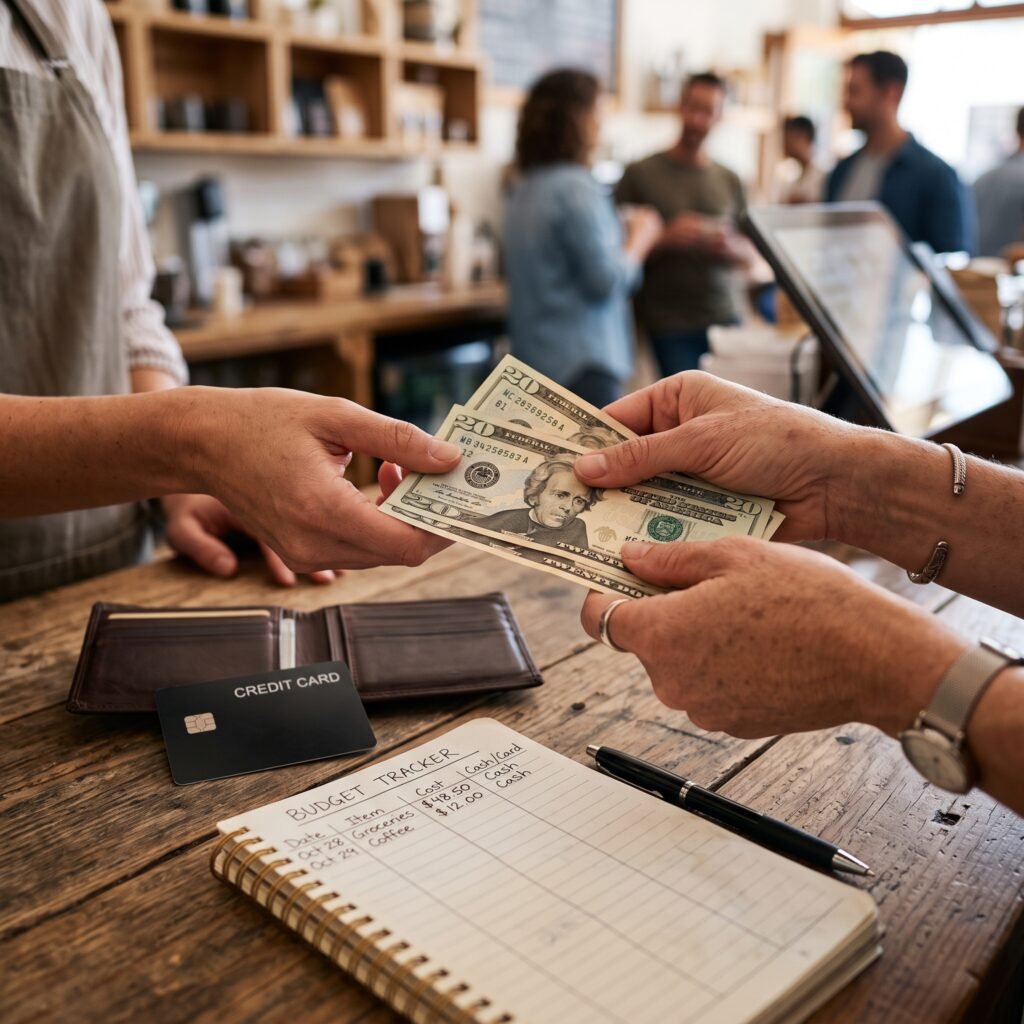
It is a proven psychological fact that people spend less money when they pay with physical cash instead of credit cards or smartphone apps. Swiping a card does not feel like losing anything, but handing over a crisp $20 bill forces your brain to register the expense.
Try the envelope method for your flexible spending:
- Withdraw a fixed amount of cash at the start of the week for things like groceries, gas, and entertainment.
- Put the cash into specific envelopes.
- Once an envelope is completely empty, your spending in that category must stop until the next week.
This simple physical boundary keeps you fully accountable.
10. Save Windfalls Instead of Spending Them
A windfall is any unexpected lump sum of money that comes your way. When people get extra money, their first instinct is often to celebrate and go shopping. But if you want to hit your $1,000 milestone instantly, you should redirect this money straight to your savings.
Common examples of windfalls include:
- Tax refunds
- Work bonuses or raises
- Cash gifts for birthdays or holidays
- Rebates, refunds, or settled accounts
If you receive a $500 tax refund, putting it directly into your savings account means you are already halfway to your grand goal without changing a single daily habit.
11. Cancel Unused Memberships
Take a close look at your bank statements from the last two months. Look for automatic monthly withdrawals that you might have forgotten about.
Cancel things like:
- Gym memberships you rarely visit
- Premium app subscriptions or mobile games
- Extra streaming video or music platforms
- Monthly style, beauty, or snack boxes
If you cancel two unused services that cost $15 a month and a gym membership that costs $40 a month, you instantly save $70 a month. Over a year, that is $840 back in your pocket.
12. Track Your Progress Every Week
Staying motivated during a financial challenge can be tough, especially if you consider yourself a natural “spender.” Monitoring your daily and weekly progress keeps your eyes on the prize.
Create a simple visual tracker on a piece of paper or a whiteboard:
[==================== $1,000 GOAL ====================]
 Current Progress: $350 | Remaining: $650 | Week 2 of 4
You can even draw a simple chart with ten blocks, where each block represents $100. Every time you save another $100, color in a block. Seeing that progress bar grow visually provides a real sense of accomplishment and keeps you excited to reach the finish line.
Deep Dive: Smart Financial Moves to Look Into
While you are fixing your daily budget, it is also smart to look at your massive, fixed monthly expenses. Making changes here can save you thousands of dollars over time.
Look at Your Home Expenses
If you own a home, your mortgage is likely your biggest monthly bill. It is highly recommended to check in with a trusted home loan specialist every couple of years for a quick mortgage checkup. Depending on the current market and how long you have lived in your home, you might find options to adjust your loan structure, which could lower your monthly payment and free up hundreds of dollars in cash flow.
Switch Your Life Insurance Plan
Many people mistake insurance for an investment tool. If you currently hold a whole life insurance policy, you might be paying a massive premium for low coverage.
A smarter, more affordable strategy is to use term life insurance:
- What it is: A simple policy that covers you for a set period (like a 15-year or 20-year term).
- The benefit: It costs a fraction of the price of whole life insurance. I suggest getting a 20-year term policy that covers 10 to 12 times your annual income.
- The execution: Keep your insurance and your investments completely separate. If you have an expensive whole life policy, you can look into shopping around for a competitive term life policy through a trusted, independent insurance broker. Once your new term policy is fully active, you can cancel the old whole life policy, cash it out, and use that returned cash to instantly fund your emergency savings.
Common Mistakes That Slow Down Saving
To ensure you reach your goal without any delays, watch out for these common financial traps:
- Shopping Without a Written Plan: Going to any store without a list leads to unnecessary impulse buying.
- Ignoring Small Daily Purchases: Thinking that a $4 snack or a $3 energy drink does not matter is a trap. These small numbers add up quietly over 30 days.
- Using Credit Cards for Convenience: If you are trying to build a cash cushion, do not rely on credit cards. It creates a false sense of security and can lead to high-interest debt.
- Waiting Until the End of the Month to Save: Always pay yourself first by moving money to savings as soon as you get paid.
- Giving Up After One Mistake: If you have a bad day and overspend, do not throw away the whole plan. Forgive yourself, look at what went wrong, and restart your savings habits the very next morning. Consistency matters far more than a single perfect week.

Key Takeaways
- Set a Deadline: Break your $1,000 goal into small daily or weekly targets.
- Track Everything: Build a basic budget to see exactly where your income goes.
- Cut back: Pause non-essential purchases and streaming subscriptions for 30 days.
- Declutter for Cash: Sell old clothes, electronics, and household goods you haven’t used in a year.
- Boost Your Income: Take on a side gig like delivery, pet sitting, or local odd jobs to earn extra cash fast.
- Automate: Set up automatic transfers so your savings grow without extra effort.
Frequently Asked Questions
Is saving $1,000 in one month really realistic?
Yes, it is entirely possible. Most people achieve this by combining two or three strategies at the same time. If you cut out $300 of unnecessary spending, sell $300 worth of old electronics, and earn $400 from a weekend side gig, you will hit your $1,000 goal in 30 days.
What is the absolute fastest way to save $1,000?
The absolute fastest way is to focus on increasing your income and selling assets. While cutting back on coffee saves money slowly, selling an unused gaming console or working a high-intensity weekend delivery gig can bring in hundreds of dollars in just 48 hours.
Should I build a savings fund before paying off my debts?
Yes. Having a basic starter emergency fund of $1,000 is critical before you start aggressively paying down debt. If you have zero savings and your car breaks down, you will be forced to borrow more money. The $1,000 acts as a protective shield so you can pay off your debts without falling backward when life happens.
Where should I keep my starter emergency fund?
Keep this money in a separate savings account away from your everyday checking account. Look for a regular high-yield savings account that keeps your money safe and accessible, but far enough out of sight that you won’t be tempted to spend it on daily purchases.
Conclusion
Saving your first $1,000 does not require a massive salary or a complicated background in finance. It simply takes a clear goal, a few shifts in your daily habits, and the willingness to make smart decisions with your money.
Start by building your very first budget, cutting out the items you do not truly need, looking for quick ways to boost your income, and automating your transfers. Remember to be patient with yourself—learning to manage money is a skill that takes time to master.
Your first $1,000 is much more than a number in a bank account. It represents your independence, your dedication, and the solid foundation for a stress-free financial future. Turn your plan into action today, stay consistent, and watch how quickly your security grows.