
Crypto investing looks a lot different in 2026 than it did even three years ago. Spot Bitcoin and Ethereum ETFs are now mainstream, U.S. lawmakers are close to passing clearer market-structure rules, and the IRS has a dedicated tax form for digital assets. That doesn’t mean crypto is “safe” — it’s still one of the most volatile asset classes available to retail investors. But it does mean there’s a more structured, less chaotic way to get started than there was during earlier boom-and-bust cycles.
This guide walks through what cryptocurrency actually is, how the market works, and the practical steps for buying, storing, and managing crypto responsibly — including the parts most guides skip, like taxes and security. It’s not financial advice. It’s a foundation so you can make your own informed decisions.

What Cryptocurrency Is
At its core, cryptocurrency is digital money that runs on a blockchain — a shared, public record of transactions that no single company or government controls. Instead of a bank verifying that you actually own the money you’re sending, a network of computers does that job by agreeing on a shared ledger.
Crypto assets generally fall into a few broad categories:
- Store-of-value assets, like Bitcoin, designed primarily to hold and transfer value outside the traditional banking system.
- Smart contract platforms, like Ethereum, Solana, and BNB Chain, which support decentralized applications, lending, trading, and other financial tools — often called decentralized finance, or DeFi.
- Stablecoins, like USDC and USDT, which are pegged to a fiat currency (usually the U.S. dollar) and used mainly for payments, trading, and moving value on-chain without price swings.
Quick definition: Cryptocurrency is a digital asset secured by cryptography and recorded on a decentralized, public ledger, allowing peer-to-peer transactions without a central intermediary like a bank.
Read More : If I Were Starting a Business in 2026, Here’s Exactly What I’d Do

How the Crypto Market Works
Crypto trades 24/7 across a global network of exchanges, unlike stock markets, which have set trading hours. Prices are driven by supply and demand, just like any other market, but a few factors make crypto distinct:
- No circuit breakers. Traditional markets pause trading during extreme volatility. Crypto doesn’t, which is part of why price swings can be sharper and faster.
- Regulatory sensitivity. News about legislation, ETF approvals, or enforcement actions can move prices significantly within minutes.
- Institutional participation has grown. Spot Bitcoin and Ethereum ETFs now hold well over $100 billion combined, and pension funds, banks, and public companies increasingly treat crypto as a portfolio allocation rather than a fringe bet.
- Liquidity varies enormously. Bitcoin and Ethereum trade with deep liquidity. Smaller tokens can have thin order books, meaning prices can be manipulated more easily and slippage can be severe.
In the U.S., regulatory clarity has been improving. Congress has been working through market-structure legislation (often referenced as the CLARITY Act) to define which digital assets count as securities versus commodities, and the GENIUS Act established federal rules for stablecoin issuers. Full legislative clarity likely won’t arrive all at once, so expect the rules to keep evolving through 2026 and beyond.

Benefits and Risks
No article about crypto investing is complete — or honest — without a clear-eyed look at both sides.
Potential Benefits
- Portfolio diversification. Crypto often moves independently of stocks and bonds, though correlations shift over time.
- 24/7 market access and fast, borderless transfers.
- Growing institutional infrastructure, including regulated ETFs, custody providers, and clearer tax reporting.
- Inflation hedge narrative. Bitcoin’s fixed 21 million supply appeals to investors concerned about currency debasement, though this thesis remains debated and unproven over a full market cycle.
Real Risks
- Extreme volatility. Double-digit percentage swings in a single day are common, even for large-cap coins.
- No FDIC or SIPC protection. Crypto held on an exchange isn’t insured the way a bank or brokerage account is.
- Security risk. Hacks, phishing scams, and lost private keys have cost investors billions of dollars industry-wide.
- Regulatory uncertainty. Rules can change quickly and vary by state and country.
- Speculative and thinly traded assets. Many smaller tokens have little real utility and can lose most of their value quickly.
If you’re not prepared to lose some or all of the money you invest, crypto isn’t the right place for it. Most financial professionals suggest treating crypto as a small portion of a diversified portfolio rather than a primary savings vehicle.

Step-by-Step Guide to Investing
Here’s a simple framework for getting started:
- Educate yourself first. Understand what you’re buying and why before putting in money.
- Decide how much you can afford to lose. Only invest money you won’t need for short-term expenses.
- Choose a regulated exchange.
- Verify your identity and fund your account.
- Start with well-established assets rather than jumping straight into speculative tokens.
- Move long-term holdings to a personal wallet for better security.
- Track your transactions for tax and performance purposes.
- Revisit your allocation periodically rather than checking prices daily.
Choosing an Exchange
Exchanges fall into two main categories:
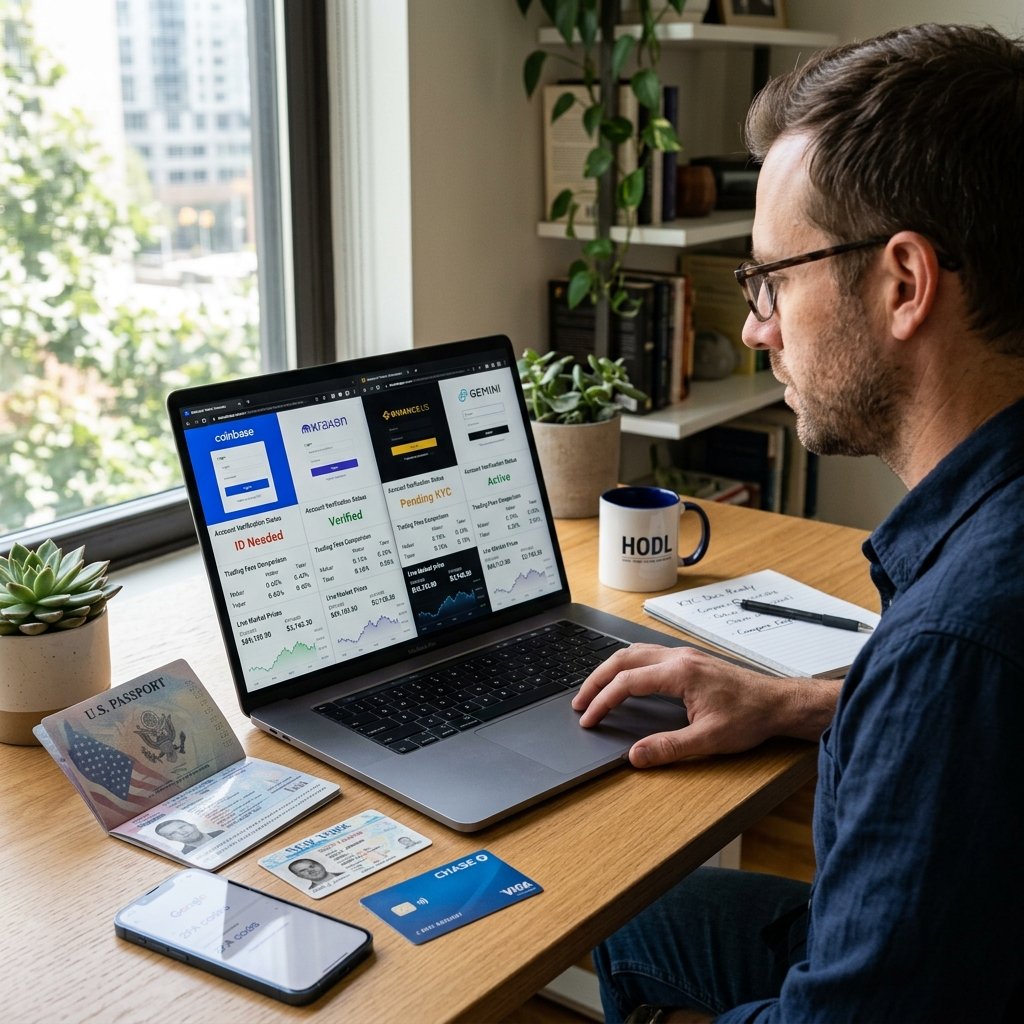
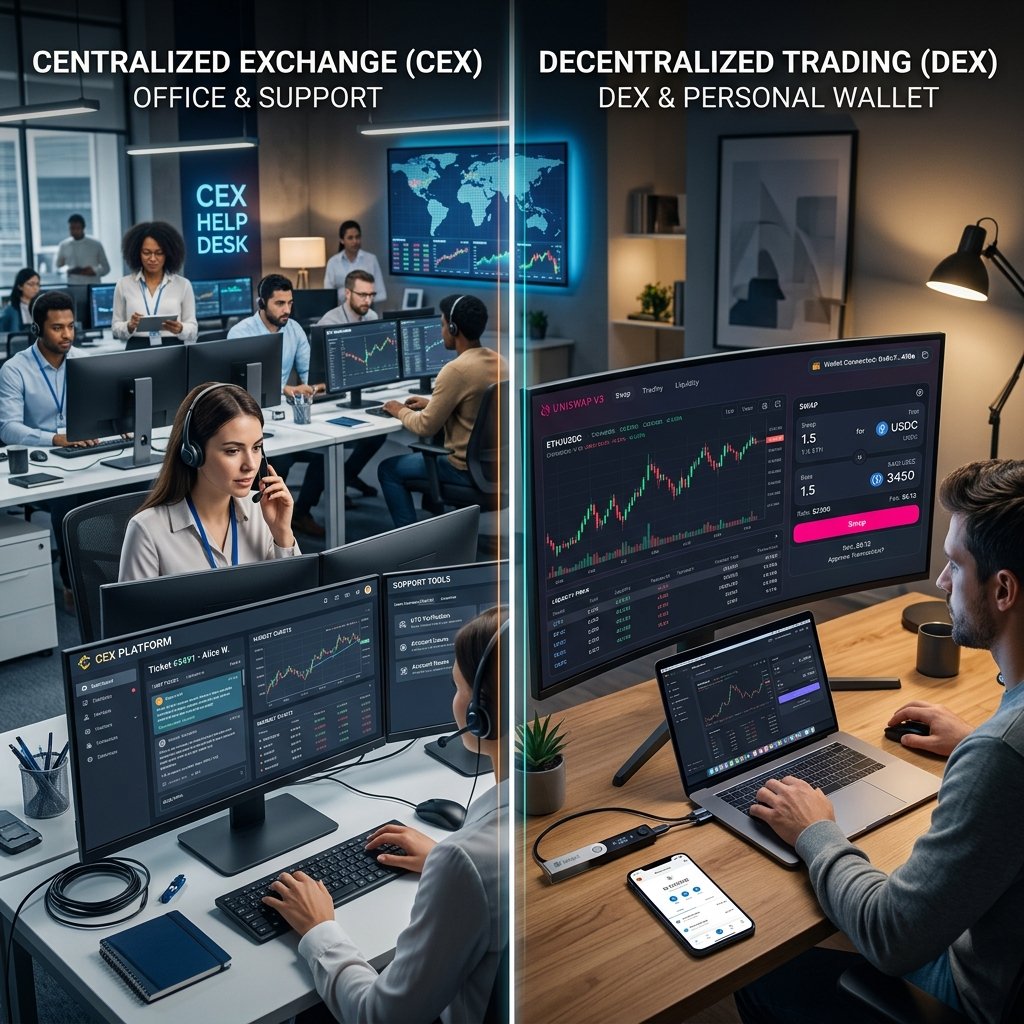
Centralized exchanges (CEXs) — like Coinbase, Kraken, and Gemini — act as intermediaries. They handle custody, offer bank transfers, and are the easiest way for beginners to convert dollars into crypto. In the U.S., these platforms operate under state money-transmitter licenses and increasingly under federal oversight, which adds a layer of accountability but also means they collect identity information (KYC).
Decentralized exchanges (DEXs) — like Uniswap — let users trade directly from their own wallets without a company holding their funds. They offer more control and privacy, but also more responsibility: if something goes wrong, there’s no customer support line to call.
When comparing exchanges, look at:
- Regulatory status and licensing in your state
- Fee structure (maker/taker fees, withdrawal fees)
- Coin selection and liquidity
- Security track record and insurance policies
- Ease of moving funds to a personal wallet
Featured snippet answer: A centralized exchange is a company that facilitates crypto trades and holds custody of your assets, similar to a brokerage. A decentralized exchange lets you trade directly from your own wallet without a company controlling your funds.
Setting Up a Wallet
A crypto wallet stores the private keys that prove ownership of your assets. There are two main types:
- Hot wallets (software wallets like MetaMask or Phantom, or an exchange account) stay connected to the internet. They’re convenient for active trading but more exposed to hacking and phishing.
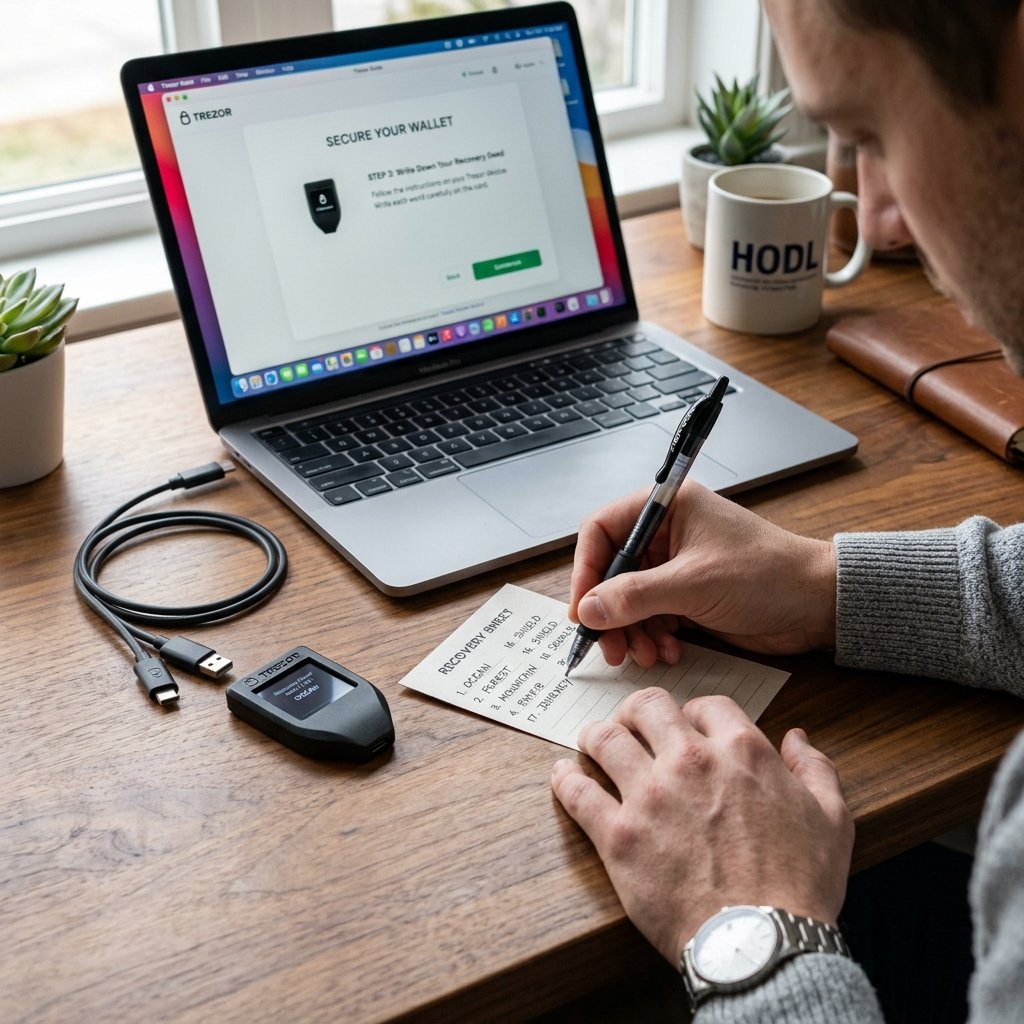
- Cold wallets (hardware devices like a Ledger or Trezor) store your private keys offline. They’re the standard recommendation for anything you plan to hold long-term.
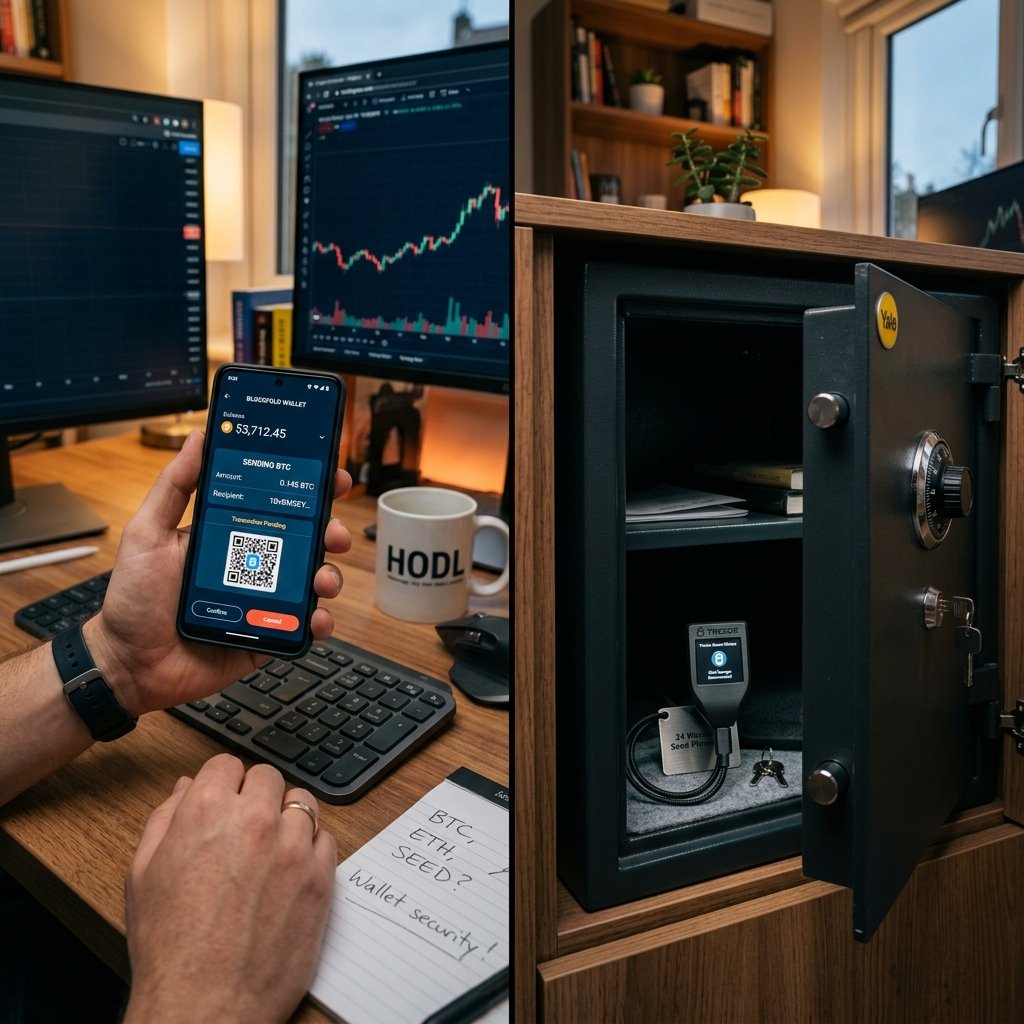
A basic rule many experienced investors follow: keep only what you’re actively trading on an exchange, and move longer-term holdings to a hardware wallet. Whatever wallet you use, write down your seed phrase on paper (never store it as a photo or in cloud storage), and never share it with anyone — no legitimate company or support agent will ever ask for it.
Buying Your First Cryptocurrency
Once your exchange account is verified and funded:
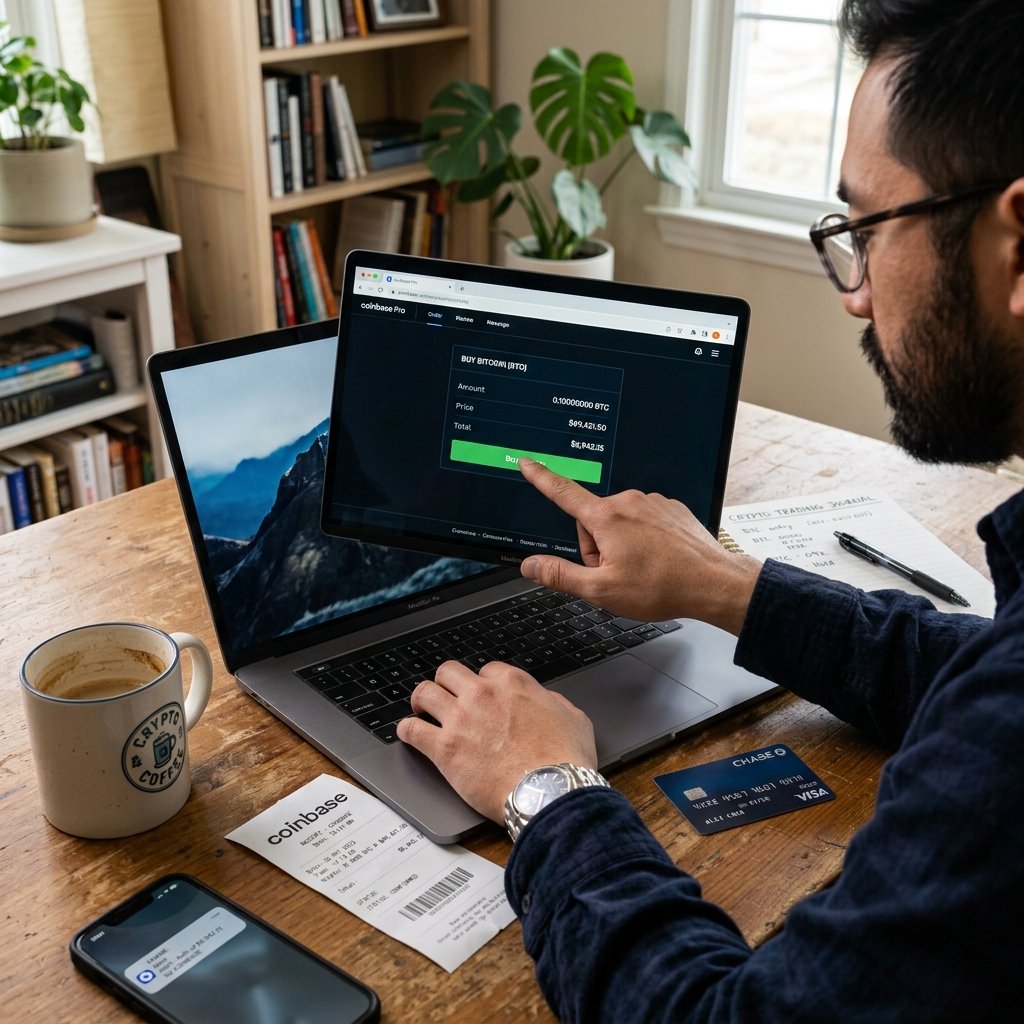
- Deposit funds via bank transfer, debit card, or wire (bank transfers typically have lower fees).
- Search for the asset you want to buy.
- Choose a market order (buy immediately at current price) or limit order (buy only at a specific price).
- Review the fee before confirming.
- Decide whether to leave the asset on the exchange or transfer it to your own wallet.
Many beginners start with Bitcoin and Ethereum because they have the deepest liquidity, longest track record, and most institutional support. Smaller tokens can offer higher upside, but they also carry much higher risk of failure or fraud.
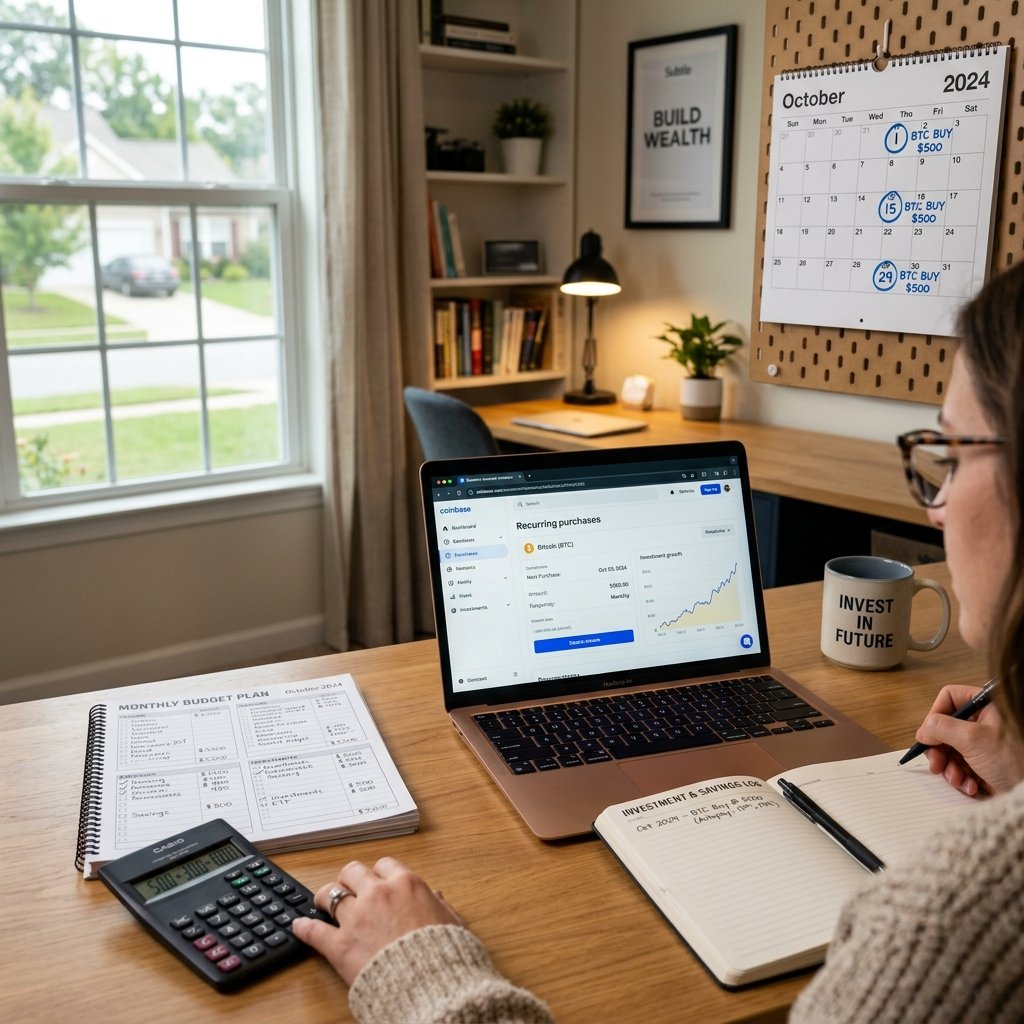
A strategy some investors use to reduce timing risk is dollar-cost averaging — investing a fixed amount on a regular schedule rather than trying to time the market. This won’t guarantee profits, but it removes the pressure of trying to pick the “perfect” entry point.
Building a Portfolio
There’s no single right way to structure a crypto portfolio, but a few principles apply broadly:
- Core holdings: Many investors weight the majority of their crypto allocation toward Bitcoin and Ethereum, given their liquidity and longer track record.
- Satellite positions: A smaller portion may go toward other established projects (large-cap altcoins) for diversification.
- Speculative positions: Any allocation to smaller, newer tokens should be sized as money you’re fully prepared to lose.
- Stablecoins: Some investors keep a portion in stablecoins as “dry powder” to deploy during pullbacks, or to reduce volatility without fully exiting to cash.
Rebalancing periodically — trimming positions that have grown disproportionately large and adding to underweighted ones — is a discipline that applies to crypto just as it does to traditional portfolios.
Risk Management
- Position sizing. Many financial advisors suggest limiting total crypto exposure to a small single-digit percentage of a diversified portfolio, though the right number depends on your age, goals, and risk tolerance.
- Avoid leverage as a beginner. Margin and futures trading amplify both gains and losses, and can wipe out an account quickly during volatile swings.
- Set a plan before you buy, including at what point you’d consider taking profit or cutting losses, so you’re not making emotional decisions in the moment.
- Diversify across assets, not just within crypto — don’t let crypto crowd out retirement accounts, emergency savings, or other diversified investments.
- Be skeptical of guaranteed-return promises. No legitimate investment can guarantee a specific return, and offers that sound too good to be true usually are.

Common Beginner Mistakes
- Investing money earmarked for near-term expenses or emergencies.
- Chasing tokens after they’ve already spiked, often called “FOMO buying.”
- Ignoring security basics, like reusing passwords or skipping two-factor authentication.
- Leaving large holdings on an exchange indefinitely instead of moving long-term positions to a personal wallet.
- Not keeping transaction records, which creates a headache at tax time.
- Overtrading, which racks up fees and taxable events without necessarily improving returns.
- Falling for phishing sites or fake customer support accounts on social media.
Taxes in the U.S.
The IRS treats cryptocurrency as property, not currency, which means most transactions are taxable events. Key points for 2026:
- Form 1099-DA is the new IRS form for digital asset reporting. Centralized exchanges are required to report gross proceeds from your 2025 crypto sales, and you should receive this form by mid-February 2026 if applicable.
- Cost basis reporting is being phased in. For the 2025 tax year, brokers generally aren’t required to report your cost basis (what you originally paid), so you may need to calculate and track this yourself. Full cost-basis reporting is expected to begin with 2026 transactions.
- You owe tax even without a 1099. If you use decentralized exchanges or self-custody wallets, you won’t receive a tax form, but you’re still required to report gains, losses, and income.
- Short-term vs. long-term gains. Assets held one year or less are taxed at ordinary income rates. Assets held longer than a year qualify for lower long-term capital gains rates.
- Other taxable events include staking rewards, mining income, and airdrops, which are typically taxed as ordinary income when received.
Crypto tax software (such as CoinTracker or CoinLedger) can connect to your exchange and wallet accounts to help organize this information, but this article isn’t tax advice — a qualified tax professional can confirm how the rules apply to your specific situation.

Security Best Practices
- Enable two-factor authentication (preferably an authenticator app, not SMS) on every exchange and wallet.
- Use a hardware wallet for long-term holdings.
- Never share your seed phrase or private keys with anyone, including people claiming to be customer support.
- Bookmark official sites rather than clicking links from search ads, emails, or social media DMs.
- Double-check wallet addresses before sending funds — crypto transactions can’t be reversed.
- Be wary of unsolicited investment advice, especially from new social media contacts promoting a specific token or “guaranteed” trading signals.

Future of Crypto Investing
A few themes are likely to shape the market through the rest of 2026 and beyond:
- Regulatory clarity is improving but incomplete. U.S. market-structure legislation has been under active negotiation, and further progress could unlock more institutional participation — but timelines have repeatedly shifted, and political dynamics (including the 2026 midterms) could delay final rules.
- Institutional adoption continues to grow, with spot ETFs, corporate treasuries, and even some sovereign reserves now holding Bitcoin.
- Stablecoins are becoming core financial infrastructure, following the GENIUS Act’s federal framework.
- Volatility isn’t going away. Even with more institutional involvement, crypto has continued to see sharp drawdowns tied to macro events, liquidations, and shifting sentiment.
None of this guarantees future performance in either direction. Anyone promising certainty about where crypto prices are headed is overstating what’s knowable.

Key Takeaways
- Crypto is a digital asset class built on blockchain technology, with Bitcoin, Ethereum, and stablecoins serving different roles.
- Start with a regulated, centralized exchange to buy your first assets, then consider a hardware wallet for long-term storage.
- Only invest money you can afford to lose, and avoid leverage until you fully understand the risks.
- The IRS now requires Form 1099-DA reporting from exchanges, but you’re responsible for accurate reporting regardless of whether you receive one.
- Security — seed phrase storage, two-factor authentication, and skepticism toward unsolicited offers — matters as much as investment strategy.

FAQs
Is crypto a good investment for beginners? Crypto can be part of a diversified portfolio, but it’s high-risk and volatile. Most financial professionals suggest starting small, sticking to well-established assets, and treating it as a minority allocation rather than a primary investment.
How much money do I need to start investing in crypto? Most exchanges allow purchases starting at $10–$25, and many support buying fractional amounts of Bitcoin or Ethereum, so you don’t need a large sum to get started.
What’s the safest way to store crypto? A hardware (cold storage) wallet is generally considered the most secure option for long-term holdings, since it keeps your private keys offline and away from internet-based hacking attempts.
Do I have to pay taxes on crypto I haven’t sold? Simply holding crypto isn’t a taxable event. Taxes generally apply when you sell, trade one crypto for another, spend it, or earn it through staking, mining, or airdrops.
What’s the difference between investing and trading in crypto? Investing typically means holding an asset for more than a year, which can qualify for lower long-term capital gains tax rates. Trading involves shorter holding periods and is taxed at ordinary income rates, with generally higher risk and higher activity.
Can I lose all my money in crypto? Yes. Individual tokens can lose most or all of their value, exchanges can fail, and wallets can be compromised. This is why risk management and position sizing matter.

Conclusion
Crypto investing in 2026 sits at an interesting point: more regulated, more institutional, and better documented for tax purposes than in previous cycles — but still genuinely volatile and still carrying real risks of loss. The fundamentals for getting started haven’t changed much: pick a reputable exchange, understand what you’re buying, size your positions sensibly, secure your holdings, and keep good records. Beyond that, ongoing education and a healthy skepticism toward hype — in either direction — will serve you better than chasing the next headline.
This article is for informational purposes only and isn’t financial, investment, or tax advice. Consider speaking with a licensed financial advisor or tax professional before making investment decisions.