
If you have been hearing people talk about making money with AI but it all sounds vague or overhyped, here is the cold, hard reality: AI tools will not magically print income for you out of thin air. However, smart systems can automate a large part of content creation, freelancing, and digital business workflows that generate real, long-term passive income.
In 2026, the real financial opportunity is no longer just using basic AI tools to write generic content. The winning strategy is building structured, AI-powered systems that continue earning revenue while you sleep.
This deep guide breaks down exactly how freelancers and absolute beginners in the United States are using advanced tools to build genuine passive income streams, optimize their work for the modern web, and lancuhing operations that will dominate the market from 2026 to 2030.
Understanding Passive Income in the AI Era

What is digital passive income in 2026?
Digital passive income in 2026 is money earned from digital properties like blogs, automated video channels, online storefronts, and digital assets built using artificial intelligence. Instead of buying real estate or waiting for stock dividends, modern creators use AI tools to build high-value content engines that generate income through advertising, affiliate sales, and digital product purchases.
Traditional passive income required deep capital or thousands of human working hours. Today, digital assets can be created, optimized, and scaled by a single individual with zero employees.
[Traditional Model: Large Budgets -> Long Design Phase -> Slow Launch]
                                  │
                                  ▼
[Modern AI Model: Fast AI Systems -> One-Person Operation -> Rapid Cash Flow]
Modern digital passive income assets typically fall into five distinct categories:
- Affiliate Niche Portals: Websites that review software, physical products, or professional services, earning a set commission whenever a visitor clicks a link and makes a purchase.
- Content Ad Networks: Educational blogs and specialized publications that draw thousands of monthly readers, monetized via programmatic display ads.
- Print-on-Demand Automated Stores: Online shops selling customized clothing, mugs, or posters where printing, packaging, and shipping are handled entirely by third parties on demand.
- Faceless Video Channels: Visual content platforms that attract massive view counts without showing a human face, earning revenue from platform ad splits and brand sponsors.
- Digital Asset Marketplaces: Web stores that sell useful files like spreadsheets, planners, productivity templates, or educational documents that require zero physical inventory.
AI tools do not replace these timeless business models. Instead, artificial intelligence speeds up your business execution by ten times. A workflow that once required an editor, a graphic designer, an SEO expert, and a manager can now be run by a single motivated freelancer.
Step-by-Step System: Building an AI Content and Product Business

Building a modern digital income stream requires a systematic, step-by-step approach. You cannot just guess what will sell; you must let data guide your creation process. Below is the precise operational blueprint for launching an automated content and digital asset business from scratch.
Step 1: Market Research with Generative Search Tools
How do you find profitable niches with AI?
Finding profitable niches with AI requires analyzing current internet trends, viral cultural concepts, and customer reviews using advanced deep research tools. Creators use AI engines to map out specific, high-intent buyer keywords and identify underserved sub-markets that traditional competitors have missed.
To build a business that makes money, you must find out what people already want to buy. The worst mistake you can make is spending weeks designing a product or writing an article that nobody is searching for.
Instead of copying successful products directly and fighting over the exact same customer base, you can use generative search engines to identify viral styles, internet memes, and design structures, then port them into entirely different niches. For example, if a clothing design featuring cats goes viral on Amazon, you can use AI to research how that exact same concept can be adapted for dog breeds, book lovers, or specific professional industries.
The Deep Research Workflow:
- Identify a core trend or visual concept that is currently driving high sales volume on major marketplaces like Amazon or Etsy.
- Open a deep-research assistant (such as Google Gemini with Deep Research enabled).
- Input a specific prompt outlining your research goal.
- Let the AI build a complete structural map detailing specific sub-niches, target groups, and recurring visual elements.
[Target a Massive Trend] ──> [Run AI Deep Research] ──> [Extract Hidden Sub-Niches]
A practical prompt you can use for this research phase looks like this:
“Act as an expert market researcher. Analyze the viral internet culture motifs surrounding the ‘dillydally vs. locking in’ trend. Create a detailed map of five highly specific hobbyist or professional demographics where this concept hasn’t been fully commercialized yet. Provide the primary visual themes and phrases that appeal to each group.”
The output of this system gives you an immediate blueprint of highly focused keywords, customer problems, and creative angles that are primed for monetization.
Step 2: Designing Physical and Digital Products Using AI

How do you generate commercial-grade assets with AI?
Generating commercial-grade assets with AI requires using advanced visual generation tools to build high-definition, clean imagery based on successful market research data. Designers use precise descriptive text inputs to create art styles, patterns, and graphics that can be printed onto products or sold as standalone digital files.
Once you have your research report and your target keywords, you need to transform those ideas into actual items that can be sold for a profit. This is where advanced text-to-image engines become your primary creative engine.
[Raw Research Data] ──> [Creative Prompt Construction] ──> [High-Definition Visual Generation]
When generating visual assets for commercial applications like clothing prints or website media, focus on clean compositions. Avoid cluttered backgrounds, distorted proportions, or highly complex details that do not translate well to print. If you are creating graphics for a print-on-demand store, you can instruct the AI generator to stick to specific, repeatable aesthetics, such as flat vectors, crisp line art, minimal icon designs, or stark black-and-white graphics.
For instance, if your research shows that the book-loving community on social media responds well to clean, minimal typography paired with simple illustrations, you can input detailed styling parameters to get exact matches. If the initial image contains unnecessary elements, you can use inline modification instructions to cleanly strip away background objects, change color palettes, or adjust framing without throwing away the entire image design.
Step 3: Product Polishing and Upscaling Workflows

How do you prepare AI images for professional manufacturing?
Preparing AI images for professional manufacturing requires scaling the file resolution to a high level and cleaning up background pixels using graphic editing software. This ensures that the digital artwork remains sharp, clear, and perfectly formatted when printed onto physical merchandise or viewed on high-definition screens.
A common issue with AI-generated visual assets is that their base resolution is often too low for high-quality printing. If you try to print a standard web-sized image onto a t-shirt or poster, the final product will look blurry, pixelated, and unprofessional. You must pass your raw assets through a strict digital polishing pipeline.
[Raw AI Image] ──> [AI Resolution Upscaler] ──> [Color & Contrast Tuning] ──> [Transparent Export]
The professional workflow for preparing these files involves three core actions:
- High-Definition Upscaling: Pass your asset through a dedicated AI upscaler app (like the built-in tool in Canva Pro or specialized image enhancers). You should at least double the resolution size, bringing the pixel count up to a minimum of 300 DPI (dots per inch) to guarantee crisp lines during the physical printing process.
- Automated Color Correction: Use intelligent contrast and color balancing tools to remove dull tones. Boosting the vibrancy and fixing dark spots ensures the design stands out cleanly against whatever background material it sits on.
- Transparent Formatting: If you are putting a graphic design onto physical products like apparel, crop out any extra canvas space. Export the finished file as a high-resolution PNG with a fully transparent background so that no awkward white blocks surround your artwork.
Once your design files are crisp and transparent, upload them to print-on-demand fulfillment apps like Printify or Printful. These platforms let you link your designs directly to blank products in their catalog. You can then connect these apps directly to your public storefront on platforms like Etsy, Shopify, or Amazon.
When a customer makes a purchase, the fulfillment system takes over automatically:
[Customer Buys on Storefront] ──> [Order Sent to Print Shop] ──> [Product Printed & Shipped]
You pay the lower wholesale cost for the production and shipping, while the remaining balance drops straight into your bank account as passive profit.
Generative Engine Optimization (GEO): Earning Traffic from AI Search Results

The internet is undergoing a massive shift. People are moving away from traditional link-based search engines and are increasingly using AI search tools like Google AI Overviews, OpenAI Search, and Perplexity to answer questions and find products. If your business is only optimized for old-school SEO, you are missing a massive wave of zero-click traffic.
The Core Difference Between Traditional SEO and Modern GEO
To win visibility on the modern web, you must understand how these search environments differ:
| Optimization Factor | Traditional SEO (Search Engine Optimization) | Modern GEO (Generative Engine Optimization) |
| Primary Goal | Rank in the top ten blue links on a results page. | Get cited as a primary source inside AI-generated answers. |
| Core Metric | Keyword frequency, domain authority, and backlinks. | Information density, question clarity, and entity trust. |
| Content Style | Long-form articles optimized for keyword variations. | Highly structured, answer-first text blocks and data lists. |
| User Intent | Matching high-volume search strings exactly. | Providing direct, conversational value to complex questions. |
Step-by-Step AI Workflow for GEO Optimization
To make sure your articles, guides, and product pages show up as top citations inside AI search engines, you must build your content exactly how a Large Language Model (LLM) wants to extract it. Here is the ultimate automated workflow for optimizing your digital content for both humans and AI engines.
[Perplexity: Extract Keywords & Competitor Reviews]
                        │
                        ▼
[ChatGPT: Build Structural Outlines & Title Options]
                        │
                        ▼
   [Claude: Rewrite Copy for Natural Human Delivery]

Phase 1: Deep Keyword and Intelligence Gathering with Perplexity AI
Start by using an AI search engine like Perplexity to crawl the web and look at successful competitor offerings, user reviews, and top questions. Ask the tool to search across scores of websites to pull the exact language, core problems, and phrases buyers use when discussing your niche. Perplexity can scan over a hundred sources in minutes, giving you a structured file containing highly relevant keywords and the rationale behind them.
Phase 2: Structural Outline Creation with ChatGPT
Take your fresh keyword data report and pass it into a highly creative writing engine like ChatGPT. Instruct the engine to generate highly optimized article titles, metadata descriptions, and clear heading outlines (H1, H2, H3 tags) that balance traditional search requirements with generative search needs. Have the tool create multiple variations so you can mix, match, and fine-tune your messaging.
Phase 3: Natural Human Polish with Claude
AI writing models can sometimes sound repetitive, robotic, or overly corporate. To keep your readers glued to the page and to show search engines that your content is high-quality, take your structured drafts and pass them into Claude.
Instruct Claude to rewrite the text to sound completely natural, clear, and direct—as if a seasoned human professional wrote it. Claude is uniquely trained to prioritize helpful, honest, and direct communication, making it the perfect tool for stripping away artificial fluff and adding a true expert tone.
Best AI Tools for Freelancing Beginners

If you are a complete beginner starting from zero, you do not need to buy dozens of different software subscriptions. A lean, highly focused stack of platforms will handle your writing, graphic design, lead generation, and business analysis.
1. Core Workflow and All-in-One Business Operations
GoHighLevel
GoHighLevel is a complete business management platform that unifies client communication, email marketing, landing page creation, sales funnels, and automated invoicing into one single dashboard. Instead of paying for five separate tools to handle your customers and marketing campaigns, this platform serves as the central operations room for your freelance career or digital agency.
- Funnel Building: Build professional, high-converting lead generation pages using pre-made templates without touching a line of code.
- Automated Campaigns: Create automated email and text sequences that automatically nurture leads and follow up with potential clients.
- White-Label Agency Growth: If you want to scale your business, you can completely rebrand the software’s interface and tools as your own proprietary platform, allowing you to charge clients a monthly subscription fee for access.
2. Smart Graphic Design and Visual Identity Tools
Logo Pony
Logo Pony is an intelligent brand identity tool that uses artificial intelligence to create professional, scalable logos and brand kits based on basic design inputs. You do not need any advanced graphic design background to build a clean corporate look for yourself or your clients.
- Instant Generation: Enter your business name, pick a general color palette, select a few descriptive keywords, and the system creates hundreds of custom variations.
- Multi-Format Adaptation: The tool automatically creates perfectly resized versions of your logo for social media banners, email signatures, merchandise prints, and favicons.
Canva Pro
Canva Pro is a visual design tool that integrates powerful generative AI apps with drag-and-drop graphic layouts. It is the gold standard for creating social media graphics, client presentations, video frames, and print-ready files rapidly.
- AI Upscaling and Adjustments: Use built-in apps to automatically double the resolution of images and apply auto-color correction for professional quality.
- Massive Asset Libraries: Access millions of premium fonts, templates, vector shapes, and stock assets that can be customized to match any brand style guide instantly.

3. Advanced Strategy and Growth Analysis Systems
NotebookLM
NotebookLM is a specialized document analysis and research tool created by Google that transforms long, dry business reports into clear, actionable study materials and audio outlines. It allows you to upload text files, financial logs, and market trends, creating a private, custom AI expert that knows your business data inside and out.
- Audio Overview Generation: Instantly turn complex spreadsheets or research data into an engaging, casual audio discussion between two virtual business hosts. You can listen to this AI-generated podcast while doing tasks around the house to easily digest deep insights about your sales performance.
- Interactive Fact Synthesis: Ask specific questions about your uploaded documents and get accurate, immediate answers without having to manually read through hundreds of text pages.
AI Business Ideas That Will Explode Between 2026 and 2030
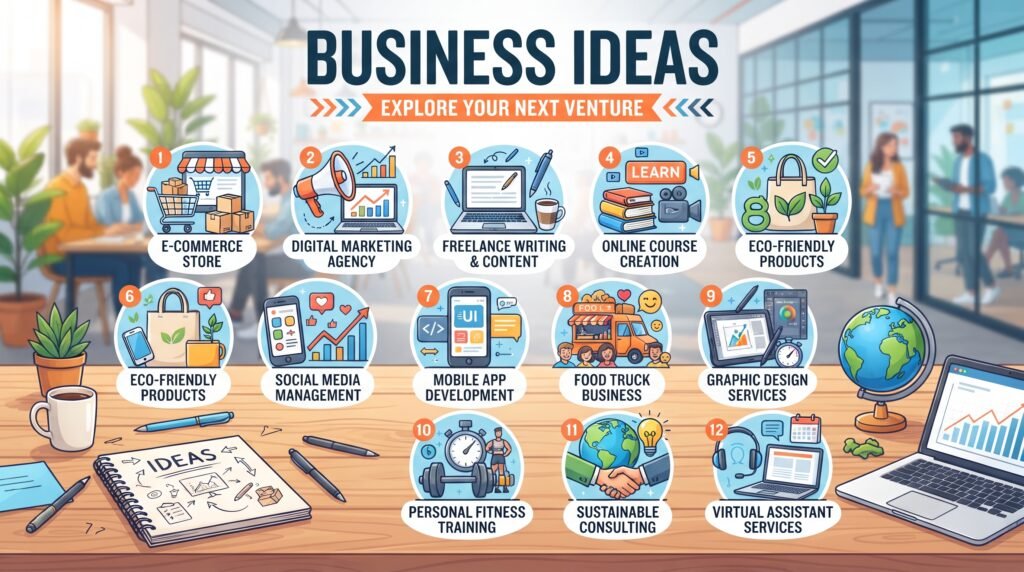
The next few years will see a massive wave of growth for small, automated operations. If you want to position yourself for long-term success, focus on business models that use artificial intelligence to solve real-world problems for paying clients or eager consumer audiences.
                  ┌───► 1. Hybrid Print-on-Demand Stores
                  ├───► 2. Automated Content Networks
                  │
[AI Opportunities]├───► 3. White-Label AI Agencies
                  ├───► 4. Data-Driven Micro-SaaS
                  │
                  └───► 5. Digital Product Hubs
1. Hybrid Print-on-Demand Micro-Brands
Building automated online stores that sell hyper-targeted physical products to passionate niche audiences is an incredibly lucrative opportunity. Instead of selling generic clothing, you use tools like Gemini Deep Research to find highly specific online communities—like specialized dog breed owners or internet subcultures—and build clever apparel lines for them.
With zero physical inventory risk, you use AI generators to quickly create unique designs, list them on Etsy or Shopify, and let automated print shops handle all production and shipping.
2. Automated Contextual Content Networks
Companies need a continuous stream of helpful, informative content to stay visible on the modern web, but hiring massive writing teams is too expensive for most small operations. A single freelancer can build a content agency that produces highly accurate, deep articles by combining the rapid processing power of Perplexity, ChatGPT, and Claude.
By structuring these networks around clear, answer-first paragraphs and rich factual data, you can build massive informational blogs that pull traffic from both classic Google searches and modern AI Overviews.
3. White-Label AI Agency Services
Local small businesses—such as plumbers, dentists, real estate agents, and local retailers—rarely have the time or technical expertise to manage their digital presence or build marketing workflows. You can step in by setting up an all-in-one operations hub using GoHighLevel.
By applying your own branding to the software, you can offer these local clients automated review collection, instant text-back systems for missed calls, and custom lead generation funnels, charging them a steady monthly fee for running their digital infrastructure.
4. Data-Driven Micro-SaaS Operations
You do not need to be an expert programmer to build simple, highly profitable software tools. By using code-generation models, you can create basic single-purpose applications—like resume formatters, custom calculation tools, niche industry templates, or basic automation plug-ins.
These lightweight tools solve a single, clear problem for users and can be sold as cheap monthly subscriptions or monetized through simple web advertisements.
5. Digital Product and Template Hubs
Millions of professionals, students, and small business owners are constantly searching for pre-made files that can organize their daily tasks, manage their finances, or plan their content. You can use artificial intelligence to quickly draft deep Notion workspaces, budget planners, structured excel logs, or comprehensive marketing toolkits.
Once created, these digital files can be listed on platforms like Gumroad or your own site, costing you zero dollars to replicate and ship every single time a new customer buys.

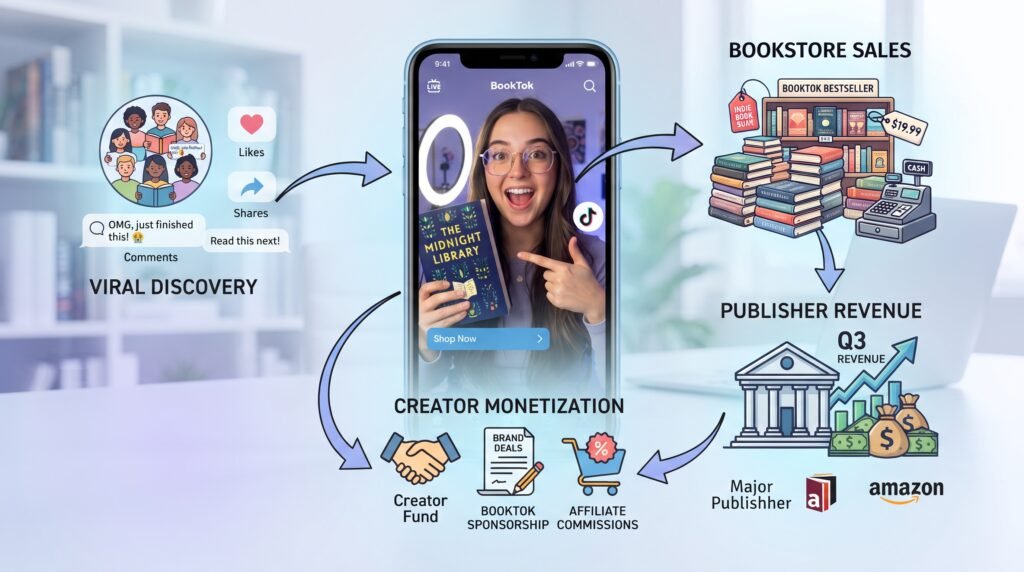
Real-World Case Study: The BookTok Cash Flow Engine
To understand how these concepts function in the real world, let us look at a real, documented case study of an automated print-on-demand digital brand. This case study demonstrates how an independent creator used data analysis to uncover a highly stable, low-volatility passive income stream without hiring a single employee.
[Gemini Finds Stable Sales Data] ──> [NotebookLM Spots "BookTok" Niche] ──> [Scale Up Niche Focus]
The business owner was running a multi-niche print-on-demand clothing store, selling various apparel items across multiple industries. After letting the shop run for several months, the owner extracted the raw CSV sales log and uploaded it into Gemini Deep Research to run a comprehensive trend analysis and demand forecast.
The resulting report was dense and dry, so the owner dropped the file into NotebookLM and generated a conversational Audio Overview podcast to hear the core takeaways.
Through the AI-generated discussion, the owner discovered an amazing fact: while certain trendy designs had explosive but short-lived spikes in sales, one specific item—Design 29, which featured the slogan “It’s not hoarding if it’s books”—showed incredibly stable, low-volatility revenue.
The data revealed that this single design consistently sold 50 to 80 t-shirt units every single month, completely unaffected by changing seasons.

[Design 29: "It's not hoarding if it's books"] ──> Consistently sells 50-80 units/month all year
The AI analysis explained the hidden reason behind this consistency: the design tapped perfectly into the massive, highly active “BookTok” community on TikTok—a deeply passionate demographic of avid readers who are constantly buying book-themed merchandise. Armed with this clear insight, the business owner was able to immediately cut away low-performing product lines and generate an entire collection of related reading slogans using ChatGPT and Claude.
By scaling up their presence within that one clear, data-validated niche, the owner successfully turned a chaotic store into a highly predictable, automated asset.
Common Mistakes Beginners Make When Building AI Businesses
While these modern tools make it easier than ever to start a digital business, thousands of beginners still fail because they fall into predictable traps. Avoid these five major mistakes to ensure your passive income streams remain highly profitable and safe from platform updates:
- Publishing Low-Quality AI Content Spam: Simply copying raw, unedited text straight out of an AI tool and pasting it onto a blog will fail completely. Search engines easily identify low-value, generic filler content. You must always use your human expertise to edit, restructure, and add personal perspective to everything you produce.
- Targeting Too Many Niches at the Same Time: Trying to build a general store or a blog that talks about everything all at once will destroy your authority. Pick one single, highly focused topic or community, master it completely, and establish yourself as an expert before trying to expand.
- Completely Ignoring AI Extraction Structures: If your content is buried deep inside massive walls of text, or hidden behind messy code, search engines and AI engines will simply skip over your site. Always organize your content with a clean hierarchy, short paragraphs, and direct answers.
- Waiting Too Long to Monetize Your Assets: Do not wait until you have massive amounts of traffic to start earning money. Add clear, helpful affiliate links, set up digital download options, or connect clean display ad networks early on so that every single visitor can help fund your growth.
- Copying Competitors Without Adding Value: If you look at what a top brand is doing and simply copy their exact product or article, you will always stay invisible. Use AI tools to find the weaknesses in their offers, look for questions they failed to answer, and provide unique data to give customers a clear reason to choose you.

Frequently Asked Questions (FAQ)
What is Generative Engine Optimization (GEO)?
Generative Engine Optimization (GEO) is the practice of structuring digital content so that artificial intelligence search tools can easily read, extract, and cite it as a source inside AI-generated answers. It focuses on high information density, question-based headings, and clear formatting rather than traditional keyword repetition.
How do I make my website show up in Google AI Overviews?
To show up in Google AI Overviews, you must place a clear, direct answer block consisting of two to three simple sentences directly under your main section headings. You should use clean code structure, apply proper schema markup, and provide unique facts, metrics, or case studies that the AI model cannot find anywhere else.
Do I need coding skills to start a micro-SaaS business with AI?
No, you do not need advanced programming experience to launch a micro-SaaS tool. Modern code-generation assistants can write clean, working code for simple single-purpose web tools based on detailed instructions, allowing beginners to build, fix, and launch basic digital applications easily.
Is print-on-demand still passive in 2026?
Yes, print-on-demand remains highly passive once your designs are created and linked to your online storefront. Because third-party manufacturing apps automatically handle the printing, packaging, and shipping processes whenever a customer places an order, your daily task is limited to managing occasional customer messages.
Why is human editing necessary for AI-generated articles?
Human editing is absolutely vital because it ensures your content sounds natural, remains factually accurate, and provides real value to the reader. Raw AI outputs often contain repetitive phrasing and generic advice that search engines reject for lacking genuine experience and trustworthiness.

Final Strategic Summary
Building long-term passive income using artificial intelligence content tools is never about finding lazy shortcuts or trying to trick search engines with automated spam. The individuals who earn the highest profits between 2026 and 2030 will not be the people who simply click “generate” and post low-quality filler.
The biggest winners will be the strategic operators who use artificial intelligence as a high-speed execution engine to run real, value-driven, structured digital businesses.
Pick one clear business model that fits your interests—whether that is an automated print-on-demand clothing store, a highly optimized affiliate website, a service agency for local companies, or a marketplace for digital planners. Use tools like Perplexity and Gemini to dig up deep, accurate market insights that traditional businesses overlook.
Use writing assistants like ChatGPT and Claude to frame your knowledge into clean, clear, answer-first content that completely satisfies both human readers and modern AI search engines.
Stay focused on your chosen niche, keep your formatting clean and easy to read, and update your content regularly to ensure it stays fresh and accurate. If you commit to executing this structured system with real consistency, you will build a digital property that stands out from the competition, ranks high across all modern search engines, and generates passive revenue for years to come. Start small, set up your core execution pipeline today, and let the system scale your business.