
A High-Yield Savings Account (HYSA) is one of the simplest and safest ways to grow your money in the United States. Many people keep their hard-earned cash in traditional bank accounts, not realizing they are losing money every single day.
If you leave your savings in a standard account at a traditional bank, your money is sitting still while the rising cost of everyday goods makes it less valuable. A high-yield savings account changes that. It allows your money to work for you safely, growing your balance automatically without any complicated investment risks.
In this complete guide, you will learn exactly how high-yield savings accounts work, why they pay so much more than traditional accounts, how to pick the best option for your goals, and how to maximize your cash.
What Is a High-Yield Savings Account?
A High-Yield Savings Account (HYSA) is a specific type of savings account that pays a much higher interest rate than a standard savings account. These accounts are fully backed and insured by the United States government, making them just as safe as any traditional bank account you have used before.
The main difference between a regular savings account and a high-yield savings account comes down to one math term: APY, or Annual Percentage Yield. APY represents the total amount of interest you earn on your money over the course of one full year, including the effects of compounding interest.
To see why switching to an HYSA matters so much, let’s look at how the interest rates compare across the US banking landscape today:
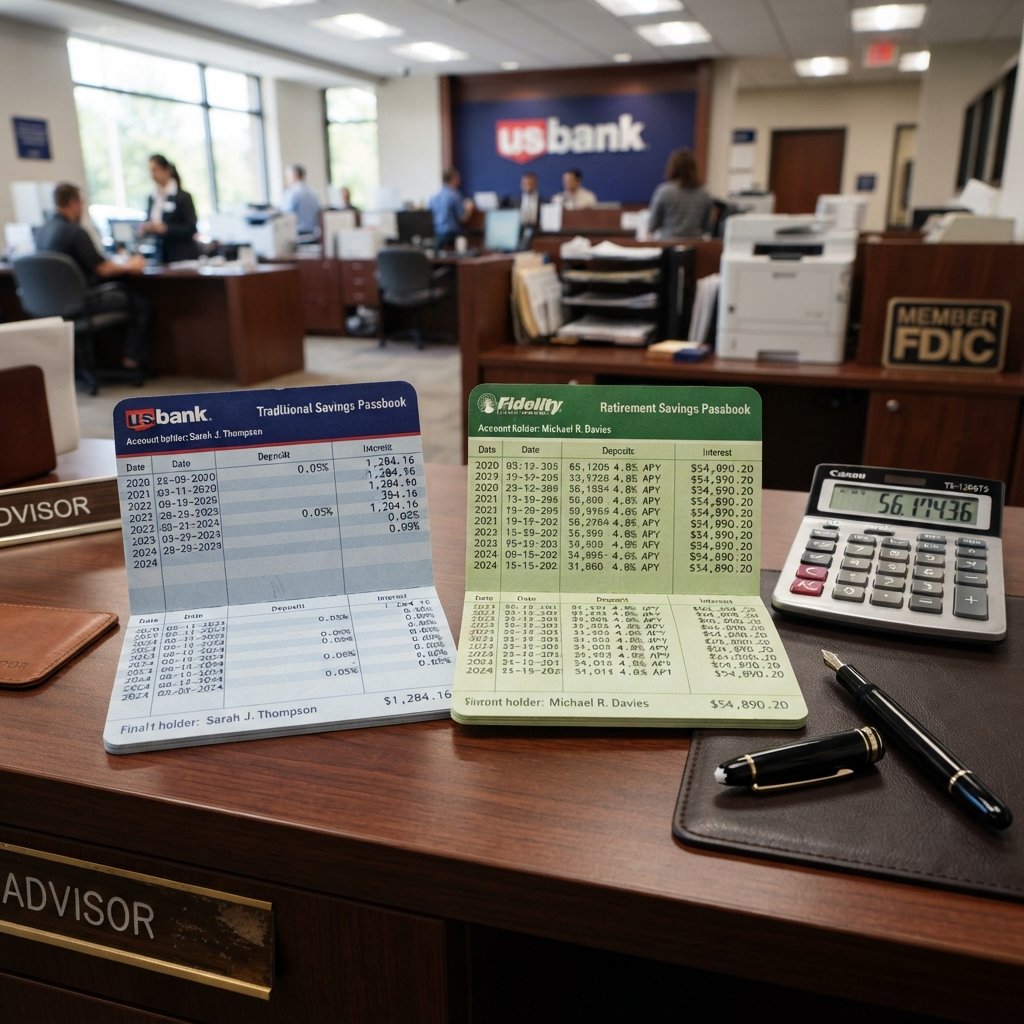
- Traditional Savings Accounts: Regular brick-and-mortar banks pay an average national interest rate of only 0.38% APY. Many massive, household-name banks pay even less—often a tiny 0.01% APY.
- High-Yield Savings Accounts: Top online-only banks and credit unions routinely pay between 3.50% APY and 5.00%+ APY.
READ MORE
- Best Credit Cards for Beginners in USA + Credit Score Guide
- How to Invest in Stock Market in USA 2026
The Real Cost of Traditional Banking
When you leave your cash in a standard savings account earning 0.01%, the bank isn’t just holding it in a vault. They take your money, lend it out to other customers for mortgages or auto loans at much higher rates, and pocket the profit. In return, they give you pennies.
Furthermore, traditional accounts often surprise you with monthly maintenance fees. For instance, some large banks require you to keep a minimum daily balance of $300 or charge you a $5 monthly fee. Paying $60 a year to hold a balance that earns less than a dollar in interest means your savings are actively shrinking.
An HYSA cuts out those unfair terms, providing a direct path to stress-free savings growth.
How High-Yield Savings Accounts Work
High-yield savings accounts operate using the exact same basic principles as any standard bank account, but they optimize the process to give the earnings back to you. The cycle follows four simple steps:
1. You Deposit Your Cash
You move your money into the high-yield account. You can do this by setting up a direct deposit from your job’s paycheck, linking your current traditional bank account to make an online transfer, or using digital payment networks like Zelle.
2. The Bank Stores and Uses Your Cash Safely
Once your money is deposited, the bank keeps it secure. To cover the cost of the interest they pay you, the bank pools deposits together and handles low-risk financial operations. They may issue highly regulated loans to other consumers or invest in safe government bonds.
3. You Earn Compounding Interest
The bank calculates your interest earnings daily based on your account balance. At the end of every month, they deposit those earnings directly into your account as cash.
The real power here is compound interest. This means you earn interest on your initial deposit, plus you earn interest on the interest you already made in the previous months. It creates a snowball effect that builds momentum automatically.
4. Your Savings Grow Hands-Free
Because the interest is paid out monthly and added straight to your balance, your money grows completely on autopilot. You do not need to trade stocks, watch market charts, or manage complex investments. You simply leave the money alone and watch the balance rise.

Why Do Online Banks Pay High Interest Rates?
A common question people ask when discovering HYSAs is: “If these accounts are safe, why can online banks pay 10 to 40 times more interest than traditional neighborhood banks?”
The answer does not involve hidden risks. It comes down to a much smarter business model.
Traditional brick-and-mortar banks have massive physical expenses. They must pay for thousands of physical branch buildings across the country, corporate real estate, utilities, physical security, vault maintenance, and thousands of local branch employees, tellers, and managers. These overhead costs require millions of dollars every month.
Online-only banks do not have physical branches. They exist entirely on secure websites and mobile apps. Because they cut out the cost of real estate, electric bills, and physical branch maintenance, they save an enormous amount of operational capital.
Instead of keeping those savings as corporate profit, online banks pass the money directly to you in the form of high interest rates. They use these competitive yields to win your business away from the legacy big banks.
Key Features of an HYSA
Before opening a high-yield savings account, it helps to understand the core features that define how these modern accounts manage your funds.
+-------------------------------------------------------------+
|               CORE FEATURES OF A USA HYSA                   |
+-------------------------------------------------------------+
|  [ Yield ]        3.50% - 5.00%+ Annual Percentage Yield    |
|  [ Security ]     FDIC / NCUA Insured up to $250,000        |
|  [ Fees ]         Typically $0 Monthly Fees / No Minimums   |
|  [ Access ]       24/7 Digital Management via Mobile Apps   |
+-------------------------------------------------------------+

High Interest Output
The primary feature is the elevated APY. While regular accounts leave your money flat, an HYSA matches or beats the baseline pace of everyday inflation, ensuring your cash maintains its purchasing power over time.
Government FDIC or NCUA Insurance
Safety is the most vital feature of a true high-yield savings account.
- If you open an account with a bank, it must be backed by the Federal Deposit Insurance Corporation (FDIC).
- If you open an account with a credit union, it must be backed by the National Credit Union Administration (NCUA).
Both organizations are independent agencies of the United States government. They protect your money up to $250,000 per depositor, per insured institution, for each account ownership category. If the bank experiences a total financial collapse and goes completely out of business, the US government will step in and give you every dollar of your balance back, up to that $250,000 limit. This makes keeping your cash in an HYSA virtually risk-free.
Zero or Ultra-Low Fees
Because online banks want to make saving as simple as possible, the vast majority of top-tier high-yield savings accounts charge absolutely no monthly maintenance fees and no annual fees. They also cut out the standard minimum balance rules, allowing you to earn the advertised high yield whether you have $10 or $10,000 in the account.
Digital Management and Seamless Access
High-yield accounts are built for modern smartphone users. You manage everything through polished, user-friendly mobile applications and web dashboards. You can check your daily interest tracking, initiate mobile check deposits, transfer money to outside accounts, and review monthly statements with a few taps.

Pros and Cons of High-Yield Savings Accounts
To make the best choice for your personal finances, you must weigh the benefits against the natural limitations of these accounts.
The Pros
- Substantial Safe Earnings: You earn maximum returns on your cash with zero market risk. Your principal balance will never drop because of a bad day on the stock market.
- Ideal for Emergencies: Because your money remains liquid, you can pull your cash out within a few business days whenever an unexpected life event happens.
- Simple Setup: Opening an account takes less than 10 minutes online, requiring only basic identification information.
- Encourages Better Saving Habits: Watching your account balance grow by real dollar amounts every single month provides visual motivation to save more money.
The Cons
- Variable Interest Rates: The interest rate on an HYSA is not locked in forever. The bank can change the APY up or down at any time based on federal economic decisions.
- Not Made for Long-Term Wealth: While HYSAs are great for cash storage, their returns are lower than the historical averages of the stock market. They will not grow wealth over decades the way investing can.
- No Immediate Cash Access: Because these banks lack physical branch locations, you cannot walk up to a local teller window to grab physical dollar bills. Moving money back to a traditional checking account usually takes 1 to 3 business days.
Comprehensive Example: Traditional Bank vs. HYSA

Let’s look at a realistic scenario to see exactly how much money you leave on the table by sticking with a legacy bank.
Imagine you have worked hard and saved $10,000 to serve as your personal emergency fund. You want to keep this cash completely safe and ready for any surprise expenses. Let’s compare what happens to that exact same $10,000 after one full year in a traditional bank account versus a top-tier online high-yield savings account.
Scenario A: The Traditional Savings Account
- Your Deposit: $10,000
- Interest Rate: 0.01% APY (Standard for big legacy banks)
- Earnings After 1 Year: $1.00
- The Result: After twelve months of letting the bank use your money, they reward you with a single dollar bill. If the bank charges you a hidden $5 monthly maintenance fee because you didn’t meet a specific rule, you actually lose $59 over the year.
Scenario B: The High-Yield Savings Account
- Your Deposit: $10,000
- Interest Rate: 4.50% APY (Standard for online high-yield banks)
- Earnings After 1 Year: $450.00
- The Result: Your money stays just as safe and secure as it was in Scenario A. However, because you switched to an online bank, you earn an extra $449.00 in pure profit without doing an hour of extra work.
| Bank Account Type | Initial Deposit | Interest Rate (APY) | Earnings After 1 Year | Monthly Average Payout |
| Traditional Big Bank | $10,000 | 0.01% | $1.00 | $0.08 (8 cents) |
| National Average Account | $10,000 | 0.38% | $38.00 | $3.16 |
| High-Yield Savings (HYSA) | $10,000 | 4.50% | $450.00 | $37.50 |
Who Should—and Shouldn’t—Use an HYSA?

High-yield savings accounts are excellent financial tools, but they are designed for specific financial jobs. They are not a one-size-fits-all solution for every dollar you own.
Perfect For:
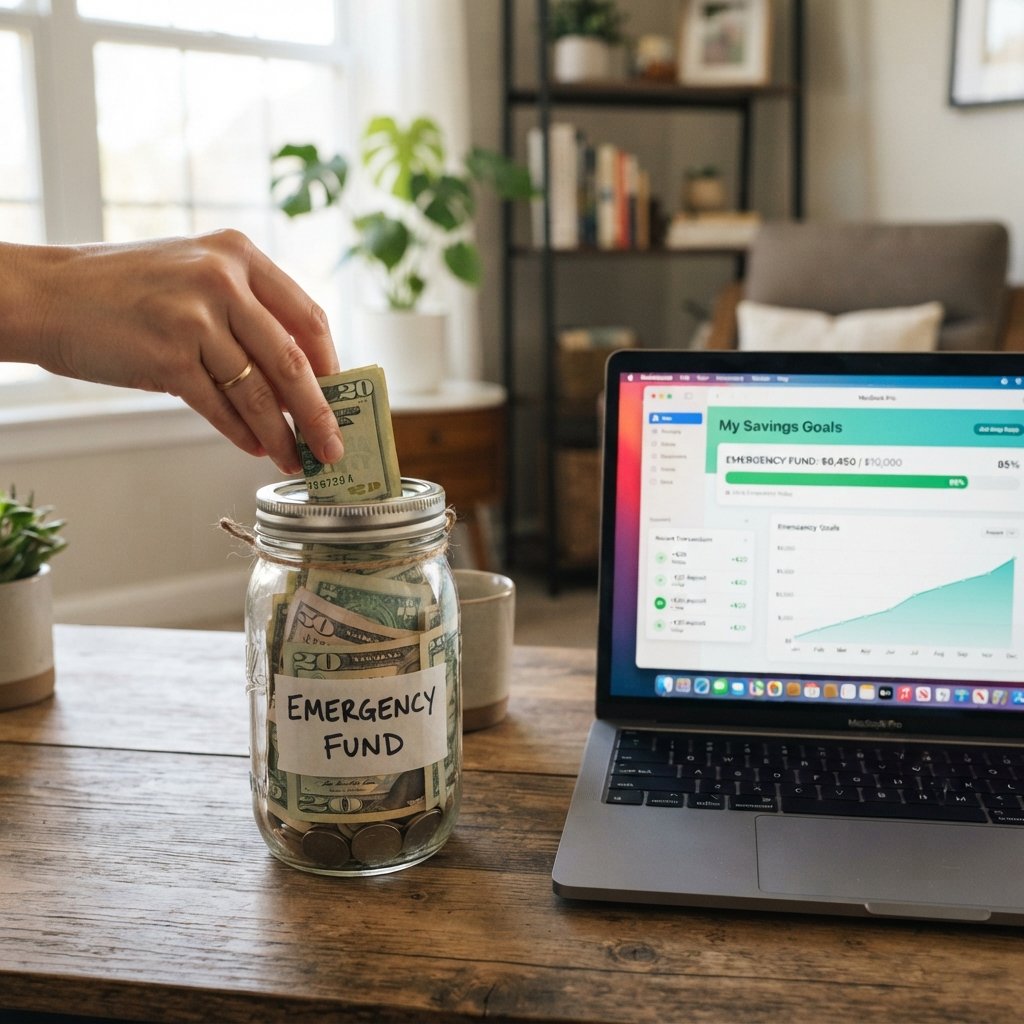
- Your Emergency Fund: Everyone needs 3 to 6 months of basic living expenses set aside for sudden job losses, medical issues, or major car repairs. An HYSA keeps this money completely safe and accessible while ensuring it grows.
- Short-Term Financial Goals: If you plan to buy a car next year, get married in 18 months, or save up a down payment for a house within the next few years, you cannot afford to risk that cash in the stock market. An HYSA protects the principal while earning steady interest.
- A Safe Haven for Vacation Funds: Setting aside a few hundred dollars a month for an upcoming trip keeps your travel cash separate from your daily checking account.
- Financial Beginners: If you are new to personal finance and feel intimidated by investing in stocks, an HYSA is the perfect low-stress entry point to watch your money multiply safely.
Not Ideal For:
- Long-Term Retirement Goals: If you are saving money that you do not plan to touch for 10, 20, or 30 years, an HYSA will cause you to miss out on much larger growth. For long-term horizons, investing your money into index funds within retirement accounts (like a 401k or an IRA) is a better path to building wealth.
- Daily Spending Cash: Savings accounts are meant for holding money, not running daily errands. You should keep your grocery, gas, and rent money inside a standard checking account so you can use debit cards and write checks easily.
- Aggressive Wealth-Building: If you are looking for high-risk, high-return investments, the steady and safe yields of an HYSA will feel too slow for your strategy.
Understanding Variable Rates and the Federal Reserve

One crucial concept to keep in mind is that high-yield savings account rates are variable. This means the interest rate you see when you open the account is not a fixed guarantee for life. The bank has the right to adjust its APY based on broader economic environments.
In the United States, these rate movements are driven primarily by the Federal Reserve (often called “the Fed”). The Federal Reserve sets a benchmark interest rate called the Federal Funds Rate. This is the interest rate banks use to lend money to one another overnight.
- When the Fed Raises Rates: When the economy experiences high inflation, the Federal Reserve usually raises its benchmark rate to cool things down. When this happens, online banks can earn more on their financial operations, so they pass those profits down by raising the APY on your high-yield savings account.
- When the Fed Cuts Rates: If the economy slows down or enters a recession, the Federal Reserve will often cut interest rates to encourage borrowing and spending. When the Fed drops its rates, online banks see their profit margins shrink, which causes them to lower the APY on your savings account.
What Variable Rates Mean for Your Savings Strategy
If you open an account today at a 4.60% APY, and the Federal Reserve cuts rates over the next two years, your bank might drop your account’s yield down to 3.80% or 3.50%.
This is a normal part of the economic cycle. Even if market rates fall across the entire banking industry, a high-yield savings account will always pay significantly more than a traditional bank account. If online banks drop to 3.50%, traditional banks will likely still sit near 0.01%. You will still win by making the switch.
The Fine Print: Important Pitfalls to Avoid

While high-yield savings accounts are highly secure, every bank has specific terms and conditions. Being aware of the following details will prevent surprises down the road.
1. Watch Out for Minimum Balance “Traps”
Some online banking institutions use clever marketing to attract accounts. They might advertise a massive 5.00% APY in bold letters on their homepage, but the fine print requires you to maintain a balance of at least $5,000 at all times to earn that rate. If your balance drops to $4,999, your interest rate might instantly drop to a miserable 0.25%.
Always choose banks that offer clear, straightforward terms with no minimum balances required to earn the highest advertised yield.
2. Balance Caps and Rate Limits
Other financial companies place strict upper limits on their high rates. For example, a bank might offer a top-tier 5.00% APY, but only on the first $5,000 you deposit into the account. Any money you save above that $5,000 threshold will drop to a standard 3.00% rate.
If you plan to hold a large sum of cash (like a $20,000 house down payment), make sure your chosen bank applies its high yield to your entire balance, not just the first few thousand dollars.
3. Direct Deposit Rules
Certain major fintech platforms and digital banks require you to set up a recurring monthly direct deposit from your job’s payroll provider to unlock their top-tier savings rate.
If you do not have a standard corporate paycheck—for instance, if you are a freelancer, an independent contractor, or run a side hustle like Uber or DoorDash—you may need to manually transfer a set amount of money (like $5,000) into the account every single month to keep the high rate active. If you miss a month, your rate drops. Make sure you select a bank whose lifestyle requirements match your personal income structure.
4. Daily Compounding vs. Monthly Payouts
It is important to understand the math behind how your money grows day by day. Most reputable high-yield accounts calculate your interest using a daily compounding method.
The bank looks at your exact account balance at the close of business every single day, figures out the fraction of interest you earned for that single day, and adds it to your invisible running total. At the end of the month, they add all those daily fractions together and pay you out in one big lump sum.
This means you only earn interest on the days your money is actually sitting in the account. For example, if you deposit $10,000 into an HYSA but pull it out after only 3 days to buy a used car, you will not receive a full month’s worth of interest ($38). Instead, you will only receive the interest earned for those specific 3 days (around $4). Your money must sit in the account over time to experience the full benefits of compounding.
How to Choose the Best HYSA For Your Goals

With dozens of online banks competing for your money, picking the perfect account can feel overwhelming. You can narrow down your options by focusing on a few distinct categories based on what matters most to your financial style.
Category 1: The Pure Rate Hunters
If you do not care about fancy app designs, unique tracking tools, or switching your primary banking relationship, your goal is simple: get the absolute highest interest rate possible.
Look for stable, dedicated online banking platforms that consistently stay at the top of national rate sheets without charging hidden fees. Even if their apps are basic, your money will sit safely and bring back maximum monthly returns.
Category 2: Legacy Brands with Modern Speeds
If you already use established financial institutions for credit cards or investment accounts (such as American Express, Capital One, or Discover), it is worth checking their high-yield savings options first.
While their rates might sit slightly below the absolute highest online option, they still offer exceptional yields that dwarf traditional banks. The massive benefit here is convenience: because you are already a customer, you can open the savings account instantly, manage all your funds inside one single app layout, and move money between accounts instantly.
Category 3: Feature-Rich Savings Systems
If you want your savings account to actively help you manage your financial life, look for modern online banks that offer advanced organizational tools.
A prime example is the popular “Vaults” or “Buckets” feature. This unique system allows you to take one single high-yield savings account and split the balance visually into separate digital categories without opening multiple accounts.
For example, within a single dashboard, you can label $1,000 for an upcoming fall vacation, $5,000 for your peace-of-mind emergency fund, and $3,000 for a future car down payment. Your money still earns the exact same high APY across the entire total balance, but you can track your progress toward multiple goals clearly.
Additionally, some modern platforms combine high-yield savings accounts directly with built-in stock market investing tools. This makes it incredibly simple to transition your extra funds from safe cash savings into long-term investments as your wealth grows over time.
Step-by-Step: How to Open a High-Yield Savings Account

Opening an HYSA is a straightforward, digital process. Because these banks do not have physical buildings, the entire onboarding system is optimized to be fast and user-friendly.
+--------------------------------------------------------------+
|               5-STEP HYSA SETUP PROCESS                      |
+--------------------------------------------------------------+
| Step 1: Gather info (SSN, ID, existing bank routing number)  |
| Step 2: Complete the online application (Takes 5-10 mins)    |
| Step 3: Link your old checking account securely via ACH      |
| Step 4: Choose your initial deposit amount and click send    |
| Step 5: Download the mobile app to monitor your daily growth |
+--------------------------------------------------------------+
Step 1: Gather Your Information
Before opening the bank’s website or app, gather your basic personal details. You will need:
- Your social security number (SSN) for tax and identity verification.
- A government-issued photo ID (like a U.S. driver’s license or passport).
- Your current traditional bank account’s routing number and account number to fund the new account.
Step 2: Complete the Secure Online Application
Navigate to the credible online bank of your choice and click “Open an Account.” You will fill out standard forms with your name, address, date of birth, and employment status. This information is legally required by federal banking laws to protect against financial fraud.
Step 3: Link Your Existing Bank Account
Once your identity is verified and your account is approved, the system will ask you to connect an external bank account. Most online platforms use secure, encrypted connection networks to link your traditional checking account in seconds.
Step 4: Make Your Initial Deposit
Choose the amount of money you want to transfer into your new high-yield account. You can start small with a few hundred dollars or move your entire emergency fund over at once. Click submit, and the money will move securely through the U.S. banking system, typically appearing in your new account within 1 to 3 business days.
Step 5: Download the App and Automate
Download the new bank’s mobile app onto your phone so you can easily track your money. To make saving completely effortless, set up an automatic monthly transfer. Arranging for $50 or $100 to move from your daily checking account into your high-yield savings account every single payday ensures your financial foundation grows consistently without you having to think about it.
Summary of Key Takeaways
- Massive Earning Power: High-yield savings accounts pay vastly more interest than standard traditional savings accounts, turning regular cash storage into an active income stream.
- Total Peace of Mind: Top HYSAs are fully insured by the US government through the FDIC or NCUA up to $250,000, making them completely safe from market crashes.
- Powered by Online Savings: These high rates exist because online-only banks operate without the massive real estate costs of traditional physical branches, giving those corporate savings back to you.
- Built for Short-Term Focus: An HYSA is the ultimate home for emergency funds and near-future purchase goals. It keeps your cash liquid and accessible while guarding it against inflation.
- Rates Change with the Economy: High-yield savings rates are variable. They will shift up or down based on the Federal Reserve’s national interest rate environment, but they will always remain superior to traditional alternatives.
Frequently Asked Questions (FAQ)
Are high-yield savings accounts actually safe?
Yes. As long as the financial institution you select is explicitly labeled as FDIC insured (for banks) or NCUA insured (for credit unions), your deposits are fully backed by the United States government up to $250,000 per person. Your money carries zero market risk.
Can I lose my money in a high-yield savings account?
No. Unlike investing in stocks, mutual funds, or crypto assets where value shifts based on market performance, your principal balance in an HYSA is locked in and secure. The only way you could lose money is if the bank completely collapses and your personal balance exceeds the $250,000 government insurance limit.
Do I have to pay taxes on the interest I earn?
Yes. The interest you earn in a high-yield savings account counts as taxable income in the eyes of the IRS. At the start of every year, your bank will send you a tax form called a 1099-INT if you earned more than $10 in interest. You must report this amount when you file your annual taxes.
How long does it take to get my money out of an HYSA?
Because online banks do not have local physical branches where you can walk in and withdraw cash on the spot, you must transfer your money online back to a traditional checking account. These electronic transfers are completely safe and typically take 1 to 3 business days to arrive.
Can an online bank change my interest rate without warning?
Yes. High-yield savings accounts use variable interest rates. The bank can adjust its APY up or down overnight to stay aligned with the Federal Reserve’s benchmark rate movements or to remain competitive in the banking industry.
Are there limits on how many times I can withdraw money each month?
Historically, federal banking laws (known as Regulation D) limited savings account withdrawals to six per month. While the government paused this strict rule, many banks still maintain a six-withdrawal-per-month limit to keep accounts operating smoothly. If you go over the limit, the bank may charge a small fee or transition the account into a checking account. HYSAs are built for cash accumulation, not daily transactional spending.

Conclusion
Switching from a traditional savings account to a high-yield savings account is one of the easiest, most impactful personal finance upgrades you can make. It requires no specialized investment knowledge, takes less than ten minutes of digital setup, and carries zero stock market risk.
By keeping your emergency fund or short-term savings inside an online HYSA, you stop letting massive legacy banks profit off your hard work while giving you nothing in return. Instead, you put your money in a secure position where it beats inflation, captures compound interest, and grows your net worth automatically every single month. It is the perfect financial launchpad to secure your peace of mind before you take your next steps into long-term investing.