
Budgeting is one of the most important financial skills you can learn. Yet, millions of people in the United States struggle to do it effectively every single month.
Many people believe that the root cause of their financial stress is simply not making enough money. However, a closer look at the data shows a different story. In reality, it is often small, hidden financial mistakes that quietly destroy a budget day after day.
If you constantly feel like your hard-earned money disappears too fast, or if you find it impossible to stick to a financial plan, you are not alone. There is a high probability that you are making one or more common budgeting errors without even realizing it.
The good news is that these mistakes are easy to fix once you know what they are. This comprehensive guide breaks down the most frequent budgeting errors people make. More importantly, it provides simple, actionable solutions based on real financial experience to help you fix them, break free from bad money habits, and take complete control of your financial future.
The Core Problem: Why Traditional Budgeting Fails
Before exploring the specific mistakes, it helps to understand why budgets fail on a structural level.
Most people view a budget as a mathematical tool—a strict set of numbers written on a piece of paper. But true money management is about human behavior, habits, and psychology. When a plan does not account for human nature, unexpected events, or daily habits, it fails.
By merging traditional budgeting rules with real-world wealth-building strategies, you can build a personal financial system that actually works for your life.

READ MORE
1. Not Having a Clear, Written Budget at All
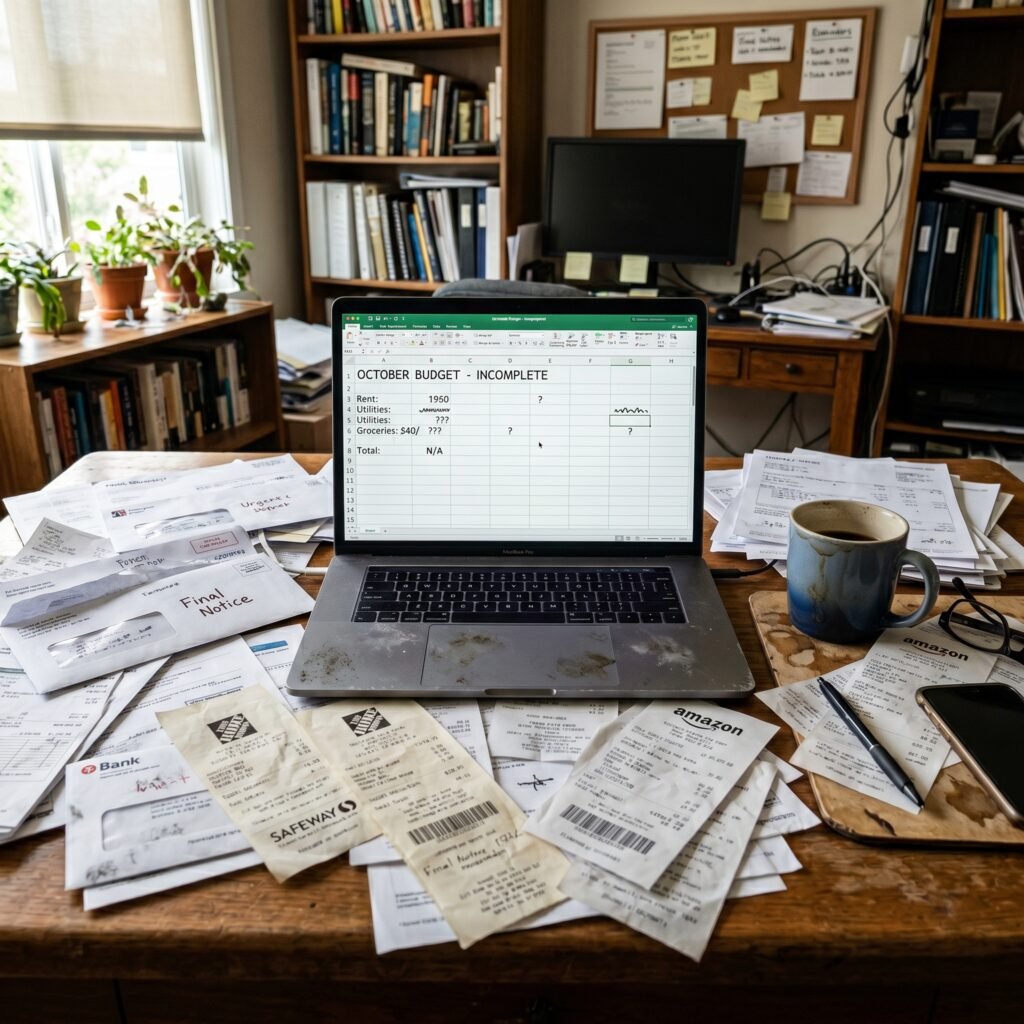
The single biggest budgeting mistake you can make is not having a physical or digital budget in place. A large number of Americans rely entirely on what they call a “mental budget.” They track their income and expenses in their head, believing they have a good grasp of where their money goes.
This approach rarely works. A mental budget is highly inaccurate because human brains are naturally wired to forget small expenses while remembering large chunks of income.
The Dangers of a Mental Budget
When you do not have a clear, written plan for your money, three major problems happen automatically:
- Unconscious Overspending: You spend money on random items throughout the week without realizing how quickly those small amounts add up.
- Lost Expense Tracking: You completely lose track of where your money went by the end of the month, leading to the classic question, “Where did my paycheck go?”
- Inconsistent Savings: Savings become an afterthought. You only save whatever happens to be left over at the end of the month, which is usually zero.
The Solution: Put Your Budget in Writing
To build a stable financial foundation, your budget must exist outside of your head. It needs to be a living document that you can see, analyze, and update.
You do not need a complicated system to start. You can use a simple paper notebook, a basic digital spreadsheet (like Google Sheets or Microsoft Excel), or a dedicated budgeting app. The tool you choose matters far less than the act of writing the numbers down in black and white. Seeing your financial reality on screen or paper triggers a psychological shift that forces you into positive financial action.
2. Underestimating Real Monthly Expenses
Another incredibly common mistake is creating a budget based on a best-case scenario rather than reality. People often list their major bills—like rent, mortgage, car payments, and utilities—but completely underestimate or omit everyday living costs.
When you undercount your true living costs, your budget looks great on paper but fails completely in the real world.
The Hidden Budget Killers
There are several categories of small but regular expenses that people consistently fail to budget for accurately:
- Digital Subscriptions: Netflix, Spotify, Disney+, gym memberships, cloud storage, and premium smartphone apps. While each one might only cost $10 to $15, a collection of five or six subscriptions quiet drains a massive amount of cash every month.
- Dining Out and Food Delivery: Grabbing a quick coffee in the morning, ordering takeout through delivery apps on a busy weeknight, or going out for drinks with coworkers. Food is the easiest category to underestimate.
- Fuel and Daily Transportation: Parking fees, highway tolls, public transit fares, and rideshare trips.
- Impulse Shopping: Small online purchases, target runs, or buying items simply because they are on sale.
+-------------------------------------------------------+
|             THE ACCUMULATION EFFECT                   |
|                                                       |
|  $7 Daily Specialty Coffee      =  $210 / Month       |
|  $15 Forgotten App Subscriptions =  $15 / Month       |
|  $45 Weekend Restaurant Delivery =  $180 / Month       |
|  $30 Weekly Impulse Online Shop  =  $120 / Month       |
|  ---------------------------------------------------  |
|  TOTAL UNTRACKED EXPENSES        =  $525 / Month       |
+-------------------------------------------------------+
The Solution: Conduct a Financial Audit
To fix this mistake, you must stop guessing your expenses. Open your online bank statements and credit card portals for the last 60 to 90 days. Look at every single transaction and categorize them.
Calculate the exact average of what you actually spend on food, fun, gas, and shopping. Use these real-world numbers as the baseline for your new budget, rather than a guessed number that makes you feel good but is impossible to maintain.
3. Not Tracking Your Spending Every Single Day
Creating a budget at the start of the month is only half the battle. The area where the vast majority of people fail is follow-through. If you only look at your budget once a month, it becomes a historical document of your failures rather than a guide for your daily choices.
Why Weekly or Monthly Checks Don’t Work
Many people fail to build a lasting budget because they rely on the “Bank Balance Method.” They log into their mobile banking app, see a positive balance in their checking account, and assume they have plenty of money to spend.
This is incredibly dangerous. Your bank balance does not know that your auto-renewing car insurance payment is due tomorrow, or that you still need to buy groceries for the next two weeks. Relying purely on a live bank balance leads to an endless cycle of stress when major bills hit later in the month.
The Solution: The 5-Minute Daily Check-In
Make spending tracking a daily ritual. Every evening, spend exactly five minutes opening your tracking tool and inputting any purchases you made that day.
This daily habit keeps your financial goals fresh in your mind. It creates an immediate feedback loop: if you see that you spent your entire weekly dining-out budget by Wednesday, you know with absolute certainty that you need to cook at home for the rest of the week. This level of regular awareness prevents small leaks from turning into massive financial floods.
4. Setting Unrealistic Savings and Lifestyle Goals
When people decide to fix their finances, they often get a sudden burst of motivation. In an effort to change their life overnight, they set extreme, aggressive financial goals that are impossible to maintain over the long haul.
For example, a person who has never saved money might suddenly decide they are going to save 50% of their income, cut out all restaurant meals, and never buy a cup of coffee again.
The Burnout Cycle
While this level of intensity can work for a week or two, it quickly leads to severe negative outcomes:
- Deep Financial Frustration: Living a life of complete restriction makes you feel miserable and deprived.
- Quitting the Budget Entirely: Because the strict rules are impossible to maintain, you inevitably break your budget. This causes a feeling of personal failure, causing you to give up on budgeting completely.
- The “Rebound” Overspending Splurge: Much like an extreme crash diet, extreme financial restriction usually ends in a massive emotional spending spree that leaves you in a worse position than when you started.
The Solution: Incremental Adjustments
Budgeting is a marathon, not a sprint. Instead of completely transforming your entire lifestyle overnight, focus on making small, permanent adjustments.
If you currently save 0% of your paycheck, set a goal to save just 5% or 10% next month. Adjust your lifestyle slightly to accommodate that small change. Once that new level of saving feels normal and comfortable, raise it by another 2% or 3%. Slow, steady progress builds lifelong habits that stick.

5. Ignoring Your Emergency Fund
What happens when your car breaks down, your HVAC system stops working, or you face an unexpected medical bill? If you do not have a dedicated emergency fund, even the most perfect budget in the world will shatter instantly.
A shocking number of people budget down to the last penny for their regular expenses but completely forget to build a safety net for life’s unexpected moments.
The High Cost of No Safety Net
When an unexpected bill arrives and you do not have cash savings set aside:
- Your Budget is Instantly Destroyed: You have to pull money away from necessary categories like food, rent, or utilities to cover the emergency.
- Forced Reliance on High-Interest Debt: You are forced to put the emergency expense onto a high-interest credit card, personal loan, or payday loan.
- The Debt Trap Triples: Once you fall into high-interest debt, your monthly financial obligations increase due to interest payments, leaving you with even less money to budget in the following months.
The Solution: Build a Cash Buffer Instantly
Your very first financial priority—before aggressively paying down low-interest debt or investing in the stock market—must be building a basic emergency fund.
A standard, secure goal is to save three to six months’ worth of basic living expenses. However, if that big number feels overwhelming right now, start by aiming for a starter goal of $1,000.
Keep this cash in a separate High-Yield Savings Account (HYSA) at a completely different bank than your everyday checking account. This keeps the money safe from daily impulse spending, while ensuring it is ready to protect you when a real emergency happens.
6. Not Adjusting Your Budget to Match Real Life Each Month
A budget is not a static blueprint that you set once and leave alone for the rest of the year. Life is dynamic, unpredictable, and constantly shifting. One of the quickest ways to make a budget useless is trying to force every single month into the exact same mold.
Every Month Has a Unique Financial Shape
No two months in the American calendar look exactly the same.
- January might involve catching up on holiday credit card bills.
- May might bring a wave of school graduation gifts and travel costs.
- July usually involves higher utility bills due to air conditioning and summer vacations.
- November and December feature major holiday shopping, travel, and hosting dinners.
If you try to use a rigid, unchangeable budget for all twelve months, you will consistently fail during months that carry unique annual events.
The Solution: The Monthly Budget Reset
On the last weekend of every single month, sit down and map out a custom budget for the upcoming month. Look ahead at your calendar.
Are there any birthdays coming up? Do you need an oil change for your vehicle? Is a seasonal subscription renewing?
Adjust your spending categories to reflect these real-life events before the month begins. This proactive adjustments means your budget always aligns with reality, rather than a perfect world that doesn’t exist.

7. Over-relying on Credit Cards and Normalizing Debt
Credit cards are highly popular financial tools in the United States, offering cash-back rewards, airline miles, and consumer purchase protections. However, when credit cards become a regular crutch to bridge the gap between your income and your lifestyle, they become a major roadblock to building wealth.
The Credit Card Illusion
The psychological problem with credit cards is that they decouple the joy of buying something from the pain of paying for it. Swiping a piece of plastic or using digital smartphone wallets doesn’t feel like real money leaving your hands. This lack of friction causes people to spend significantly more than they would if they used cash or a debit card.
Furthermore, consumer debt has become normalized in modern culture. People use financing options like “Buy Now, Pay Later” (BNPL) apps for small, everyday items like clothing or household gifts.
+-------------------------------------------------------------+
|               THE REAL COST OF CREDIT CARD DEBT              |
|                                                             |
|  Current Balance:      $5,000                               |
|  Interest Rate (APR):  22% (Average US Card)                |
|  Minimum Payment:      $150 / Month                         |
|  ---------------------------------------------------------  |
|  Total Time to Pay Off: 48 Months (4 Years)                 |
|  Total Interest Paid:   $2,580                              |
|  Actual Cost of Items:  $7,580                              |
+-------------------------------------------------------------+
As long as you carry a revolving credit card balance, the high interest rates cancel out any rewards, cash back, or miles the credit card company provides. Credit card companies intentionally design their systems to encourage carryover balances because interest fees are how they make their largest profits.
The Solution: The Cash Outright Rule
If you struggle with overspending, implement a simple rule: If you cannot afford to pay for an item outright with cash or your checking account today, you cannot afford to buy it with a credit card.
If you currently carry credit card debt, freeze your card usage immediately. Switch entirely to a debit card or physical cash while you use a structured repayment plan to wipe out your existing balances. Use credit cards only when you have the cash ready in your bank account to pay the statement balance in full every single month.
8. Forgetting to Plan for “Fun Money”
When people design a new budget, they often let guilt drive their decisions. They cut out every single category related to entertainment, hobbies, social gatherings, and fun, allocating every available dollar to bills, debt payoff, or savings.
While this looks incredibly disciplined on a spreadsheet, it is a recipe for behavioral failure.
The Danger of Financial Starvation
A budget that allows zero room for personal enjoyment is unsustainable. Human beings cannot live in a state of total restriction indefinitely. Eventually, you will experience financial exhaustion.
You will miss a friend’s dinner, skip a movie night, or pass up a hobby you love until you snap. When that emotional breaking point arrives, you are highly likely to abandon the budget completely, viewing it as a prison sentence rather than a tool for liberation.
The Solution: Create a Controlled Fun Category
A healthy budget does not stop you from spending money; it gives you permission to spend money intentionally, without guilt.
Always include a dedicated line item in your monthly budget for “Fun Money” or “Guilt-Free Spending.” This is cash set aside specifically for things that bring you joy—whether that is dining out, going to concerts, buying video games, or enjoying a hobby.
+-------------------------------------------------------+
|          THE BALANCED 50/30/20 BUDGET METHOD          |
|                                                       |
|   [ 50% NEEDS ]   -> Rent, Groceries, Insurance, Bills  |
|   [ 30% WANTS ]   -> Dining Out, Hobbies, Fun Money     |
|   [ 20% SAVINGS ] -> Emergency Fund, Investments, Debt  |
+-------------------------------------------------------+
Knowing that you have a set amount of guilt-free money to spend allows you to enjoy your social life and personal interests without feeling like you are ruining your long-term financial future.

9. Budgeting Without Clear, Motivating Financial Goals
Why are you budgeting in the first place? If you do not have a deep, meaningful answer to this question, your budget will feel like a boring chore that you will eventually stop doing.
Budgeting simply for the sake of budgeting offers very little emotional reward. When you face the choice between buying a flashy item today or saving money for an abstract concept, instant gratification will win almost every time if you lack a clear goal.
The Power of Clear Financial Targets
Wealthy individuals do not just track numbers; they manage their money to achieve specific, tangible goals. They know their exact assets, their liabilities, and their future targets. This clarity transforms budgeting from a restrictive chore into an exciting roadmap for personal progress.
The Solution: Define Your “Why”
Give your numbers real meaning by attaching them to concrete financial goals. Write these goals at the very top of your budget sheet where you can see them every single day.
- Short-Term Goal: Accumulating a $2,000 starter emergency fund in the next 4 months.
- Medium-Term Goal: Eradicating $12,000 of high-interest credit card debt over the next 18 months.
- Long-Term Goal: Saving a $40,000 down payment for a first home or building a long-term retirement investment portfolio.
When you have a vivid, exciting goal in place, your daily choices change naturally. You no longer view skipping an impulse purchase as a form of painful deprivation. Instead, you see it as a conscious, empowering step toward buying your dream home or achieving true financial freedom.
Advanced Wealth Habits: The Secret Shifts

To move beyond basic budgeting and start building true, long-term wealth, you must implement two critical financial shifts that separate everyday savers from wealthy individuals.
Shift 1: The Core Rule of Wealth — Pay Yourself First
Most people handle their monthly paychecks using the traditional “Pay Everyone Else First” method. When their direct deposit hits their account, they immediately pay their landlord, their utility companies, their phone provider, and their streaming subscriptions. Then, they spend money on social plans, dining out, and clothing. Finally, they promise to save whatever happens to be left over at the end of the month.
This is a fundamentally flawed financial habit. Usually, there is absolutely nothing left to save.
OLD METHOD (The Cycle of No Savings):
Paycheck -> Pay Bills -> Spend on Fun -> Save What's Left (Usually $0)

WEALTH METHOD (Paying Yourself First):
Paycheck -> Save/Invest First (Min. 10%) -> Pay Bills -> Spend on Fun
Wealthy individuals do the exact opposite: They pay themselves first. The very minute their paycheck arrives, they automatically route a minimum of 10% (ideally 15% to 20%) directly into their savings or investment accounts. Treat this savings contribution exactly like an unalterable, non-negotiable utility bill.
By automating this step, you guarantee that you are building assets and security before giving your money to anyone else. You learn to live comfortably on the remaining balance, eliminating the temptation to skip saving.
Shift 2: Maximize Both Sides of the Financial Equation
When people want to improve their financial situation, they focus almost entirely on the saving side of the ledger. They clip coupons, cut out minor daily purchases, and search for discount codes.
While managing your spending is an excellent and necessary step, focusing exclusively on saving limits your true wealth potential.
The reality is simple: Your saving potential has a hard floor, but your earning potential is completely infinite.
+---------------------------------------------------------------+
|                THE TWO SIDES OF WEALTH BUILDING               |
|                                                               |
|  THE SAVING SIDE (Finite)   |  THE EARNING SIDE (Infinite)    |
|  -------------------------  |  ----------------------------   |
|  * Maximum cap to cut       |  * No ceiling on income growth  |
|  * Hard floor at $0 expenses|  * Driven by career & business  |
|  * Provides basic safety    |  * Scaled by investing assets   |
+---------------------------------------------------------------+
You can only cut your lifestyle expenses down to a certain point before you reach a baseline needed for survival (housing, basic food, healthcare). You cannot cut your expenses past zero. However, there is absolutely no ceiling on how much money you can earn.
To build true wealth, balance your focus between both strategies:
- Maintain an efficient, waste-free budget to keep your existing money safe.
- Channel your creative energy into growing your total income.
Look for ways to expand your income streams. Negotiate a higher salary at your primary job, pick up a profitable side hustle, develop high-value freelance skills, or start a small business. Then, take that fresh, additional income and channel it directly into productive, long-term investments rather than lifestyle inflation.
Avoid Financial Pitfalls: Taxes and Inflation
As your budgeting skills improve and your savings grow, you must protect your money from two invisible wealth destroyers: taxes and inflation.
1. Optimize Your Tax Position Legally
Taxes will easily be the single largest ongoing expense of your adult life. While everyone has a legal duty to pay their required taxes, failing to understand simple tax rules causes millions of people to overpay completely by default.
Wealthy individuals use legal financial accounts to reduce their tax liabilities, allowing them to keep a far larger percentage of their hard-earned income. In the United States, you can use specialized accounts to shield your money from heavy taxes:
- Roth IRA / Traditional IRA: Individual retirement accounts that provide massive tax advantages for long-term savings.
- 401(k) / 403(b): Employer-sponsored retirement plans that lower your taxable income today while helping you build a retirement fund.
- Health Savings Account (HSA): A triple-tax-advantaged account designed for medical costs that can also serve as an investment tool.
By utilizing these accounts, you legally lower your tax burden, leaving you with more liquid cash to build your personal wealth portfolio.
2. Don’t Wait Too Long to Invest Your Savings
Once you build your core emergency cash buffer (the 3 to 6 months of living expenses), you must avoid the mistake of letting all your additional cash sit idly in a traditional bank checking or savings account.
Traditional big banks offer interest rates close to 0.01%. When inflation runs at a normal 2% to 3% annually, keeping large amounts of long-term cash in a standard bank account means your money is actively losing purchasing power every single year.
+---------------------------------------------------------------+
|              THE COST OF WAITING TO INVEST YOUR CASH          |
|                                                               |
|  $10,000 left in a traditional bank account for 30 years:     |
|  At 0.01% interest -> Worth roughly $10,030                   |
|  (In reality, inflation cuts its buying power in half)        |
|                                                               |
|  $10,000 placed in a diversified index fund for 30 years:    |
|  At 7% average historical return -> Worth roughly $76,123    |
+---------------------------------------------------------------+
Once your emergency buffer is fully funded, you must put your extra wealth to work. Diversify your money across productive assets that historically outpace inflation over time:
- Low-Cost Broad Market Index Funds: Simple investments that track the entire U.S. stock market (like funds tracking the S&P 500).
- Real Estate: Property investments that generate rental income and grow in value over time.
- High-Yield Savings Accounts (HYSA): A safe home specifically for short-term savings that earns significantly more interest than traditional bank accounts.
The longer you wait to start investing your surplus cash, the harder your physical labor will have to work to secure your ultimate financial freedom. Let your accumulated money do the heavy lifting for you.

Key Takeaways for Quick Action
To fix your budget and build wealth, follow these core rules:
- Make it visual: Always use a written or digital budget tracking tool; never trust a mental budget.
- Track daily: Spend five minutes every night logging your actual purchases to maintain true awareness.
- Be realistic: Set realistic, gradual goals to avoid emotional burnout and quitting.
- Prioritize safety: Fund a basic cash emergency fund before pursuing aggressive financial goals.
- Stay flexible: Review and update your budget categories at the end of every month to match real life.
- Pay yourself first: Route a minimum of 10% of your income into savings the absolute moment you get paid.
- Grow your earnings: Focus on expanding your total income streams rather than just cutting small expenses.
- Invest your excess: Put your surplus cash into tax-advantaged investment accounts to beat inflation.
Frequently Asked Questions (FAQ)
Why do most personal budgets fail within the first two months?
Most beginner budgets fail because they are built on unrealistic expectations and complete restriction. People often guess their spending numbers instead of tracking real expenses, or they create a plan that allows zero money for fun, hobbies, or social events. This financial starvation quickly leads to frustration, causing people to break the rules and abandon the system entirely.
What is the most effective budgeting method for a beginner?
The 50/30/20 rule is widely considered the best framework for beginners. It splits your after-tax income into three simple categories: 50% for your absolute Needs (housing, bills, groceries), 30% for your Wants (dining out, entertainment, fun money), and 20% for your Financial Goals (savings, emergency fund, debt payoff). This provides a clean structure while guaranteeing room for personal enjoyment.
How often should I review and update my budget numbers?
You should track your individual transactions daily to maintain high awareness of your spending habits. Then, you should conduct a comprehensive budget review and adjustment once a month. This monthly check-in allows you to look ahead at the calendar and adjust your spending categories for any unique upcoming events, holidays, or changes in income.
Is it better to focus entirely on paying off debt or saving cash first?
You should always focus on building a basic emergency fund first. Aim for a starter buffer of $1,000 to $2,000 before aggressively tackling debt. Without this cash safety net, any unexpected life event will force you to swipe a credit card, trapping you in a cycle of high-interest debt. Once your starter emergency buffer is safe, focus your financial energy on paying off high-interest consumer debts.
Can I use credit cards while trying to stick to a strict budget?
Yes, but only if you possess high financial discipline. If you treat a credit card exactly like a debit card—meaning you only buy items you can afford to pay for with cash today—you can safely benefit from consumer rewards and fraud protection. However, if you use credit cards to buy things you cannot afford outright, you should stop using them immediately and switch to a debit card or cash envelope system.
Conclusion
Budgeting is often misunderstood. It is not an instrument of punishment, nor is it designed to strip the joy out of your daily life.
True budgeting is simply an act of intentional organization. It is a powerful system that takes control away from random impulses and hands it directly to your conscious mind. It ensures your money flows toward the things that truly matter to you, rather than disappearing into mindless habits.
By identifying and avoiding these common budgeting mistakes, you can remove the constant stress of living paycheck to paycheck. Combined with healthy habits like paying yourself first, managing debt wisely, and investing your extra income, anyone can build a stable, prosperous, and secure financial future in the United States. Take the first step tonight: open a fresh document, review your real numbers, and put your new financial plan in writing.