





The Beginning: A Dream Built on Glass
The sunlight hit the quartz countertops at exactly the right angle, turning my kitchen into a cathedral of white stone and gold accents. I had spent three years saving for this. Three years of skipping vacations, packing soggy lunches, and working overtime shifts until my eyes burned. This kitchen wasn’t just a room; it was the physical proof that I had made it.
I remember my mother’s hands—cracked, dry, and smelling of cheap dish soap. She never had a “dream kitchen.” She had a cramped corner in a rental apartment with a stove that shocked her if she touched the burner and the fridge at the same time.
“One day, Claire,” she’d whisper while scrubbing a linoleum floor that would never truly be clean. “One day, you’ll have a place where the light stays even when the sun goes down.”
I thought I had found that light with Ethan. But as I stood in the doorway, the light felt cold.
Marjorie, my mother-in-law, was standing at my stove. She wasn’t just cooking; she was colonizing. She was wearing my favorite oversized cashmere cardigan—the charcoal one Ethan gave me for our first anniversary. She had pushed the sleeves up to her elbows, and they were already stained with tomato sauce.
“The layout is all wrong, dear,” Marjorie said, not looking up. She scraped a metal spoon against my brand-new Le Creuset pot. The sound set my teeth on edge. “I moved your spice rack to the pantry. It’s much more intuitive. And those little labels you made? A bit obsessive, don’t you think?”
I looked at the island. Ethan was there, his head buried in his phone. The silence coming from him was louder than the scraping of the spoon.
“Ethan?” I whispered. My voice felt small, like a child’s.
He didn’t look up. “Mom’s just trying to help, Claire. Don’t make it a thing.”
“She’s wearing my clothes, Ethan. She’s throwing away my things.”
Marjorie turned then, leaning against the counter I had polished only hours before. She offered a smile that didn’t reach her eyes—a victor’s smile.
“We’ve decided to stay indefinitely,” she declared. “Harold’s knees can’t take the stairs at the old house, and this guest suite is wasted on ‘potential’ visitors. We’re family. It only makes sense.”
She said it like she was doing me a favor. Like she was the queen and I was the tenant she was graciously allowing to stay in the servant’s quarters.
“Indefinitely?” I repeated. The word felt like a stone in my mouth.
“It’s for the best, Claire,” Ethan finally said, his gaze remaining fixed on his screen. “We need to look out for family.”
In that moment, I realized I wasn’t the “family” he was talking about. I was the landlord he was trying to evict from her own heart.
The Conflict: Five Days of Erasure
The first day was the spices. The second day was the closet.
I came home from work to find Marjorie folding my intimate apparel. She held up a lace slip I’d bought for a weekend getaway that Ethan had ultimately cancelled.
“A bit provocative for a married woman, isn’t it?” she asked, her voice dripping with artificial concern. “I put your sensible things in the top drawer. I moved the rest to a box in the garage. You need the space for my sweaters anyway.”
I looked at Ethan, who was standing in the doorway. He looked at the box of my clothes, then at his mother, then at the floor. He said nothing. He walked away to watch the news.
By the third day, the smell of the house had changed. It no longer smelled of my lavender candles or the expensive espresso beans I loved. It smelled of Marjorie’s heavy floral perfume and the bland, boiled cabbage she insisted Harold needed for his digestion.
I felt like a ghost in my own hallways. I would walk into a room, and they wouldn’t even acknowledge me. They would talk over me, discussing where they were going to hang their old, dusty oil paintings and which of my furniture pieces were “too modern” and needed to be sold.
“You’re being dramatic,” Ethan told me that night when I finally broke down in the bathroom. “She’s my mother. She’s elderly. Why can’t you just be grateful for the help?”
“Help?” I choked out. “She’s erasing me, Ethan! She’s wearing my clothes! She’s taking over my kitchen! Do you even see me anymore?”
He sighed, a long, weary sound of someone burdened by a nagging child. “I see a woman who doesn’t know how to share. Goodnight, Claire.”
He turned his back to me. That was the moment the marriage died. It didn’t die with a bang; it died with the soft click of a bedside lamp being turned off.
The fourth day was the breaking point. I found my mother’s wedding photo—the only thing I had left of her—tucked away in a junk drawer. Marjorie had replaced the frame on the mantel with a picture of herself and Ethan at his graduation.
“It just flowed better with the room,” Marjorie said when I confronted her, my voice shaking with a fury I had never felt before.
I didn’t scream. I didn’t cry. I simply took the photo of my mother, walked to my bedroom, and locked the door. I listened to them laughing in the living room, the sound of my mother-in-law reclaiming a life she hadn’t earned.
The Discovery: The Shadow in the Attic
On the fifth morning, while Marjorie and Harold were out for one of their “senior strolls” and Ethan was at the office, I went into the attic. I wasn’t looking for anything specific; I just needed to be somewhere they hadn’t touched yet.
In the far corner, tucked behind a stack of Ethan’s old college books, I found a small, locked metal box. It belonged to Harold.
I shouldn’t have opened it. But the “Claire” who followed the rules had been buried under piles of Marjorie’s sweaters and boiled cabbage. I used a screwdriver to pop the flimsy lock.
Inside were letters. Dozens of them. They weren’t from Marjorie.
They were addressed to Harold, spanning thirty years. They were from a woman named Elena. As I read, the world began to tilt. These weren’t just friendly notes; they were the chronicle of a second life. A second family.
Harold hadn’t been a devoted husband. He had been a ghost, much like I was now. He had another daughter. Another home. And Marjorie knew.
One letter, dated only two years ago, was from Marjorie herself to Elena.
“I know about the girl. I know about the money Harold sends. If you ever contact him again, I will make sure he loses his pension, and I will take everything. He stays with me because I own him. Don’t test me.”
The realization hit me like a physical blow. Marjorie wasn’t moving in because Harold had bad knees. They were moving in because they were broke. Harold had spent their savings supporting a secret life, and Marjorie had spent her life buying his silence with money they no longer had.
They weren’t “family looking out for family.” They were parasites looking for a new host. And Ethan—my sweet, silent Ethan—knew. I found a bank statement at the bottom of the box. Ethan had been funneling money to his parents for months. Money from our joint savings account. Money meant for our future children.
The betrayal was a cold, sharp blade. I sat in the dust of the attic and realized that my entire marriage was a curated lie, managed by a woman who wore my clothes to hide her own rags.
The Revelation: The Letter and the Ghost
I didn’t pack a suitcase. Packing a suitcase means you intend to take your old life with you. I only took my mother’s photo, my passport, and the metal box.
I drove to a hotel two towns over. For the first time in five days, I breathed air that didn’t smell like Marjorie’s perfume.
I spent the night writing. I wrote to Ethan, but more importantly, I wrote to the woman I used to be. I wrote a letter that would serve as a death certificate for the woman who stayed quiet.
The next morning, I made three phone calls. One to a locksmith. One to a high-end moving company. One to a local sheriff I had gone to high school with.
I didn’t return to the house. I watched from a parked car across the street as the “revenge” I had meticulously planned began to unfold.
At 10:00 AM, the moving truck arrived. At 10:15 AM, the sheriff’s cruiser pulled up.
I saw Marjorie come to the door, still wearing my gray cardigan. Her face went from confused to pale as the sheriff handed her the papers.
See, the house wasn’t “ours.” The down payment had come from an inheritance from my grandmother, and because of a prenuptial agreement my father had insisted on, the deed was in my name alone. Ethan had no legal claim to the property.
I had filed for an emergency restraining order based on the financial abuse I discovered in the attic and the unauthorized entry into my personal property. But that was just the legal side.
The emotional side was in the letter I left pinned to the front door.
The Letter
Ethan,
You told me I didn’t know how to share. You were right. I don’t know how to share my life with a man who is already a shadow of his mother. I don’t know how to share my home with people who treat my kindness like a weakness to be exploited.
I found the box, Ethan. I know about Elena. I know about the money you stole from our “future” to pay for your father’s double life and your mother’s pride. Did you think I would never find out? Or did you think I was so broken by your mother’s bullying that I wouldn’t care?
Marjorie, you can keep the cardigan. It’s stained with the lies of thirty years, so it suits you perfectly. You wanted my life? You can have the version of it that exists in a dumpster. Because by the time you read this, the locks have been changed, your “indefinite” stay has ended, and the moving crew is instructed to take every single item that doesn’t belong to me and drop it on the sidewalk.
You wanted to be the woman of the house. Now you can be the woman of the street.
Don’t look for me. I’m finally in a place where the light stays.
— Claire
The Ending: Life Reclaimed
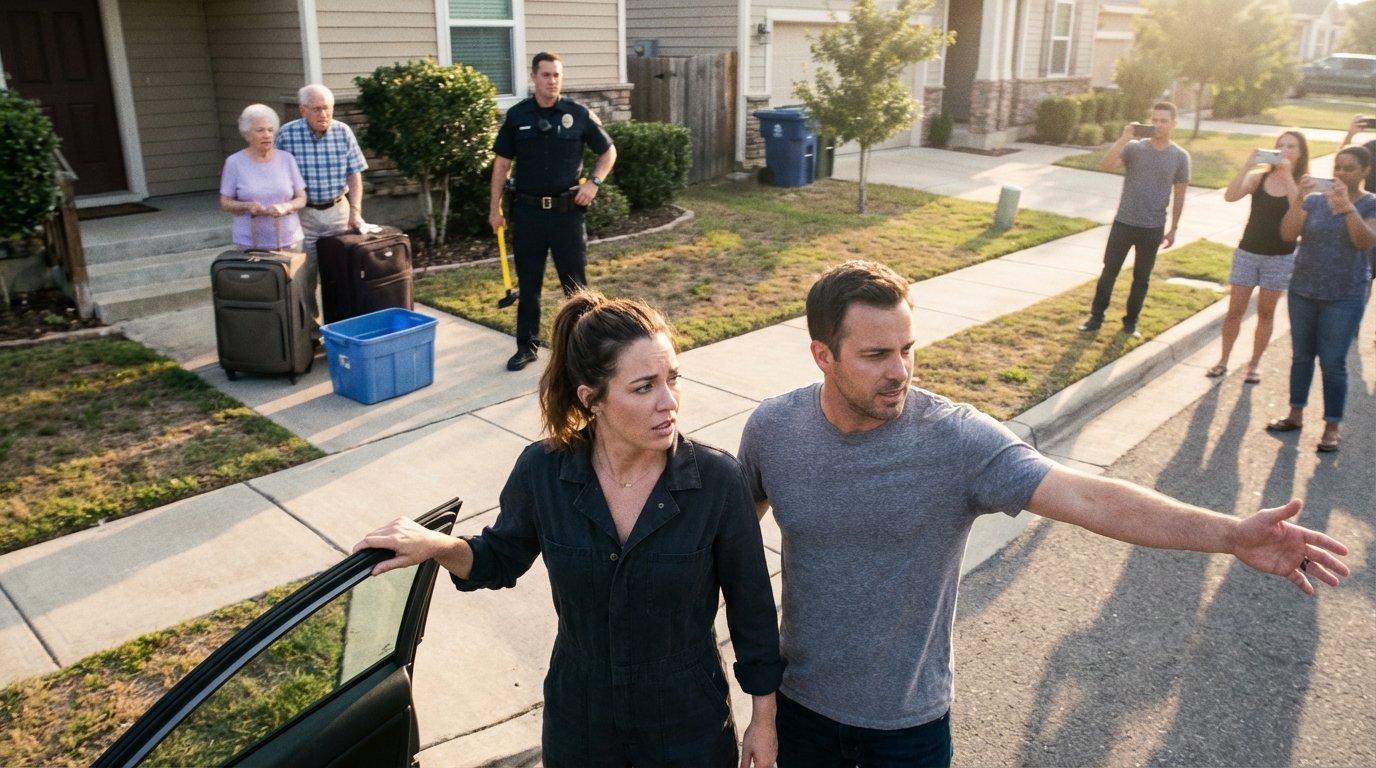
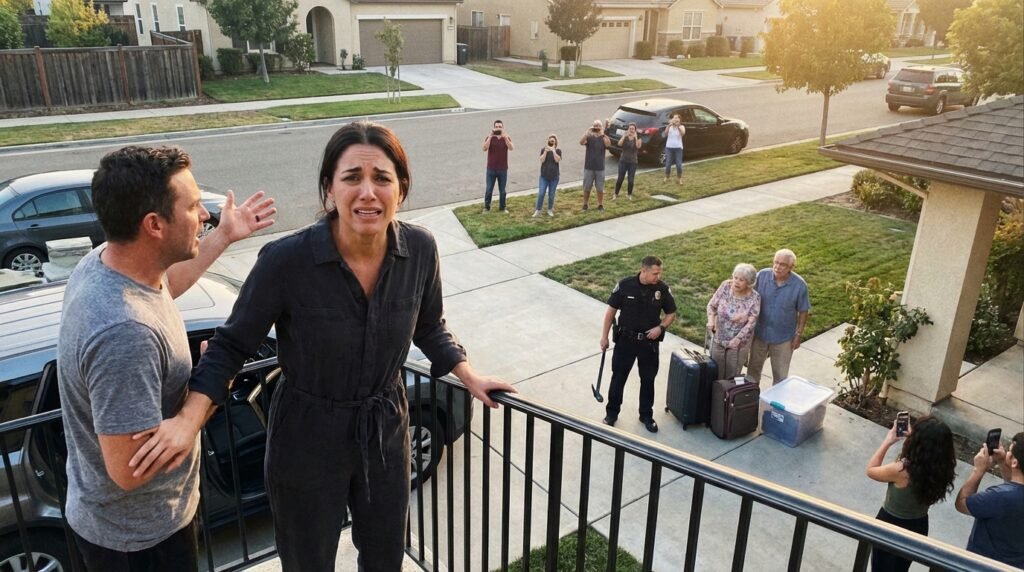
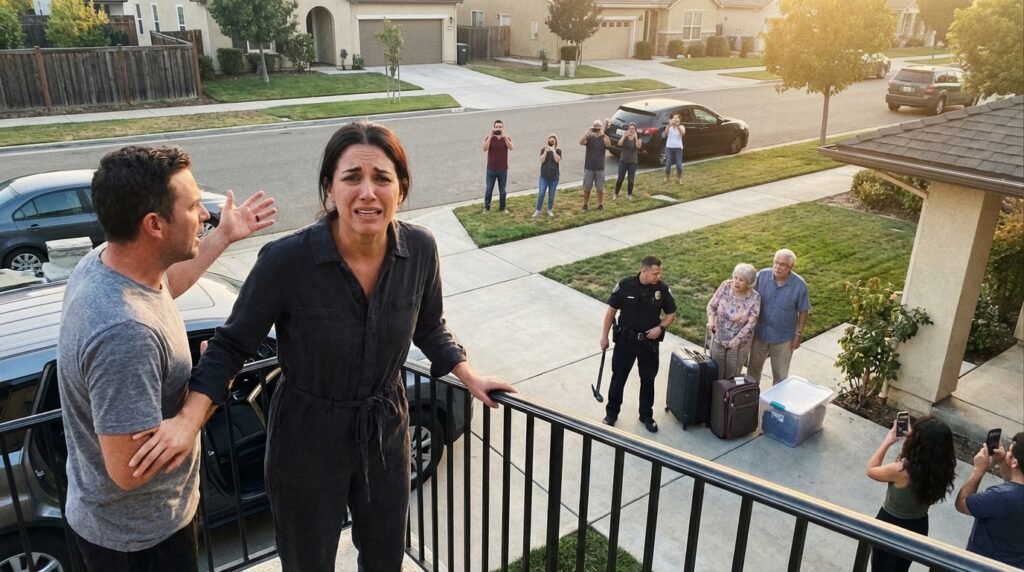
The scene on the lawn was a local legend within an hour.
Neighbors watched as Marjorie’s floral sofas and Harold’s dusty boxes were piled onto the curb. I watched through the rearview mirror as Ethan pulled into the driveway, jumping out of his car to find his mother screaming at a sheriff and his father sitting on a pile of suitcases, looking like the broken old man he actually was.
Ethan looked at the house—my house—and then at the pile of his belongings. He looked lost. For the first time, his silence wasn’t a weapon; it was a cage.
I drove away.
I spent the next six months in a small cottage by the coast. I didn’t have a dream kitchen. I had a two-burner stove and a fridge that hummed too loudly. But the spices were mine. The clothes in the closet were mine. And the silence? The silence was finally peaceful.
I eventually sold the big house. I didn’t want the memories of the boiled cabbage or the “indefinite” threats. I used the money to start a foundation for women dealing with financial abuse.
Sometimes, I still think about Marjorie. I wonder if she’s still wearing that gray cardigan, or if she finally realized that you can’t occupy a person’s soul just because you’ve managed to sit in their chair.
The neighbors still whisper about the day the “perfect” family was dumped on the sidewalk. They call it a scandal. I call it an eviction of the spirit.
I am no longer the girl who hides her mother’s photo in a drawer. I am the woman who builds her own walls, and this time, the locks are much, much stronger.