

The Weight of Invisible Things
The rain didn’t fall; it mourned. It streaked against the tinted windows of the limousine like tears on a cold cheek. Inside, the air smelled of expensive lilies and the suffocating scent of my mother’s Chanel No. 5.
I sat across from her, my fingers tracing the sharp edges of a small, navy-blue box. It was light, almost weightless. To the world, it looked like a “cheap” gift, the kind of thing you buy at a stationer’s when you’ve forgotten a birthday.
“You’re still holding that?” my mother, Caroline, asked. Her voice was a polished blade. “Tessa, darling, we are going to a gala. Hide that tacky thing in your purse.”
I didn’t hide it. I gripped it tighter. My childhood was a collection of moments where I was told to be smaller, quieter, and less “difficult.”
I remembered being six years old, bringing her a dandelion from the garden. She had looked at it with genuine disgust before dropping it into the trash. “We only keep roses in this house, Tessa,” she had said.
Now, twenty years later, I was still the weed in her garden of porcelain dolls. Beside her sat Richard Hart, the man who had replaced my father in her bed and her heart within a year of the funeral.
Richard didn’t look at me. He never did. To him, I was a line item in a budget he wanted to cut. His son, Dylan, sat next to him, smirking at his phone, probably texting his friends about the “charity case” joining them for dinner.
“It’s a gift for the host,” I said softly.
“The host is Richard’s biggest investor,” Caroline hissed. “He doesn’t want a trinket from a girl who works in a ’boutique’ agency. He wants prestige.”
I looked out the window. They had no idea that the “boutique” agency was mine. They had no idea that the “cheap” gift in my hand was the detonator for the life they had built on my father’s grave.
The Conflict: A Table Set for Betrayal
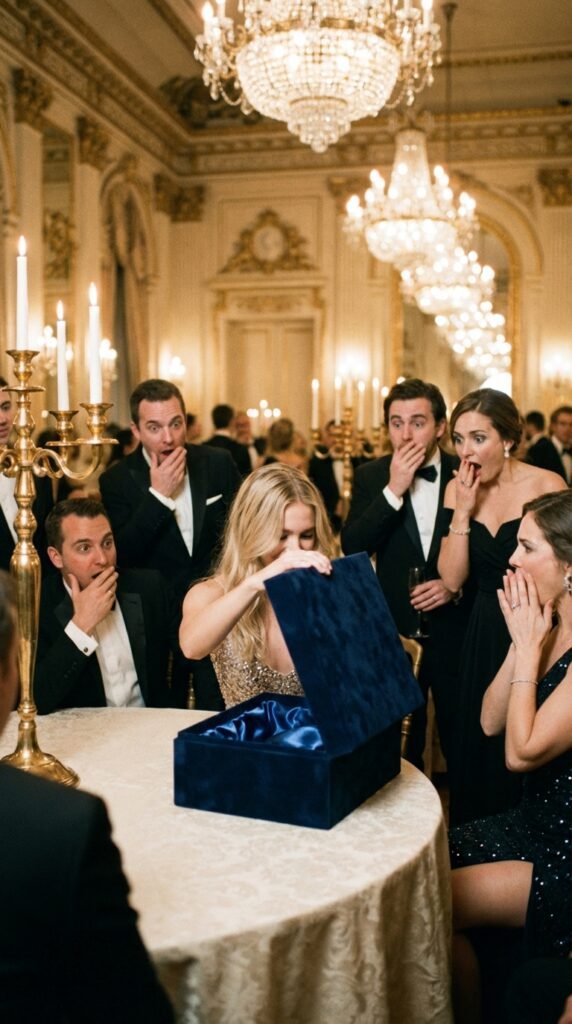
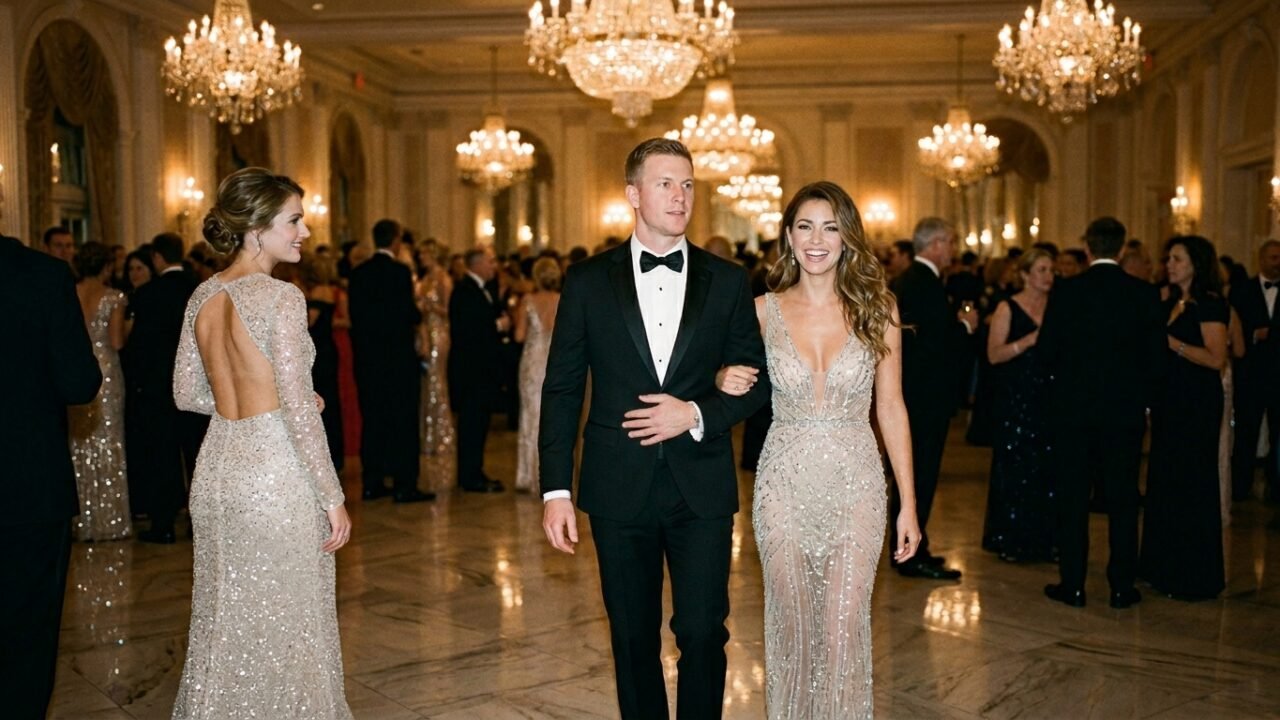
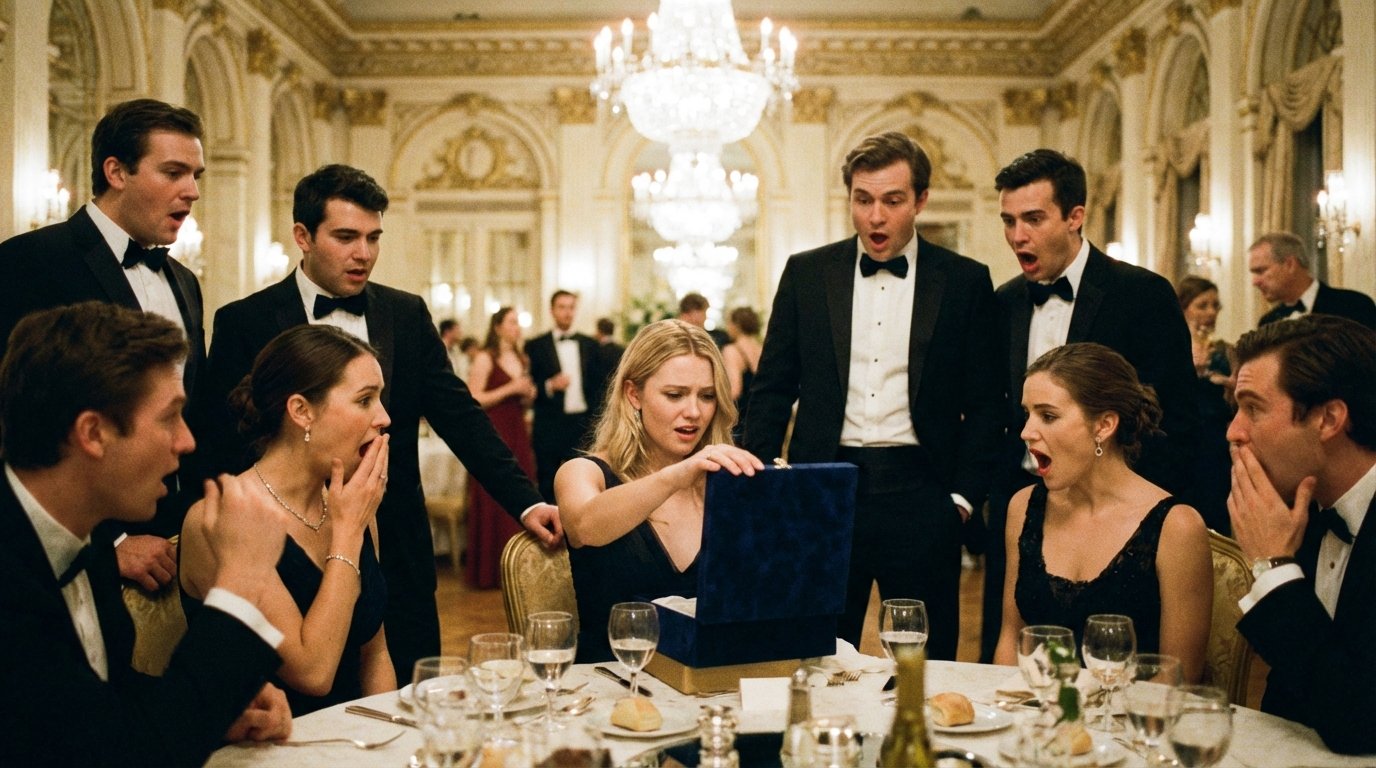
The ballroom was a sea of champagne and hypocrisy. Gold leaf clung to the pillars, and the string quartet played something by Vivaldi that sounded like a frantic heartbeat.
We sat at the head table. Richard was holding court, boasting about his latest acquisition. My mother hovered at his shoulder, the perfect trophy, her diamonds catching the light and throwing cold sparks across the room.
“And what about you, Tessa?” Richard asked, his voice booming so the surrounding tables could hear. “Still drawing pictures for a living?”
Dylan snickered, leaning back in his chair. “I saw her bag earlier. It’s a university crest. Probably a keychain. Real high-end stuff, right?”
The table erupted in polite, cruel laughter. My mother joined in—a light, musical sound that felt like ice water down my spine.
“It’s a memento,” she said, trying to smooth over the ’embarrassment’ of my presence. “Tessa has always been… sentimental. To a fault.”
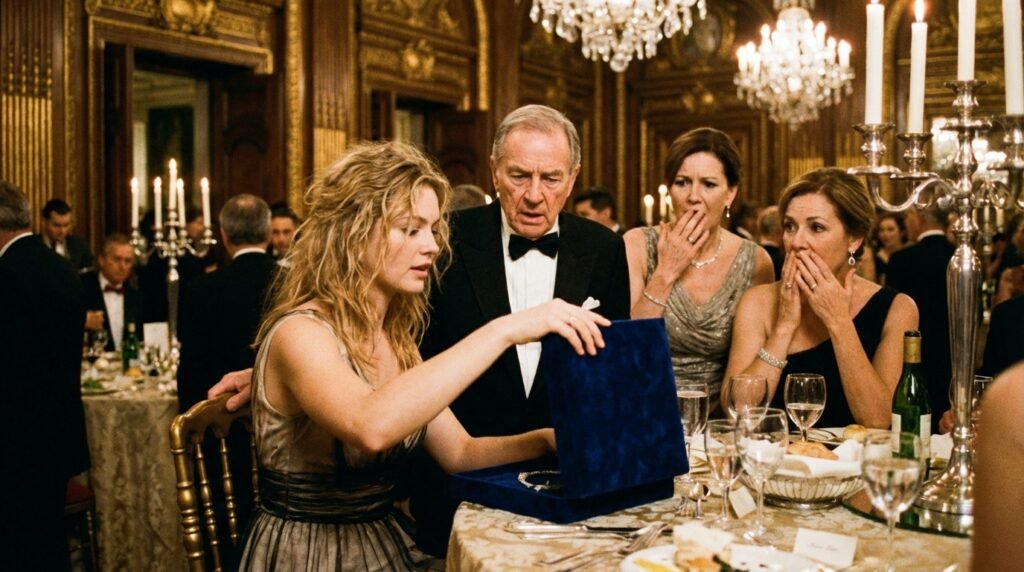
“It’s a “cheap” gift,” Richard sneered, shoving my small velvet box toward the edge of the table. It slid across the white linen, nearly falling into a puddle of spilled wine. “Don’t clutter the table with it. We’re expecting the main course.”
I felt the heat rise in my neck. This was the moment. The years of being the “poor relative” at my own dinner table. The years of watching Richard liquidate my father’s assets while my mother looked the other way.
I stood up. The scraping of my chair was loud, intentional.
“You’re right, Richard,” I said, my voice steady despite the roar in my ears. “It is cheap. In fact, it cost me nothing but my silence. But I think it’s time everyone saw what’s inside.”
The Discovery: The Paper Trail of a Lie
I reached out and pulled the box back to the center of the table. My mother’s face went pale. She knew that look in my eyes. It was the look my father had right before he won a closing argument.
“Tessa, sit down,” she whispered. “You’re making a scene.”
“No, Mom,” I said. “I’m making a statement.”
I opened the lid. There was no velvet lining, no gold watch. Just a simple, heavy brass key and a black card.
The Ghost of My Father
I remembered the night my father died. He had called me into his study, his breath shallow. “Tessa,” he had whispered, “don’t trust the glitter. Look for the foundation.”
I didn’t understand then. I was twelve. I just wanted him to stay.
After he passed, the lawyers told us the money was gone. Richard stepped in to “save” us. My mother called him our guardian angel. I called him a vulture.
I picked up the black card. It wasn’t a credit card. It was a private investigator’s contact card, embossed with a seal they all recognized: The firm that handled the Monroe estate.
“What is this?” Richard demanded, his face turning a mottled purple.
“This is the key to the safe deposit box at the university,” I said. “The one my father set up in my name before you convinced my mother he died penniless.”
I pulled a slim folder from my clutch—a folder that shouldn’t have fit, but did. I laid the first document down.
“This is the deed to this house,” I said. “The one you claim to own, Richard. But it seems my father never actually transferred it. He put it in a trust. A trust that matured on my twenty-fifth birthday. Yesterday.”
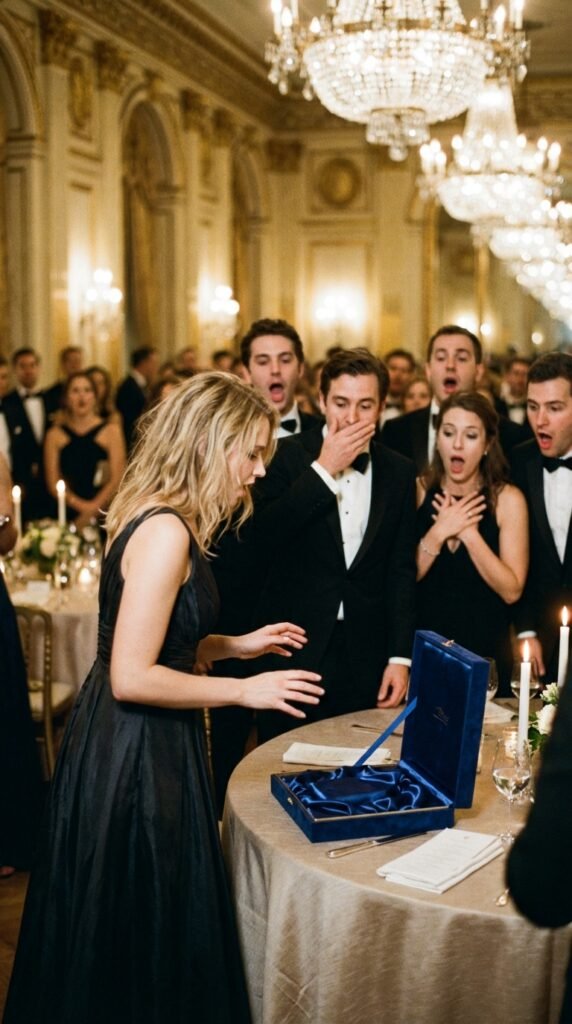
The room went silent. Even the quartet stopped.
The Revelation: The Letter from the Grave
I saw my mother’s hand tremble. She looked at the deed, then at Richard. The “perfect” husband was suddenly sweating.
“That’s a forgery,” Dylan barked, though his voice cracked.
“Is it?” I asked. I pulled out the final piece. A long, yellowed envelope.
“This was inside the box at the university. It’s addressed to you, Mom. But I think the whole room should hear it, since Richard loves an audience so much.”
I began to read. My voice didn’t shake. I had read this letter a hundred times in the dark of my apartment, crying until my eyes burned.
“To my dearest Caroline,
If you are reading this, I am gone, and you have likely already looked to Richard for comfort. I hope I am wrong. I hope you remembered that Richard was the one who sabotaged our firm’s merger ten years ago.
I have left everything to Tessa. Not because I didn’t love you, but because I knew you couldn’t resist the shine of a man like him. I have hidden the truth in plain sight.
Richard didn’t save us, Caroline. He robbed us. The ‘loans’ he gave you were actually my own life insurance policy, laundered through his shell companies. He bought your loyalty with my own blood.”
The silence that followed was heavy, suffocating. My mother looked at Richard as if she were seeing a monster for the first time.
“Richard?” she breathed.
“He’s lying!” Richard yelled, reaching for the letter. “The man was a drunk! He was losing his mind!”
“He was dying of cancer, Richard!” I screamed back, the grief of thirteen years finally exploding. “And you sat at his bedside and promised to take care of us while you were signing the papers to steal our lives!”
The Final Twist
I leaned over the table, my face inches from my mother’s.
“And here is the best part, Mom. The “cheap” gift? The university crest? It’s not just a box. It’s the logo of the firm that just bought out Richard’s entire investment group this morning.”
I smiled, and it felt like a serrated edge.
“I am the majority shareholder now. And your ‘guardian angel’ is officially bankrupt.”
The Ending: A New Foundation
The aftermath was a blur of security guards and legal threats. Richard tried to swing at me, but the guests—the same people who had laughed at my gift minutes ago—were now recording him on their phones, their faces filled with judgment.
My mother sat in her chair, looking small. The diamonds around her neck looked like shackles.
“Tessa,” she whispered as I turned to leave. “I didn’t know.”
I stopped. I looked at the woman who had traded her daughter’s happiness for a polished lie.
“That’s the problem, Mom,” I said softly. “You never wanted to know. You preferred the sparkle to the truth.”
I walked out of the ballroom and into the cool night air. The rain had stopped. For the first time in my life, the air felt clean.
I reached into my pocket and felt the brass key. It wasn’t just a key to a box or a house. It was the key to the rest of my life.
I hailed a taxi. As I sat in the back, watching the lights of the city flicker by, I realized that I didn’t feel the anger anymore. I felt a strange, quiet peace.
The “cheap” gift had been the most expensive thing in the room. It cost me my family, but it bought me my soul.
I looked at my phone and saw a message from my assistant. “The transition is complete. The Monroe name is back on the building.”
I leaned my head against the window and finally, for the first time since I was twelve years old, I let myself cry. Not out of sadness, but out of relief. I was no longer the weed. I was the architect.