

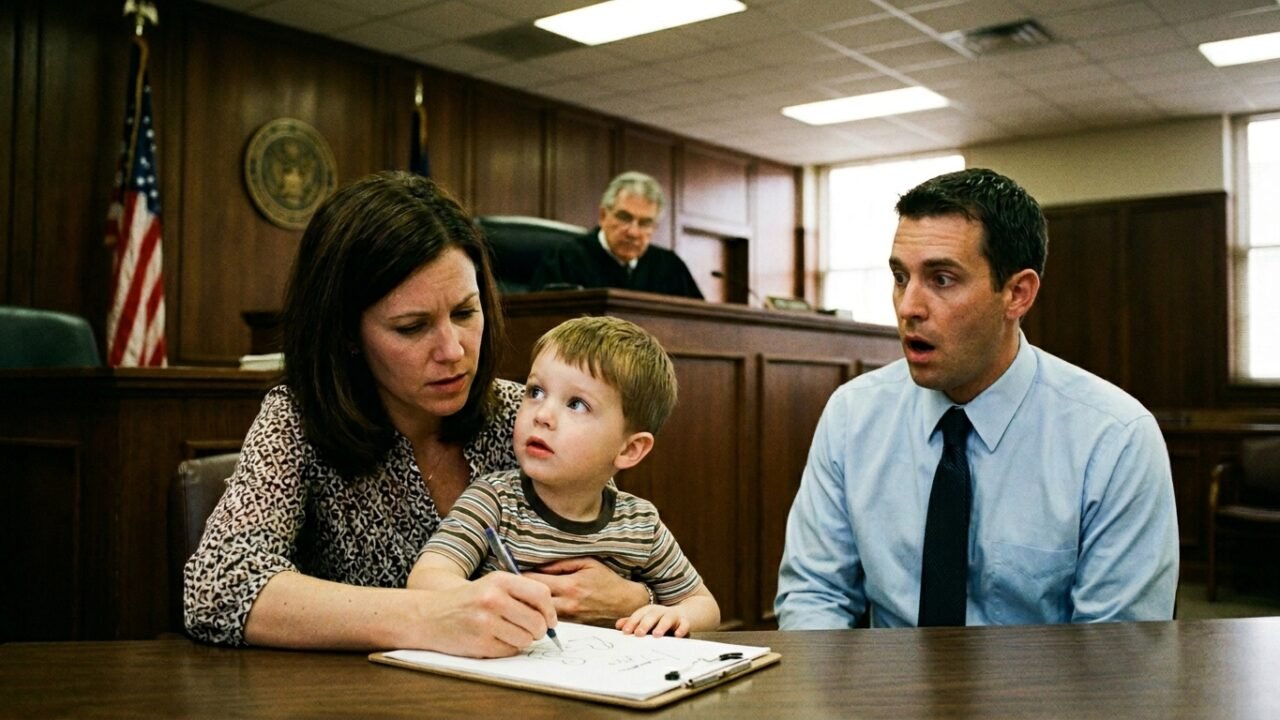




My husband never understood the weight of the name he married into, nor did he realize that the quiet woman folding his shirts was the one signing his paychecks.
The crystal chandelier hanging from the ceiling of the Grand Ballroom at the Plaza Hotel was blinding, casting a sharp prism of light over hundreds of New York’s elite. The air smelled of expensive champagne, fresh lilies, and the heavy, cloying scent of ambition.
I stood in the shadow of a large marble pillar, clutching a glass of lukewarm water until my knuckles turned white. I was wearing a plain, shapeless black dress—exactly what I had been instructed to wear.
I felt small. I felt invisible. But most of all, I felt a cold, sharp rage beginning to crystallize in the center of my chest.
Across the room, under the warm glow of the spotlight, stood my husband, Robert. He looked impeccable in his tailored tuxedo, a suit that I knew cost more than the monthly allowance he gave me for “household expenses.”
He was laughing, throwing his head back in that charming, boyish way that had once made my heart flutter. But he wasn’t laughing with me.
His arm was wrapped possessively around the waist of a woman in a shimmering scarlet gown. Jessica. She was young, vibrant, and looked at him with eyes that screamed victory.
They looked like the golden couple of the Kensington Group. The picture of success. The future of the industry.
I watched as Mr. Stevens, the most crucial investor for the company and an old friend of my late father, approached them. My breath hitched.
If Stevens recognized me, the house of cards Robert had built would come crashing down. I saw his eyes scan the room and land on me.
A flicker of recognition sparked in his gaze. He gestured toward me, confused. I saw Robert’s face drain of color.
My husband had a split second to make a choice. He could have told the truth. He could have said, “This is Sarah, my wife.”
Instead, Robert let out a nervous, dismissive chuckle. He waved his hand at me as if I were a stray dog.
“Oh, her?” Robert said, his voice carrying over the jazz. “Don’t mind her, Mr. Stevens. That’s just Sarah. She’s… well, she’s the help. A housekeeper.”
“She’s a bit slow,” he added, a smirk tugging at his lips. “She just stopped by to drop off some keys I forgot.”
Housekeeper. The word echoed in my skull like a bullet in a metal chamber.
After two years of marriage—after two years of cooking his meals and supporting his dreams from the shadows—I was reduced to “the help.”
Robert turned back to Jessica, pulling her closer. “But this,” he announced, “this is the woman I wanted you to meet. Jessica, my partner, my soulmate… and my future wife.”
A gasp rippled through the circle. I stood there, the “slow” housekeeper, and I began to smile. Because Robert had forgotten one very important detail.
I didn’t just work for the Kensington Group. I owned it.
A Legacy Built on Whispers and Dust
Before I was a “housekeeper,” I was Elena Kensington’s daughter. My childhood was not one of silver spoons, despite our wealth. It was one of lessons.
I remember my mother sitting at her mahogany desk, the scent of Earl Grey tea and old paper surrounding her. She never wore jewelry except for a plain gold band.
“Sarah,” she told me when I was six, “the loudest person in the room is usually the weakest. True power is silent. It is the floor beneath people’s feet that they never think to thank.”
My mother had built an empire from nothing after my father passed away. She taught me to read ledgers before I could read novels.
She also taught me to be wary. She saw through people like they were thin glass. When she died, she left me everything—but with a condition.
The Kensington Group was to be managed by a trustee until I found a partner who proved their worth. I was young, grieving, and lonely.
Then I met Robert. He was a mid-level manager with a smile that felt like sunshine. He didn’t know who I was; I had used my mother’s maiden name to keep a low profile.
We fell in love—or so I thought. When we married, I helped him climb. I gave him “tips” that were actually corporate directives.
I let him believe he was a genius. I let him think he was the one saving the company, while I stayed home, playing the role of the supportive, quiet wife.
I wanted to be loved for me, not my bank account. It was the greatest mistake of my life.
The Cracks in the Porcelain
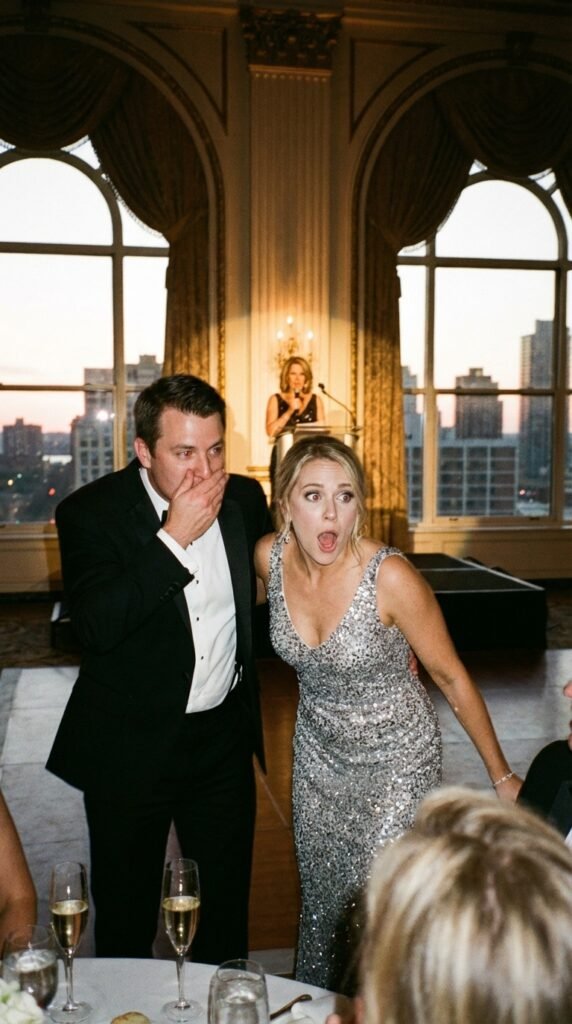
The shift happened slowly. It started with late nights that turned into “business trips.” Then came the scent of perfume on his collar that wasn’t mine.
Robert began to treat me less like a partner and more like an inconvenience. He grew arrogant.
“You wouldn’t understand the pressures of the corporate world, Sarah,” he would say, sipping scotch I had paid for. “Just stick to the garden.”
He started commenting on my appearance, telling me I looked “mousy” and “plain.” He suggested I stay in the kitchen when his “important” friends came over.
Then, three months ago, I found the jewelry receipt. A diamond necklace. Not for me.
I didn’t confront him. Instead, I went to the office—the real office. The penthouse suite that Robert wasn’t allowed to enter.
I met with my lawyers. I saw the records of how he had been funneling company funds into a private account for a woman named Jessica.
He thought he was stealing from a faceless corporation. He didn’t realize he was stealing from his wife.
The gala was supposed to be his “coming out” party. He had planned to announce his “engagement” to Jessica, thinking he had finally pushed me far enough into the corner to demand a quiet divorce.
He wanted the company. He wanted the mistress. And he wanted me gone.
But standing there in that “shapeless” black dress, I realized that I didn’t want a quiet divorce. I wanted a reckoning.
The Letter in the Attic
A week before the gala, I had gone back to my mother’s old estate to find a dress. Instead, I found a locked box in the attic.
Inside was a letter addressed to me, dated just days before my mother’s passing. My hands trembled as I broke the wax seal.
“My Dearest Sarah,
If you are reading this, you have likely reached the crossroads I feared you would. You have a heart that wants to see the best in men, just as I did.
Your father was not the man the world thought he was. He tried to sell this company behind my back to pay off debts he hid from me.
I didn’t cry when I found out. I didn’t scream. I simply removed the floor from beneath him.
Do not let a man use your kindness as a ladder. If he cannot see the queen in the woman beside him, he does not deserve the kingdom.
The key in this box opens a private vault in the Kensington building. Use it only when you are ready to stop being invisible.”
I cried for hours in that dusty attic. My mother had known. She had seen the pattern.
I took the key. I went to the vault. Inside were the original founding documents of the Kensington Group—documents that proved Robert’s “promotion” to CEO was never legally finalized.
He was an interim director at best. An employee. And I was his boss.
I looked at the documents, then at the photos of Jessica he had foolishly left on his laptop. The plan formed in my mind like ice freezing on a lake.
I wouldn’t stop him from going to the gala. I would let him walk right to the edge of the cliff.

The Mask Falls
Back in the ballroom, the silence of my shock was broken by Jessica’s shrill, triumphant giggle.
“A housekeeper?” she asked, looking at me with faux pity. “Oh Robert, you’re so kind to keep such… simple people around.”
She reached out and patted my arm. “Thank you for the keys, Sarah. You can go now. I’m sure there’s some silver that needs polishing at home.”
Robert laughed, a cruel, jagged sound. “Go on, Sarah. Don’t be a nuisance. Mr. Stevens is a busy man.”
Mr. Stevens was looking at me with wide, horrified eyes. He knew. He finally saw the Kensington eyes behind my glasses.
“Robert,” Mr. Stevens whispered, his voice trembling. “Do you have any idea what you’ve just said?”
“I know exactly what I said,” Robert snapped, emboldened by the gin. “I’m the head of this company. I don’t need to explain my staff to anyone.”
I took a step forward. The “housekeeper” persona fell away. I straightened my spine, and for the first time in years, I let the room see me.
“Actually, Robert,” I said, my voice clear and cold, cutting through the room like a blade. “You’ve always had a problem with the fine print.”
The jazz band faltered. People began to turn.
“Sarah, shut up and get out!” Robert hissed, stepping toward me.
I didn’t flinch. “The keys I brought you aren’t for the house, Robert. They’re for your desk. I’ve had the locks changed.”
He paused, a look of genuine confusion crossing his face. “What are you talking about, you crazy—”
“Mr. Stevens,” I said, turning to the investor. “It’s good to see you again. I apologize for the charade. My mother always said to wait until the vultures revealed themselves before you closed the trap.”
Stevens breathed a sigh of relief. “Sarah… I thought it was you. My God, child.”
Robert looked between us, his face turning a sickly shade of gray. “Sarah? What is this? Who is she, Stevens?”
“She,” Mr. Stevens said, with a dark satisfaction, “is Sarah Kensington. The sole owner of the Kensington Group. And your employer.”
The silence that followed was absolute. You could have heard a pin drop on the marble floor.
Cleaning House
Jessica’s hand dropped from Robert’s arm as if he had caught fire. She stepped back, her eyes darting around the room, looking for an exit.
Robert was shaking. “No… no, that’s not possible. The board… the documents…”
“The documents you signed were for an interim position, Robert,” I said, stepping into the light. “I signed the final approvals this morning. Or rather, I didn’t.”
I pulled a small envelope from my pocket. “This is your formal termination. Effective immediately. For embezzlement, breach of contract, and… well, being a fundamentally pathetic human being.”
“Sarah, honey,” Robert stammered, his voice cracking. “It was a joke. I was just… Jessica is nobody. She’s just a PR stunt!”
Jessica gasped, turning on him. “A PR stunt? You told me you loved me! You told me she was a psycho you couldn’t get rid of!”
The “golden couple” began to tear each other apart in front of the most powerful people in New York. It was a pathetic, ugly sight.
I signaled to the security guards waiting by the doors. “Please escort Mr. Vance and his ‘soulmate’ out. They no longer have an invitation to this event. Or this building.”
As they were dragged out—Robert screaming for a second chance, Jessica crying about her dress—I felt a weight lift off my shoulders that I hadn’t even known I was carrying.
I turned to the crowd, to the investors and the socialites who had ignored the “housekeeper” moments before.
“I apologize for the interruption,” I said, raising my glass of water. “But the Kensington Group is under new management. My mother’s management.”
The applause was hesitant at first, then thunderous.
Later that night, I sat in my mother’s office. The house was quiet. The divorce papers were already being drafted, and the police had enough evidence of Robert’s fraud to keep him busy for years.
I looked at the photo of my mother on the desk. I realized I wasn’t the help, and I wasn’t just the owner. I was finally myself.
I took a sip of Earl Grey tea, the steam warming my face. The floor was solid beneath my feet.