


The silence of the suburbs is a lie. It’s a thick, heavy blanket designed to smother the sounds of things that should remain buried. For five years, I lived within that silence, believing I had built a sanctuary out of the wreckage of a tragedy. I thought my adopted daughter, Lily, was the final, beautiful piece of a broken puzzle.
I was wrong. The puzzle was never finished; it was just missing the most terrifying pieces.
The Beginning: A Legacy of Smoke and Ash
The memory of the crash still tastes like copper and burnt rubber.
I can still see the flashing red lights reflecting off the rain-slicked pavement. Elena, my best friend since we were five years old, was gone in an instant. The police told me the car had flipped three times before the gas tank ignited. They said the dental records were the only way to be sure it was her.
I remember standing at the edge of the yellow police tape, clutching a diaper bag to my chest like a shield. Inside that bag was everything left of Elena’s life: a half-used pack of wipes, a rattling plastic toy, and the scent of lavender baby powder.
A Promise Kept in Tears
“I’ve got her, El,” I whispered into the night air, my voice cracking under the weight of the smoke. “I promise, I’ve got her.”
Lily was only six months old then. She had Elena’s wide, curious eyes and a tiny tuft of blonde hair that refused to stay flat. When I took her home, she didn’t cry. She just stared at me with a profound, unsettling stillness, as if she knew the world had just cracked down the middle.
Raising her was my penance and my privilege. We were a team. I taught her how to tie her shoes, how to slice a grilled cheese into perfect triangles, and how to brave the monsters under the bed. But I never taught her what was coming.
The First Echoes
The first time it happened, I dismissed it as the imagination of a tired mother.
It was a Tuesday. The rain was tapping against the windowpane of our small Victorian home—a house I had bought with the meager life insurance payout Elena had left behind. Lily was five now, a vibrant girl who loved yellow dresses and drawing lopsided suns.
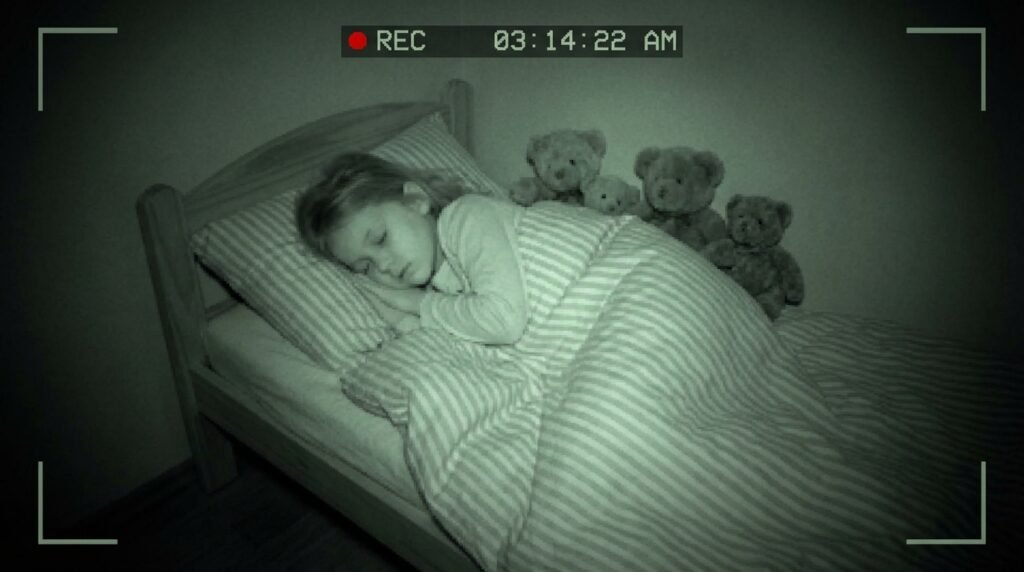
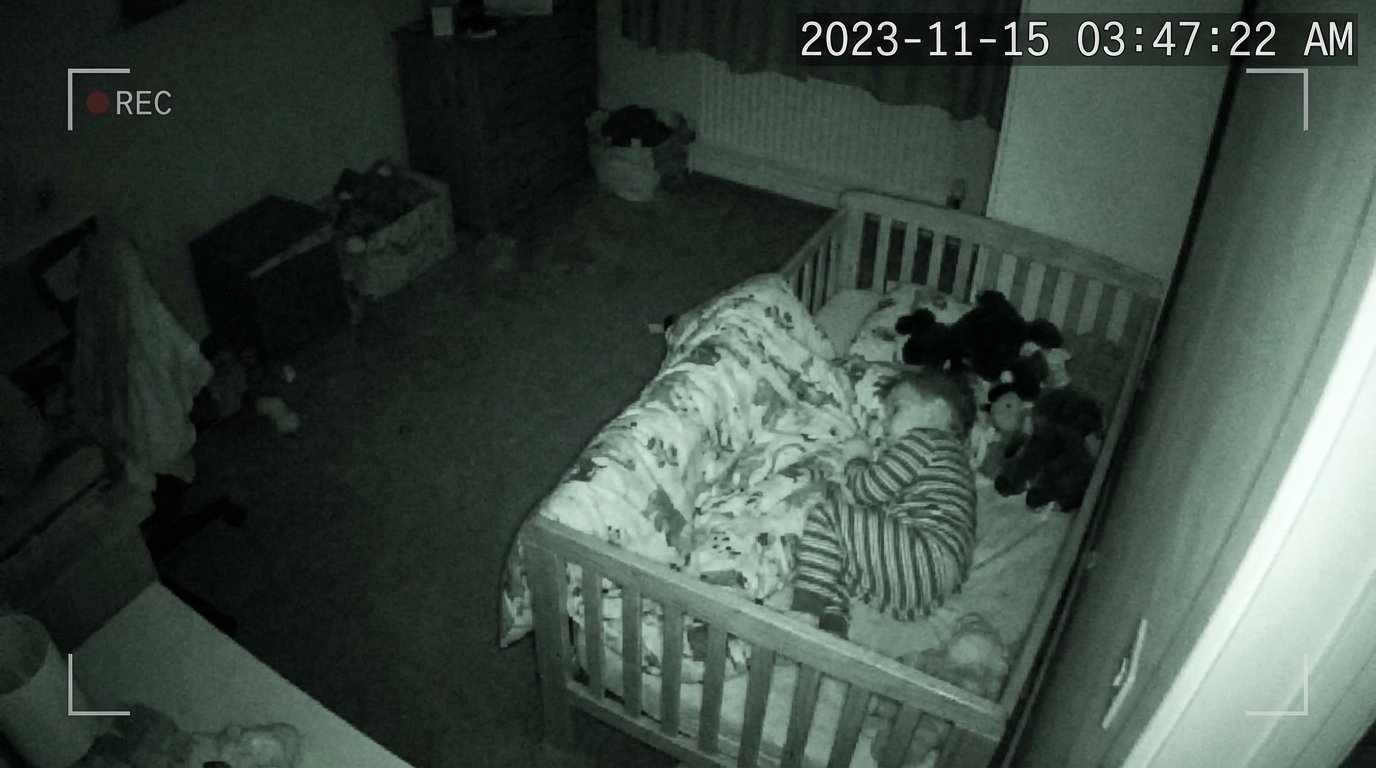
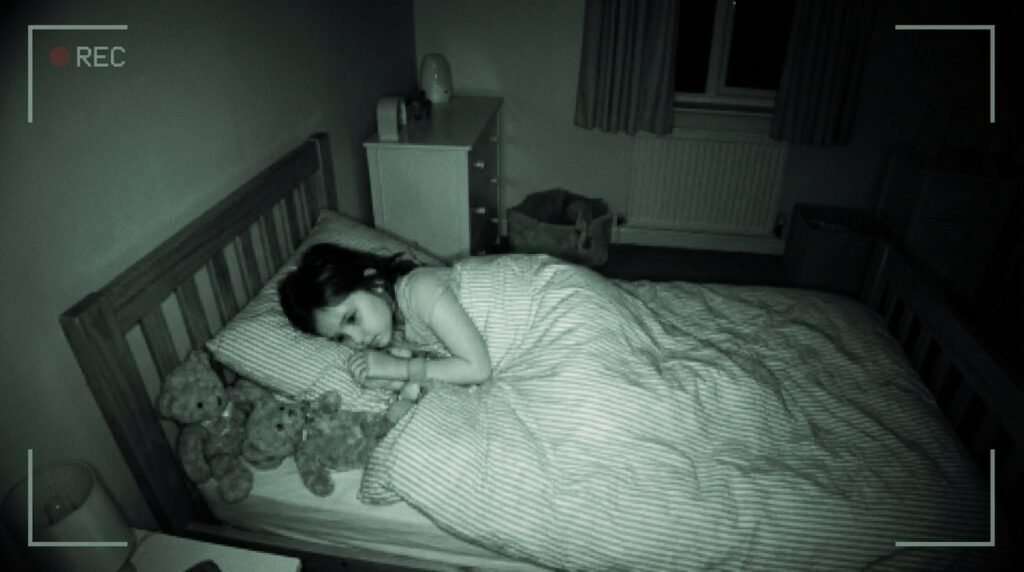
I was folding laundry in the living room when I heard a rhythmic chanting coming from the baby monitor. I frowned, checking the time. 2:00 a.m.
Lily didn’t talk in her sleep. She was usually a silent sleeper, tucked deep under her “magic” pink quilt. But the sound coming through the speaker wasn’t a mumble. It was sharp. Structured. It had the cadence of an ancient poem.
The Conflict: The Language of the Dead
I stood outside her bedroom door, my hand trembling on the porcelain knob. The air in the hallway felt five degrees colder.
Inside, Lily was sitting bolt upright. Her eyes were wide open, but they were vacant, fixed on the corner of the room where the shadows gathered. Her lips moved with a terrifying precision, spilling out words that sounded like grinding stones and rushing water.
“Lily?” I whispered, stepping into the glow of her nightlight.
She didn’t blink. She finished a long, guttural sentence and then simply collapsed back onto her pillow, her breathing instantly leveling out into the steady rhythm of deep sleep.
The Search for Answers
The next morning, Lily was her usual self. She ate her cereal, complained about wearing socks, and gave me a sticky hug before school.
“Sweetie, did you have any dreams last night?” I asked, trying to keep my voice light.
She tilted her head, a stray Cheerio stuck to her chin. “No, Mommy. Just the quiet dreams. Why?”
I didn’t have an answer. I called a child psychologist that afternoon. He spoke in soothing, clinical tones about “parasomnias” and “linguistic experimentation.” He told me children often mimic sounds they hear on television or the internet.
“But it sounded like a real language,” I argued. “Something old.”
“The brain is a complex machine, Sarah,” he replied. “Don’t let grief turn a common sleep disorder into a ghost story.”
The Pattern Emerges
But the “ghost story” refused to end.
The second night, the chanting started at exactly 2:00 a.m. again. This time, I didn’t go in. I sat on the floor of the hallway, clutching the monitor, recording every syllable.
The third night was worse. Lily began to weep in her sleep, but the words remained rhythmic, cold, and foreign. I felt a knot of dread tightening in my stomach. I knew those sounds. I had heard them before, years ago, in the background of Elena’s life.
Elena’s mother had been an immigrant from a small village near Reykjavik. She had passed away long before Lily was born. Elena herself barely remembered a word of her mother’s native tongue.
So how was my adopted daughter speaking fluent, archaic Icelandic?
The Discovery: What the Attic Held
On the fourth night, I couldn’t take the mystery anymore. I sat on the edge of Lily’s bed, my phone in my hand, the translation app open and glowing like a beacon in the dark.
2:00 a.m. arrived.
Lily’s body stiffened. Her jaw unhinged, and the voice that came out was not the voice of a five-year-old. It was lower, raspy, vibrating with an urgency that made my skin crawl.
I pressed the ‘Translate’ button.
The app spun for a second, the processing circle mocking my heartbeat. Then, the text appeared on the screen in cold, digital letters.
“The bird is trapped in the wood. The nest is a lie. My mom is alive. Go up to the attic. She’s there. Unlock the blue trunk. Find the key under the floorboard.”
The Ascent
My breath hitched. My lungs felt like they were filled with glass.
“Elena is dead,” I whispered to the empty room. “I saw the wreckage. I went to the funeral.”
I looked at Lily. She was pointing. Even in her sleep, her small, pale finger was leveled directly at the ceiling. Toward the small, square hatch that led to the crawlspace I had never entered in five years.
I grabbed a heavy Maglite from the kitchen drawer. Each step up the pull-down ladder felt like a betrayal. The air in the attic was stale, smelling of mothballs and ancient dust.
My flashlight beam cut through the darkness, illuminating stacks of old boxes, a discarded rocking chair, and—in the far corner—a heavy, Victorian-style trunk painted a faded, chipped blue.
The Secret Under the Floor
I didn’t go for the trunk first. I went for the floorboard Lily had mentioned.
My fingers scrambled over the wood until I felt a loose plank. I pried it up with a screech of protesting nails. Hidden in the dirt and insulation was a small, leather-bound journal and a brass key.
I opened the journal. The handwriting was unmistakable. It was Elena’s frantic, loopy scrawl. But the dates… the dates were impossible.
The last entry was dated three days after the car crash.
“If anyone finds this, I’m sorry. I had to disappear. They were coming for the money, and they would have taken Lily to get to it. Sarah will protect her. She has to. I’m watching from the shadows, but the shadows are getting smaller. I’ve left the truth in the blue trunk. Sarah, if you’re reading this, I’m so sorry I lied.”
The Revelation: The Woman in the Shadow
I turned the brass key in the lock of the blue trunk. It clicked with a finality that felt like a gunshot.
Inside wasn’t a body. It wasn’t a ghost.
It was a legal file, a stack of cash, and a series of photographs. I flipped through them, my heart hammering against my ribs.
They were photos of me. Taking Lily to the park. Buying groceries. Tucking her into bed. All taken from a distance. All taken within the last month.
And then I saw it. A hidden compartment at the bottom of the trunk. I pulled the false floor away and found a small, handheld radio and a series of Icelandic tapes.
The Face of the Deception
“You weren’t supposed to find that yet, Sarah.”
I spun around, my flashlight beam swinging wildly.
Standing by the attic hatch was a woman. She was thin, her face scarred with the jagged lines of severe burns, her hair cropped short. But the eyes—those wide, haunting eyes—belonged to my best friend.
“Elena?” I choked out. “You’re dead. I buried you.”
“You buried a Jane Doe,” Elena said, her voice a hollow rasp. “I put my rings on a hitchhiker I’d picked up. I needed to die so the debt would die with me. I needed Lily to be safe with you. The people I owed… they don’t look for children of the dead.”
“You’ve been in my house?” I screamed, the betrayal surging through me like acid. “You’ve been haunting my daughter? Teaching her Icelandic through the vents while she sleeps? Using her as a messenger?”
“I missed her,” Elena sobbed, taking a step forward into the light. “I thought if I taught her the language of my mother, we would have a secret bond. I didn’t mean to scare her. I just wanted her to know I was here. I’m her mother, Sarah!”
“I am her mother!” I roared. “I did the work! I wiped the tears! You left her in a burning car of lies!”
The Ending: A New Kind of Silence
The confrontation was a blur of tears and screams. Elena was a shadow of the woman I knew—broken by guilt, hiding in the crawlspaces of a life she had forfeited. She had been living in the shed, sneaking into the attic at night, whispering to Lily through the old ventilation shafts, convinced she was “protecting” us.
She was delusional. She was dangerous.
The Final Call
I looked at the woman I once loved like a sister. I looked at the burner phones, the surveillance photos, and the madness in her eyes. She wasn’t a mother anymore; she was a predator.
I pulled my phone from my pocket.
“Sarah, please,” she begged, reaching out a scarred hand. “We can go away. All three of us.”
“There is no ‘us’,” I said firmly.
I dialed 911.
As the sirens began to wail in the distance, cutting through the suburban silence, I went back downstairs to Lily’s room. I sat on the edge of her bed and stroked her hair.
She woke up just as the police lights began to flicker against her bedroom walls—red and blue, just like the night of the crash.
“Mommy?” she asked, her voice small and sweet.
“It’s okay, baby,” I whispered, holding her tight. “The voices are gone now. We’re safe.”
Closure
The police took Elena away. She was charged with a litany of crimes, from insurance fraud to stalking. But the real sentence was the look on Lily’s face when she finally saw her “aunt” Elena in the back of the patrol car—a look of total strangers.
I sold the house. We moved three states away, to a place where the attics are empty and the nights are truly quiet.
Lily doesn’t speak Icelandic anymore. She speaks the language of a happy child—of school projects, and soccer practice, and “I love you, Mom.”
The silence of the suburbs is still a lie, but in our house, we finally tell the truth. My adopted daughter is mine. And I will burn down the world before I let the shadows touch her again.