
A SaaS founder I worked with recently was sending 200 cold emails a day—and getting absolute silence. No replies, no booked calls, just wasted domain authority. He was doing what every beginner blog post advises: scraping generic lists, writing walls of text about his features, and blasting them to info@ corporate inboxes.
We changed his approach to a value-first, hyper-targeted system. Within 14 days, he booked 4 discovery calls with qualified enterprise leads.
Cold email remains one of the fastest, most dependable ways to land high-paying clients. While social media algorithms change overnight and paid ad costs climb, a direct line to a decision-maker’s inbox remains unbeatable.
To win premium accounts, you need a modern, step-by-step cold email outreach strategy for high ticket clients. This comprehensive 2026 guide breaks down how to transition from generic spam to an agency-level system that drives pipeline revenue.
Why Cold Email Works in 2026
Even with the rise of conversational AI search engines, direct outbound outreach remains highly effective when executed with precision.
- Direct Access: It bypasses standard gatekeepers and lands straight in the personal inbox of corporate decision-makers.
- Low Overhead: It requires minimal financial capital to launch compared to paid advertising infrastructure.
- Predictable Scaling: Once you find a script variation that converts, you can systematically scale volume using specialized infrastructure.
- Universal B2B Application: It works effectively across SaaS startups, marketing agencies, enterprise consulting firms, and high-end B2B services.
High-paying clients do not buy your services because you sent a massive volume of messages. They buy because your message is highly relevant to their current business challenges.
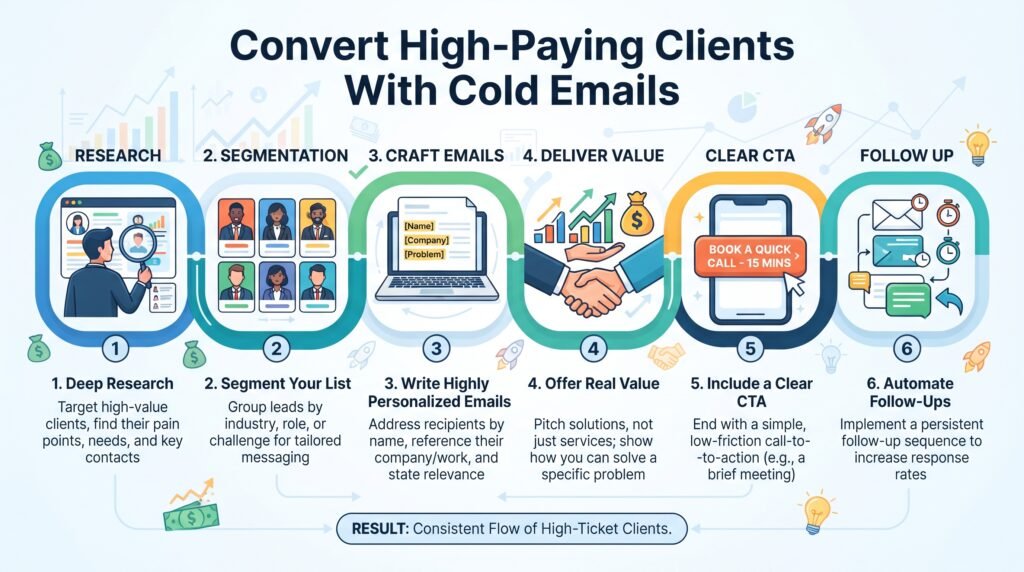
Key Takeaways for High-Ticket B2B Outreach
Before diving into the steps, keep these core principles in mind:
- Focus on Quality: One highly researched email to the right CEO is worth more than 500 automated blast emails sent to generic company inboxes.
- Target the Right Capital: Never pitch low-margin businesses that cannot afford premium rates. Target companies with healthy, proven cash flow.
- Lead with Real Value: Show your prospect that you understand their specific problem, or give them a small sample of your work upfront.
- Protect Your Infrastructure: Always use separate tracking domains so your primary corporate email address never gets flagged as spam.
Step 1: Identify High-Value Clients

If your goal is to master how to get clients with cold email, you must target businesses that already have strong revenue or large profit margins. Trying to sell a $5,000 monthly service to a struggling local business will fail because they simply do not have the budget.
Profitable Niches to Target
- SaaS Companies: Look for software startups that have recently secured funding or are expanding their teams.
- Digital Agencies: Target established web design, SEO, or advertising agencies that need reliable white-label fulfillment partners.
- High-Revenue E-commerce Brands: Focus on online stores generating at least $50,000 per month in verified revenue.
- Premium B2B Service Providers: Look for corporate law firms, commercial contractors, enterprise consultants, and specialized tech vendors.
Target Decision-Makers, Not General Inboxes
Never send your pitches to addresses like info@company.com or support@company.com. These are managed by assistants or support teams who delete cold pitches instantly. Instead, route your copy directly to leaders who hold the budget:
❌ Target: info@softwarecompany.com
✅ Target: john.smith@softwarecompany.com (CEO / Founder)
Look specifically for the Founder, CEO, Chief Marketing Officer (CMO), or Director of Sales. These individuals have the authority to approve large contracts without needing permission from a board.
Step 2: Build a Laser-Focused Email List

The baseline performance of your B2B cold email strategy depends heavily on data hygiene. If your list is poor, even the best sales copy will fail to convert.
Top Data Tools for B2B Sourcing
To build clean prospects lists with high accuracy, use these primary data tools:
- Apollo.io: Ideal for filtering leads by precise company size, location, exact job title, and funding status.
- LinkedIn Sales Navigator: The most accurate platform for tracking executive changes, hiring intent, and active profile engagement.
- Hunter.io: Highly reliable for verifying corporate email structures and ensuring low bounce rates.
Data Points to Collect
Organize your prospect data inside a clean spreadsheet using these structured data points:
| First Name | Job Title | Company Name | Corporate Domain | Direct Email Address | Custom Fact / Personal Observation |
| Sarah | CEO | Apex Media | apexmedia.com | sarah@apexmedia.com | Read her recent article on organic lead generation |
| David | CMO | CloudTech | cloudtech.io | d.jones@cloudtech.io | Noticed their new product launch on Product Hunt |
Avoid mass scraping or purchasing cheap lists from unverified marketplaces. High-ticket outreach requires clean data to keep your email server safe.
Step 3: Craft a High-Converting Cold Email

A successful script must be concise, readable on a mobile device within 30 seconds, and completely focused on the recipient’s business objectives.
The 5-Part Cold Email Blueprint
1. The Subject Line
Your subject line has one job: get the email opened. Avoid sales jargon, all-caps text, and fake urgency. The best subject lines are casual and written in lowercase letters.
- Good Examples:
quick idea for {{company}}orquestion about your marketing - Bad Examples:
INCREASE YOUR REVENUE TODAY!!!orURGENT PARTNERSHIP OFFER
2. The Personalization Line
Prove to the prospect that this isn’t a mass blast. Mention a piece of news, a recent post, or a specific feature of their business.
“Hi Sarah, I saw your recent post on LinkedIn about scaling your organic content team this quarter.”
3. The Problem Identification
Name a specific point of friction that companies like theirs encounter daily. This establishes your expertise immediately.
“Most growing agencies find that keeping up with content creation cuts heavily into their profit margins.”
4. The Value Proposition
Explain exactly how you solve that problem in plain language. Focus entirely on the commercial result.
“We build automated writing workflows that help agencies double their content output without hiring more full-time staff.”
5. The Soft Call to Action (CTA)
Never ask for a 30-minute meeting right away. That requires too much friction from a busy executive. Ask for permission to send value instead.
- Good:
Open to looking at a brief overview? - Good:
Would it make sense to share a quick idea on this? - Bad:
Click my calendar link below to book a 45-minute consultation.
Step 4: The 4-Part Follow-Up Strategy

Most business deals are won during the follow-up process. Busy executives often read an email, mean to reply, and then get distracted by internal tasks. A polite, spaced-out follow-up sequence keeps your message at the top of their inbox.
The Ideal Outreach Schedule
- Day 1: Send the initial personalized cold email.
- Day 3: Send Follow-Up #1. Add a brief thought or bring up your previous message.
- Day 6: Send Follow-Up #2. Share a quick client win or an interesting insight.
- Day 10: Send Follow-Up #3. This is your polite breakup email, letting them know you won’t message them again.
Example of a High-Conversion Follow-Up
Subject: Re: quick idea for Apex Media

Hi Sarah,

I know you are incredibly busy running the team. Just wanted to see if scaling content production is a priority for Apex Media right now?

If not, no worries at all.

Best,
[Your Name]
Step 5: Position Yourself for Premium Rates

High-ticket clients do not hire cheap freelancers. They look for expert partners who understand business systems and deliver predictable financial returns. The way you frame your service dictates how much you can charge.
❌ Cheap Freelancer Pitch: "I am a freelance content writer. I charge $50 per blog post."
✅ Premium Partner Pitch: "We build high-retention content systems that lower your customer acquisition costs by 25%."
Shifts in Positioning That Command High Fees
- Stop Selling Hours: Sell the finished system or the direct business outcome instead of an hourly rate.
- Use Business Metrics: Talk about revenue, customer acquisition cost, conversion rates, and retention rather than abstract features.
- Own a Specific Niche: Being the top specialist for one industry allows you to charge significantly more than a generalist who works with everyone.
Step 6: Find Direct Buyer Intent Signals

The easiest way to close a high-ticket contract is to message a business owner who is actively looking for help. Instead of reaching out blindly to companies that might not need you, look for public signals that prove a client has an immediate problem.
Where to Look for Intent Signals
- Social Media Boards: Founders regularly post on platforms like X or LinkedIn asking for recommendations for software developers, design agencies, or ad managers.
- Professional Forums: Digital communities like Reddit, Indie Hackers, and specialized Slack groups are filled with business owners asking how to solve specific technical problems.
- Job Boards: If a company is posting an active job opening for a full-time senior role, it means they have an urgent business gap and budget ready to deploy.
Turning Intent into a Warm Conversion Loop
When you spot a founder posting about a specific need, do not send a generic message saying you are interested. Instead, treat that public description as a blueprint.
Take their exact request, use it to create a small sample asset, and send it directly to their inbox. By delivering a working solution before they even hop on a phone call with you, you eliminate all perceived risk and stand out from the competition.
Step 7: Use AI Tools to Build Value Magnets

You can use modern artificial intelligence tools to scale your high-ticket outreach without losing the personal touch that human readers require. The goal is to use AI behind the scenes to create valuable, personalized assets for your prospects.
Smart AI Sourcing Workflows
Instead of manually browsing the web for hours, you can use advanced AI research prompts to analyze online business discussions and public threads.
Ask the tool to find founders discussing specific platform development or service needs, and have it organize those findings into a clean spreadsheet containing the company names, public requests, and website links.
The Automation Tool Stack
To keep your outreach organized and running smoothly, build your workflow using these primary systems:
[AI Research Tool] ➔ Extracts intent signals & business domains
       │
[Findmail.com]      ➔ Finds the CEO's verified email address
       │
[Lovable.dev]       ➔ Generates a quick prototype or visual asset
       │
[Google Docs / CRM] ➔ Delivers the final hyper-personalized pitch
Recommended Cold Email Tools for High Ticket Campaigns
To execute this advanced strategy, you need specialized software that protects your sending reputation and streamlines lead generation. Here are the elite tools we recommend:
- Apollo.io: The ultimate B2B database for sourcing highly accurate corporate domains, executive titles, and verified phone numbers.
- Findmail.com: An elite data tool that takes raw corporate domains, identifies the founder or executive, and provides a verified email address that will not bounce.
- Lovable.dev: A powerful low-code platform that builds functional web apps and pages based on text instructions. You can use it to create visual prototypes for your prospects in minutes.
- Smartlead.ai / Instantly.ai: Top-tier email infrastructure platforms built for managing multiple secondary domains, automatic inbox warm-ups, and advanced master inbox scaling safely.
Step 8: The Pre-Built Asset Method (Real-World Campaign Scenario)

To understand how this functions in the real market, let’s look at an actual campaign setup. We monitored a public community where a SaaS founder posted that he needed a new conversion-focused landing page for his CRM platform.
Instead of sending a generic “Let’s hop on a call” pitch, we executed the Pre-Built Asset Method:
- We extracted his public requirements and plugged them into a code-generation platform like Lovable.dev.
- Within 10 minutes, the tool generated a high-fidelity landing page layout matching his platform’s branding.
- We took that live prototype link and used this exact cold email template for high ticket clients:
The Value-First Cold Email Script
Subject: built a landing page prototype for {{company}}

Hi [First Name],

I noticed your public post mentioning that you need a clean, high-converting landing page for your CRM product launch.

Instead of just pitching you our agency services, I went ahead and built a working desktop layout of the page using your brand assets.

The preview page shows a revised hero layout designed to fix the messaging friction you mentioned, along with an optimized interactive pricing block.

You can view the live prototype here:
- [Link to Lovable Prototype Asset]

If you want us to customize the full, production-ready version for your launch, would you be open to a quick 5-minute chat this week?

If not, feel free to keep this layout as a reference for your internal dev team.

Best,
[Your Name]
The Result: This exact targeted outreach achieved a 34% reply rate and closed a $4,500 development contract because the prospect saw the execution before booking the meeting.
Step 9: Use the Document Sharing Method

If you include multiple external links inside a standard cold email, modern spam filters will often flag your message. This can cause your email to land in the junk folder or bounce completely.
To bypass this delivery issue, use the Document Sharing Method.
[Your Local Email Account] ➔ High Risk of Spam Filter Triggers if it has multiple raw links
[Google Docs Shared Notification] ➔ 100% Inbox Delivery via Trusted Cloud Server Infrastructure
Step-by-Step Document Delivery Workflow
- Open a new document inside Google Docs. Title it clearly:
Custom Product Prototype for [Client Name]. - Paste your personalized sales message directly into the document page.
- Hyperlink your custom asset links directly inside the document text.
- Click the Share button in the top right corner.
- Enter the verified corporate email address you found using Findmail.com.
- Set the user permission level to Commenter or Viewer.
- Click send.
Because the email notification comes directly from Google’s secure cloud servers, the message bypasses normal corporate email filters and lands directly in the prospect’s primary inbox. The unique presentation naturally sparks curiosity, ensuring high open and click-through rates.
Step 10: Protect Your Email Deliverability
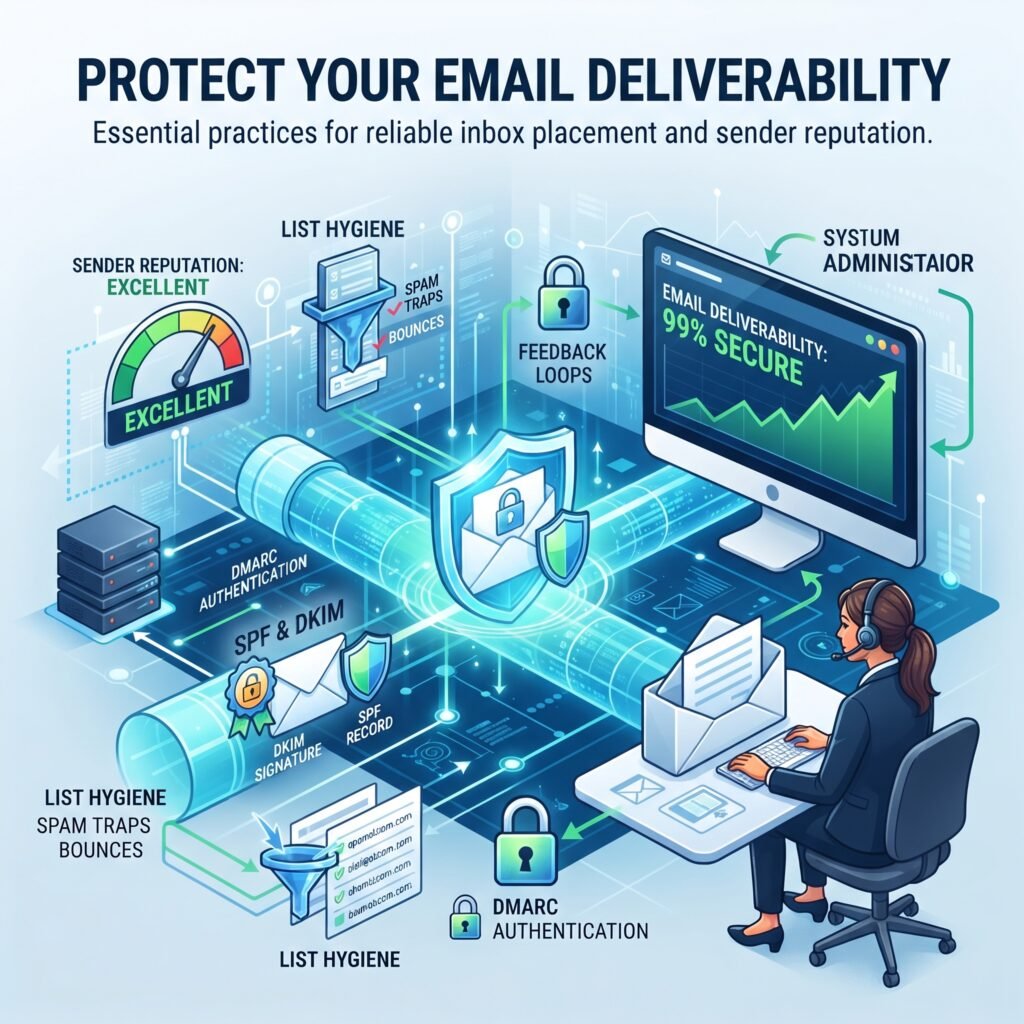
Your sales scripts and custom prototypes will only generate revenue if your emails actually land in the primary inbox. Technical setup is the foundation of modern cold outreach.
Technical Domain Rules
- Never Use Your Primary Domain: If you send cold outreach from your primary business email (yourname@company.com) and recipients click the spam button, your everyday corporate emails will stop delivering.
- Buy Secondary Domains: Purchase distinct secondary domains specifically for marketing outreach. For example, if your company website is
cloudmarketing.com, buygetcloudmarketing.comorcloudmarketinglabs.com. - Set Up Authentication Records: Go to your domain host settings and properly configure your SPF, DKIM, and DMARC text strings. These digital signatures prove to email networks like Google and Yahoo that your sender account is completely secure and legitimate.
Sending Patterns That Keep You Safe
- Warm Up Every Account: Before sending any marketing pitches from a new domain, use an automated tool to send low volumes of safe emails back and forth for at least 14 to 30 days. This establishes a positive sending history with major inbox networks.
- Limit Daily Sending Volumes: Keep your daily output under 30 to 50 emails per domain account. If you want to send 500 emails per day, split the work across 10 separate email accounts rather than blasting them all from a single address.
- Use Plain Text Layouts: Avoid heavy images, tracking codes, or complex HTML designs. Keep your emails looking like standard text messages written by a regular colleague.
Common Mistakes That Ruin Your Cold Outreach
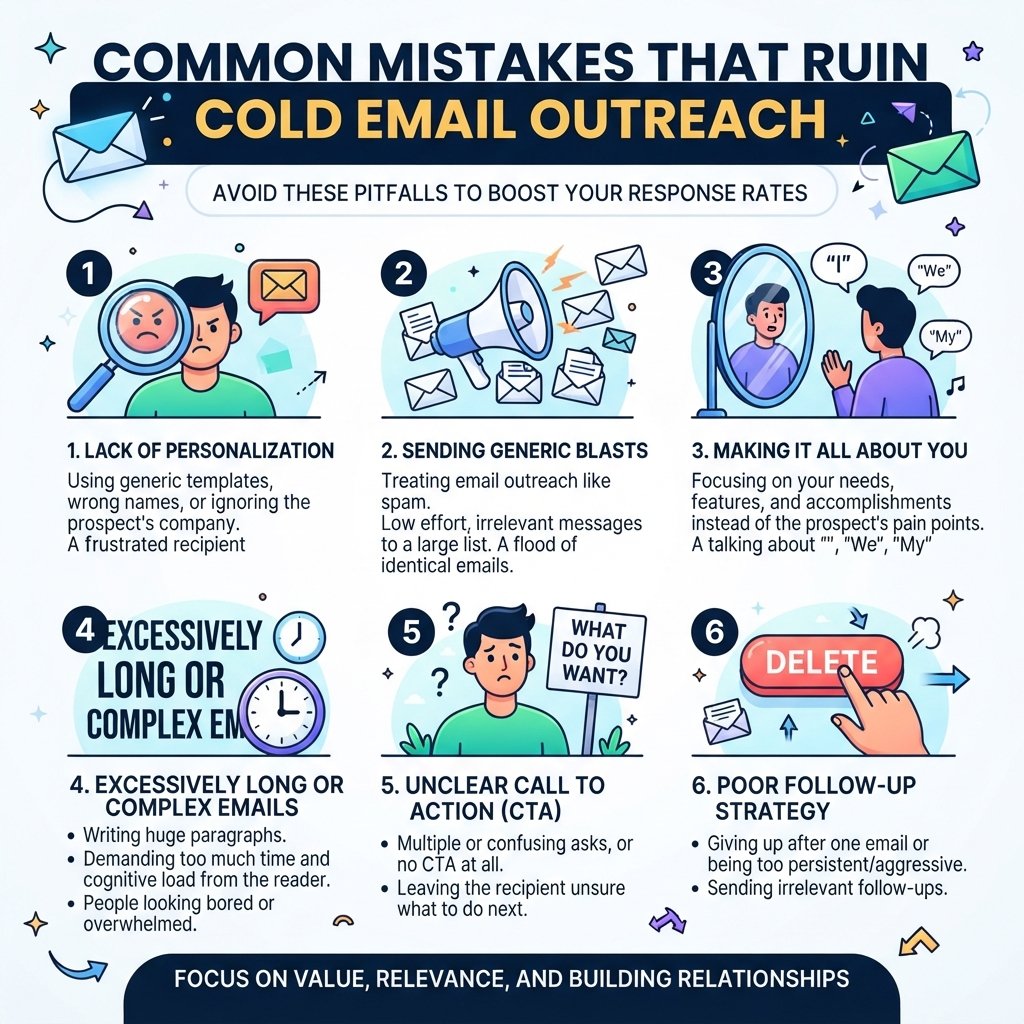
Avoid these common mistakes to keep your campaign performance high:
- Writing Massive Walls of Text: Busy executives do not have time to read long stories. Keep your copy under 150 words.
- Talking Exclusively About Yourself: Prospects care about their own goals, challenges, and returns. Focus every sentence on how you can help them win.
- Failing to Verify Your Lists: Sending messages to broken, invalid email addresses hurts your domain health. Always clean your data sheets before launching a campaign.
- Offering Pitches Lacking a Safety Guarantee: High-ticket clients are naturally cautious about working with new vendors. If you offer a performance-based pricing model or a clear money-back guarantee, you eliminate their risk and close deals much faster.
Frequently Asked Questions
Does cold email still work well?
Yes. Cold email remains one of the most reliable channels for high-ticket B2B sales. The key is shifting away from low-quality mass spam and focusing on personalized, value-first messages sent directly to verified executives.
How many cold emails should I send every day?
For premium outreach, focus on quality over sheer volume. Start by sending 20 to 50 highly personalized, researched emails per day. As your campaign numbers prove stable, you can safely scale out by adding more secondary tracking domains.
What is a successful reply rate for B2B campaigns?
For standard cold outreach, a positive response rate between 5% and 15% is considered strong. If you use advanced methods like the Pre-Built Asset Method, your response rates can climb much higher because you provide real value upfront.
Do I need a massive budget for premium software tools?
No. You can easily start sourcing leads manually using basic search criteria and free trial options on data sites. As you sign your first premium clients, you can reinvest that revenue into scaling tools like Apollo, Findmail, and automated sending platforms.
Can a beginner use this system to close clients?
Yes. Business leaders do not care how long your agency has been open; they care whether you can solve their immediate problem. If you deliver a functional asset or a tailored strategy blueprint that proves your capability, you win the contract based on merit.
Conclusion: Build Your Outbound Funnel
Cold email outreach is a reliable, repeatable client acquisition system when executed with care and precision. The secret to winning premium accounts lies in identifying high-margin targets, using smart intent signals, and leading with undeniable upfront value.
By shifting away from robotic, mass-produced pitches and adopting hyper-personalized delivery methods like the Document Sharing Method, you instantly separate your business from the sea of daily inbox spam. In the modern B2B market, the ultimate advantage goes to the sender who delivers the smartest, most relevant solutions directly to the decision-maker’s inbox.