
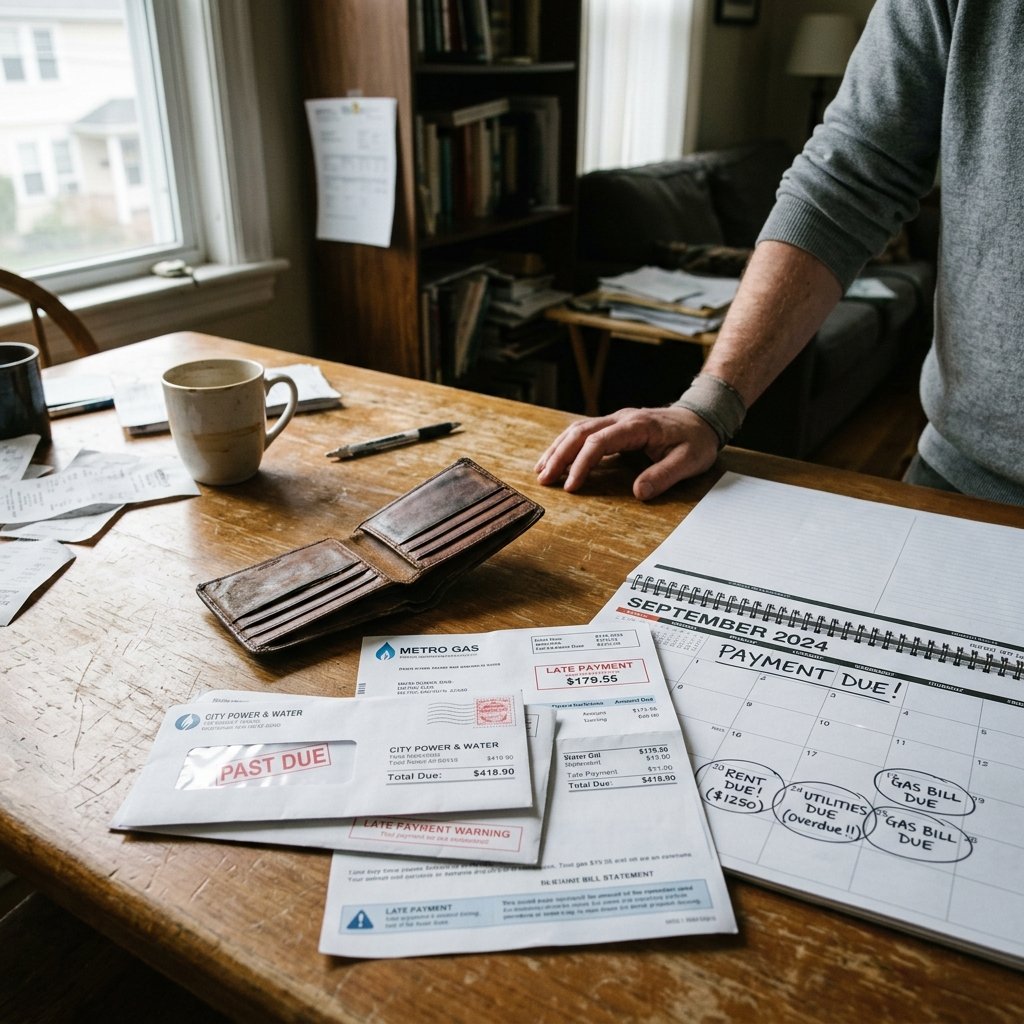
Millions of Americans work hard every single day. They wake up early, clock in for long hours, and do everything they can to build a good life. Yet, when the end of the month arrives, many of these same people look at their bank accounts and wonder where all their money went.
Living paycheck to paycheck has become a standard way of life for a huge part of the United States. Many people feel like they are running on a financial treadmill—working harder and faster but staying in the exact same spot. While rising costs, high rent, and basic economic changes certainly play a massive role in these struggles, there is another side to the story that we can actually control.
Many daily financial problems stem from common money habits that slowly drain income and limit wealth-building opportunities. These are quiet, everyday habits that do not seem like a big deal at the moment, but over time, they completely stop you from saving money, paying off debt, or building long-term financial safety.
The good news is that you do not need to be a Wall Street genius or earn a million dollars a year to fix your finances. Small, deliberate changes in your financial behavior can produce significant long-term results. When you learn to spot these financial traps and replace them with better habits, you can stop stressing about bills and start building true wealth.
To help you get started, we have put together a deep look at the 10 most common money mistakes that keep Americans broke—and the simple, practical steps you can take to avoid them starting today.
1. Living Beyond Your Means (Paying Yourself Last)
One of the biggest financial mistakes is consistently spending more than you earn. Many people rely on credit cards, personal loans, or buy-now-pay-later services to maintain a lifestyle they cannot truly afford. This is often driven by a deeply rooted bad habit: paying everyone else before you pay yourself.
When a paycheck lands in most bank accounts, the money immediately starts flowing outward. People pay their rent or mortgage, cover the phone bill, pay for streaming subscriptions, buy groceries, and fund social plans with friends. After all of those people and companies get paid, individuals look at what is left over and say, “I will save whatever is left.”
The problem is that almost nothing is ever left.
This habit is what financial experts call paying yourself last. It means you treat your own future savings as an afterthought. You are prioritizing the profits of clothing stores, restaurants, and streaming platforms over your own long-term financial security. When you buy things before saving, you are trapped in a cycle that makes wealth building impossible.
Traditional Poor Money Habit:
[Income] ---> [Pay Bills & Expenses] ---> [Save What is Left] (Usually $0)

Smart Wealth Building Habit:
[Income] ---> [Save 10% First] ---> [Pay Bills & Expenses with the Rest]
How to Avoid It

- Pay Yourself First: Change the way your money flows the moment you get paid. Take a minimum of 10% of your paycheck and move it directly into a separate savings or investment account before you pay a single bill or buy a single item. Treat this 10% like a mandatory bill that you cannot skip.
- Track Your Monthly Expenses: Write down every single dollar that leaves your pocket. You cannot fix a leak if you do not know where the water is coming from.
- Create a Realistic Budget: Look at your actual take-home income and map out your necessary expenses. Ensure your fixed expenses (like rent and insurance) leave room for savings.
- Avoid Lifestyle Inflation: When you get a raise or a bonus at work, do not immediately upgrade your lifestyle. Do not buy a more expensive car or a bigger apartment just because you make more money. Instead, keep your living expenses the same and use the extra income to increase your savings and investments.
2. Not Having a Budget (Ignoring Your Real Numbers)
Without a budget, it is completely impossible to know where your money is going. Many people assume they know how much they spend, but human memory is highly inaccurate when it comes to small daily purchases. A $5 coffee here, a $15 lunch delivery there, and a few small online shopping orders can add up quickly and silently sabotage your largest financial goals.
Until you know your exact financial starting point, you cannot chart a path to where you want to be. People who struggle with money often avoid looking at their bank accounts because it causes stress. They guess their balances and hope for the best.
On the other side, financially successful individuals treat their personal finances like a business. They know their exact assets (what they own) and their liabilities (what they owe). They do not fantasize about money; they look at their numbers in clear black and white. Seeing your actual spending numbers on paper triggers real action and breaks the habit of blind spending.
How to Avoid It
- Use the 50/30/20 Budgeting Rule: This is a simple, easy-to-use framework that splits your take-home income into three clear buckets:
- 50% for Needs: This covers essential things you must pay to survive, such as rent, utilities, basic groceries, and minimum debt payments.
- 30% for Wants: This is your fun money for dining out, hobbies, clothing, and entertainment.
- 20% for Savings: This money goes straight toward building your emergency fund, retirement accounts, and extra debt payoffs.
- Review Your Expenses Every Month: Pick one day at the end of every month to print out your bank and credit card statements. Highlight your spending categories so you can clearly see if you went over your limits.
- Set Hard Spending Limits: Use separate bank accounts or budgeting apps to put a strict cap on your discretionary purchases. Once your “wants” budget for the month is empty, stop spending.
3. Ignoring Emergency Savings (Not Having a Financial Buffer)

Unexpected life events happen to everyone. A car transmission fails, a medical issue requires a hospital visit, a pipe bursts in the home, or an unexpected layoff occurs. These events are a guaranteed part of life. Yet, millions of people live without any financial cushion to catch them when they fall.
When you do not have an emergency savings fund, a minor setback turns into a massive financial disaster. Without a cash buffer, you are forced to turn to high-interest credit cards, personal loans, or family members to dig yourself out of a hole. This creates a dangerous cycle: you take on debt to cover an emergency, spend months trying to pay it off, and then get hit by another emergency that forces you deeper into debt.
A liquid cash reserve acts as an insurance policy for your daily life. It transforms a major life emergency into a simple, temporary inconvenience.
How to Avoid It
- Aim for a Six-Month Buffer: Work toward saving three to six months of essential living expenses. This means calculating the bare minimum amount of money you need to survive each month (rent, food, core bills) and multiplying that number by six. Keep this cash stockpile in a safe, accessible account.
- Start Small to Build Momentum: If saving thousands of dollars feels completely impossible right now, do not get discouraged. Start by aiming for a small, achievable goal like $500 or $1,000. Reaching that first milestone will give you the confidence to keep going.
- Automate Your Savings Contributions: Set up a recurring transfer with your bank so that a portion of your income automatically moves into your emergency fund every single time you are paid. If you never see the money in your checking account, you will never miss it.
4. Carrying High-Interest Credit Card Debt (Comfortable with Bad Debt)

We live in a culture where debt has become completely normalized. Companies actively encourage consumers to use credit, loans, and split-payment applications to buy the smallest everyday items, from new clothes to holiday gifts. Many Americans have become far too comfortable carrying ongoing balances on their credit cards, viewing it as a standard monthly expense.
Let’s make a clear distinction: credit card debt is one of the fastest ways to stay permanently trapped in a financial cycle. Credit card companies do not offer rewards and points out of kindness; they want you to carry a balance because that is exactly how they make their massive profits.
The average credit card interest rate hovers around 22%. To put that in perspective, if you carry a balance at 22% interest, the cost of everything you buy is drastically inflated over time. High interest charges eat away at your disposable income, making it incredibly difficult to pay down the actual principal balance. It completely cancels out any points, cash-back, or travel miles you might earn.
A simple rule to live by is this: unless you can afford to pay for a non-essential item outright with cash today, you cannot afford to buy it with a credit card.
The Real Cost of a $2,000 Credit Card Purchase (at 22% Interest):
- If you only pay the monthly minimum: It will take years to pay off.
- You will pay hundreds or thousands of extra dollars just in interest.
- That $2,000 item actually ends up costing you double or triple the price.
How to Avoid It
- Pay Your Balances in Full Every Single Month: Use credit cards only for convenience and protection, never as an extension of your paycheck. Pay the statement balance down to zero before the due date hits to avoid paying a single penny of interest.
- Focus on High-Interest Debt First: If you currently have credit card debt, use an aggressive repayment strategy. The “Debt Avalanche” method involves making minimum payments on all cards while throwing every extra dollar at the card with the highest interest rate. Once that is gone, move to the next highest.
- Stop Using Credit Cards for Non-Essential Purchases: If you are actively trying to pay off debt, remove your credit cards from your digital wallets and shopping apps. Use your debit card or physical cash so you are forced to stick to money you actually possess.

5. Failing to Plan for Retirement (Waiting Too Long to Start)
Many people delay saving for retirement because the end of their career feels decades away. When you are in your 20s, 30s, or even 40s, immediate daily expenses feel much more important than a lifestyle you will live far in the future. Unfortunately, waiting to save for retirement is a massive error because it heavily reduces the power of compound growth.
Compound growth is when the money your money earns starts earning money itself. It is a snowball effect that turns small, consistent investments into massive sums of wealth over long periods. The longer your money sits inside a tax-sheltered retirement account, the harder it works for you.
If you wait until your 40s or 50s to start thinking about retirement, you will have to save vastly larger percentages of your paycheck to achieve the same financial comfort as someone who started small in their 20s. Every year you delay means you have to work significantly harder and longer to achieve financial independence.
The Power of Compound Growth (Starting Early vs. Late):
- Person A invests $200 a month starting at age 25.
- Person B invests $200 a month starting at age 45.
- By age 65, Person A will have a massive financial advantage over Person B,
  simply because their money had 20 extra years to snowball.
How to Avoid It
- Contribute to Employer-Sponsored Plans: If your company offers a retirement savings plan like a 401(k), sign up immediately. Most employers will offer a match (for example, matching your contributions up to 4% of your salary). This match is literally free money. Skipping it means turning down an instant, guaranteed 100% return on your investment.
- Open an Individual Retirement Account (IRA): If you do not have an employer plan, open a traditional IRA or a Roth IRA through a reputable online brokerage. A Roth IRA is an incredible tool for long-term growth because your money grows entirely tax-free, allowing you to withdraw it without paying taxes in retirement.
- Increase Contributions Gradually: Start with a percentage that feels comfortable, even if it is just 2% or 3% of your income. Every time you get a raise or pay off a debt, increase your retirement contribution by 1% or 2% until you are saving 15% of your total income.

6. Making Impulse Purchases (The Cost of Expensive Hobbies)
Online shopping, social media advertisements, and one-click purchasing options have made it easier to spend money today than at any point in human history. We are constantly bombarded with targeted ads designed to trigger our emotions and convince us that we need a specific item right now to feel happy or successful.
Many people fall into the trap of using shopping as an expensive hobby or an emotional outlet. They buy things when they are bored, stressed, sad, or celebrating. This continuous stream of impulse spending slowly chips away at their financial foundations. You might think that a $20 online purchase does not matter, but when that impulse habit occurs multiple times a week, it completely drains your ability to build meaningful savings.
How to Avoid It
- Enforce the Strict 24-Hour Rule: Before you buy any non-essential item online or in a store, force yourself to wait a full 24 hours. Leave the item in your shopping cart or walk out of the store. Most of the time, the emotional urge to buy will fade after a day, and you will realize you did not actually need it.
- Shop with a Clear, Written List: Never walk into a store or browse a shopping website without a specific plan. Write down exactly what you need before you start, and make a firm promise to yourself that you will not buy anything outside of that list.
- Identify Your Personal Spending Triggers: Notice when you feel the strongest urge to spend money. If you shop when you are stressed after a long day at work, replace that habit with a free activity, like going for a walk, exercising, or reading a book.

7. Not Investing Early (Leaving All Your Cash in a Bank Account)
Keeping your money inside a traditional bank checking or savings account feels safe. You can log into your mobile app, look at the balance, and see that your money is secure. However, leaving all your extra cash sitting in a standard bank account over long periods is actually a hidden financial leak.
The culprit is inflation. Inflation is the natural rise in the cost of goods and services over time. Every single year, the purchasing power of a dollar decreases. If your bank account pays a near-zero interest rate while inflation is rising at 3% or 4% per year, your money is actively losing value. Your account balance stays the same, but that cash will buy fewer groceries, less gas, and fewer goods in the future.
To build real wealth and protect your purchasing power, your money needs to work for you. You must move past the fear of the stock market and start investing your long-term savings so they can grow faster than the rate of inflation.
The Risk of Doing Nothing:
$10,000 left in a standard bank account for 20 years = Loses massive purchasing power due to inflation.
$10,000 invested in a diversified fund for 20 years = Historically grows into a much larger financial asset.
How to Avoid It
- Learn Basic, Simple Investing Principles: You do not need to study complex stock charts or trade individual companies to be a successful investor. The most reliable way for everyday people to invest is through broad, diversified index funds or Exchange-Traded Funds (ETFs) that track the entire stock market.
- Utilize Low-Cost, Diversified Index Funds: An index fund automatically spreads your money across hundreds of large, successful companies (like Apple, Microsoft, and Amazon). If one company struggles, your overall investment is protected by the success of all the other companies in the fund.
- Start with Small, Regular Amounts: You do not need thousands of dollars to start investing. Many modern investment platforms let you start with as little as $5 or $10. The key is consistency—investing a small amount every single week or month is far better than waiting years to save a large sum.
8. Neglecting Your Credit Score (The Hidden Cost of High Borrowing)

Your credit score is one of the most powerful numbers in your financial life. It is a grade that tells lenders how well you manage your money and how risky it is to lend you cash. Unfortunately, many people ignore their credit scores until the exact moment they need to buy a car, rent an apartment, or purchase a home.
A poor credit score carries a massive hidden cost. When you have a low score, banks will charge you significantly higher interest rates on loans. Over the lifespan of a 30-year home mortgage or a 5-year car loan, a high interest rate caused by a bad credit score can cost you tens of thousands of extra dollars. That is money straight out of your pocket that could have been used to build your personal wealth, save for retirement, or fund your children’s education.
How to Avoid It
- Pay Every Single Bill on Time: Your payment history is the single biggest factor that determines your credit score. Set up automatic payments for at least the minimum amount due on all your bills to ensure you never miss a payment deadline.
- Keep Your Credit Utilization Ratio Low: Your credit utilization is the percentage of your total available credit limit that you are currently using. For example, if you have a credit card with a $1,000 limit and you carry a $500 balance, your utilization is 50%. Aim to keep your total utilization below 30% to maintain a strong credit score.
- Monitor Your Credit Report Regularly: Use free, secure tools to check your credit report for errors or unauthorized accounts. Catching and correcting a mistake early can prevent sudden drops in your score.
9. Relying on a Single Source of Income (The Danger of the Lone Paycheck)
Depending entirely on a single employer for 100% of your income is a major financial risk. If that single paycheck is cut off due to a company downsizing, an economic recession, or an unexpected corporate restructuring, your entire financial world can instantly collapse.
To break free from financial stress and build true wealth, you must understand both sides of the wealth equation: saving money and earning money.
The Two Sides of the Wealth Equation:
1. Saving Side: Has a natural cap. You can only cut your expenses down to $0.
2. Earning Side: Has absolutely no cap. Your potential upside is infinite.
While cutting back on expensive hobbies and managing your budget is crucial, you can only save a certain amount of your existing income because you will always have core costs to survive. Earning more money, however, has unlimited potential upside. Building multiple income streams provides a powerful financial safety net and accelerates your path to financial freedom.
How to Avoid It
- Develop Additional Income Streams: Look for practical ways to bring in extra money outside of your primary 9-to-5 job. This doesn’t mean taking on a stressful second full-time job; it means finding flexible projects that fit into your existing schedule.
- Explore Freelance Work and Side Hustles: Use your current professional skills to take on freelance clients, start an online side hustle, consult, or offer services in your local community.
- Invest in High-Value Skills: Dedicate time to improving your knowledge and abilities. Take online courses, learn a new technical skill, or earn certifications that make you highly valuable in the modern job market. Increasing your earning potential is one of the most reliable ways to jumpstart your financial growth.
10. Avoiding Financial Education (The Cost of Financial Ignorance)

Many people spend decades of their lives working incredibly hard to earn money, yet they never spend a single hour learning how money actually works. Personal finance is rarely taught in schools, leaving most adults to learn through painful trial and error.
Avoiding financial education is a costly mistake. If you do not understand interest rates, taxes, inflation, and investment options, you will consistently make choices that favor financial institutions over your own family. Taking control of your financial destiny requires you to become a student of personal finance.
How to Avoid It
- Read Practical Personal Finance Books: Start with foundational books that explain money in simple, clear language. Books like Rich Dad Poor Dad by Robert Kiyosaki or The Psychology of Money by Morgan Housel offer timeless, easy-to-understand advice on building a healthy relationship with wealth.
- Follow Reputable Financial Resources: Find trustworthy financial educators, blogs, podcasts, and video channels that break down complex money topics into plain English. Avoid “get-rich-quick” schemes and focus on long-term, proven financial principles.
- Legally Optimize Your Taxes: Taxes will be the single largest expense over your lifetime. While everyone must pay their legal share, wealthy individuals study the tax rules to minimize their bills legally. Learn how to use tax-advantaged accounts like an Individual Retirement Account (IRA) or a Health Savings Account (HSA) to shelter your investments and profits from heavy taxation.
Summarizing Your Path to Financial Freedom
To break free from the cycle of staying broke, keep these core financial pillars in mind:
| Financial Pillar | The Broke Habit | The Wealthy Habit |
| Savings Strategy | Spending first, saving whatever is left over. | Paying yourself first by saving 10% immediately. |
| Budgeting Practice | Guessing account balances and blind spending. | Following a clear budget plan (like 50/30/20). |
| Emergency Preparedness | Relying on credit cards for unexpected bills. | Maintaining a liquid 3-to-6 month cash buffer. |
| Debt Management | Carrying ongoing high-interest balances. | Paying credit cards down to zero every single month. |
| Income Approach | Relying entirely on a single employer paycheck. | Building side income streams and high-value skills. |
Frequently Asked Questions (FAQ)
What is the absolute biggest money mistake that keeping Americans broke?
Living beyond your means—specifically paying yourself last—is the most damaging mistake. When you spend your paycheck on lifestyle expenses before putting money into savings, you guarantee that you will never have the capital needed to invest or build a safety net.
How much money should I realistically have inside my emergency fund?
Most financial experts recommend saving between three to six months of essential living expenses. If your basic monthly survival needs (rent, food, insurance) equal $3,000, your goal should be a cash stockpile between $9,000 and $18,000 kept in a safe, accessible bank account.
Why is investing necessary? Can’t I just save all my money in cash?
While saving cash is important for short-term emergencies, leaving all your long-term money in a standard bank account exposes it to the risk of inflation. Over time, inflation reduces the purchasing power of your cash. Investing allows your money to grow at a faster rate, protecting and expanding your wealth over the long haul.
Can small daily spending habits really make a big financial difference?
Yes, absolutely. Small, repeated financial choices have a major compounding effect. A few small impulse purchases every single week can silently drain hundreds of dollars from your budget every month, completely wiping out your ability to build meaningful savings or pay off debt.
What is the difference between good debt and bad debt?
Bad debt is high-interest debt used to buy consumable items that lose value over time, such as using a credit card for clothes, travel, or dining out. Good debt is low-interest debt that can potentially increase your net worth or generate future income, such as a reasonable mortgage for a home or a loan for an education that increases your earning power.

Conclusion
Financial success rarely happens overnight from a single stroke of luck or a massive lottery win. Instead, true long-term financial security is the natural result of avoiding common money traps and making smart, consistent decisions day after day.
By recognizing these 10 common money mistakes in your own life, you can take active steps to change your financial trajectory. Switch your mindset from paying yourself last to paying yourself first. Learn to look at your actual numbers in clear black and white. Stop carrying high-interest debt that drains your future, and start using the power of compound growth to build sustainable wealth.
The journey to financial independence does not require perfection; it simply requires action. The sooner you choose to correct these everyday habits, the sooner you will build lasting financial security, peace of mind, and long-term wealth for your future. Use this guide as your roadmap, start with one small change today, and watch your financial life transform.