
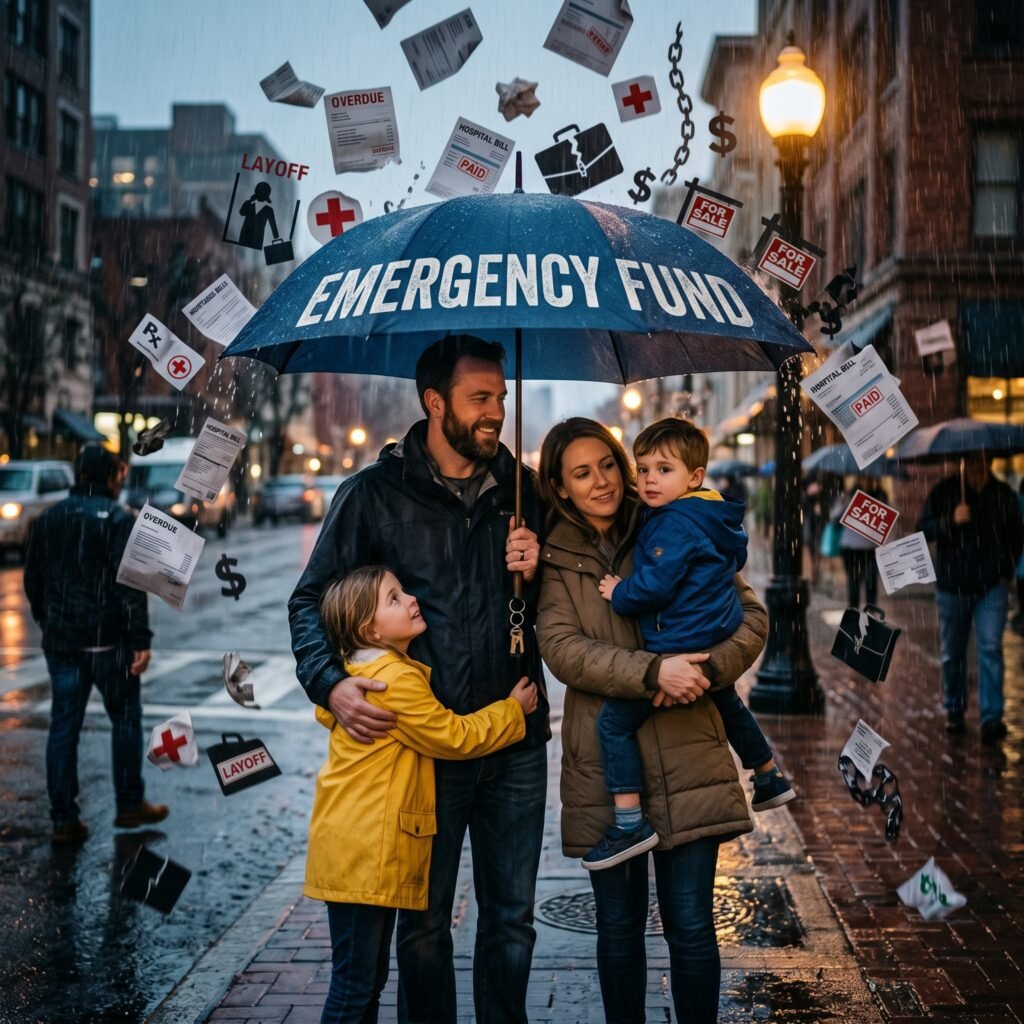
Life is full of sudden surprises, and not all of them are pleasant. A sudden medical bill, unexpected car repair, sudden job loss, or urgent home maintenance can quickly put heavy financial stress on your budget. That is why having an emergency fund is one of the most important steps you can take toward total financial security.
An emergency fund acts as a real-world financial safety net. It helps you cover unexpected expenses without relying on credit cards, high-interest personal loans, or borrowing money from friends and family.
If you are starting with zero savings and living on a low income, do not worry. Building a solid emergency fund is completely possible regardless of your current income level. This comprehensive guide will walk you through the exact, actionable steps to create an emergency fund from scratch, reduce your monthly expenses, find extra cash, and develop long-term financial stability.
What Is an Emergency Fund?
An emergency fund is money set aside specifically to cover unexpected expenses or urgent financial crises. Unlike regular savings meant for vacations, holiday gifts, or planned large purchases, an emergency fund is a financial shield. You should only touch this money when a true emergency happens.
Common situations where an emergency fund is necessary include:
- Sudden job loss or a sudden drop in your monthly work hours.
- Urgent medical emergencies or unexpected dental work.
- Major car repairs when your vehicle is required to get to work.
- Unexpected home repairs, like a leaking roof or a broken water heater.
- Emergency travel expenses, such as visiting a sick family member.
Having liquid cash available for these specific situations prevents you from falling into bad debt cycles and significantly reduces daily anxiety.

Why Is an Emergency Fund Important?
Many working Americans live paycheck to paycheck. When you have no cash cushion, even a relatively small unexpected bill can create massive, long-term financial hardship.
An emergency fund provides four major life-changing benefits:
1. True Financial Security
Knowing you have cash sitting in a safe account specifically for hard times instantly reduces stress. It improves your peace of mind and allows you to make calm decisions during a crisis instead of panicking.
2. Reduced Reliance on Debt
Without emergency savings, most people default to using credit cards or taking out high-interest payday loans when a surprise bill arrives. An emergency fund stops this loop, allowing you to pay cash and avoid paying hundreds of dollars in interest fees.
3. Greater Freedom and Flexibility
Emergency savings give you options during difficult life changes. If you work in a toxic job environment or experience sudden temporary unemployment, having a cash cushion gives you the time to look for a good job rather than accepting the first bad option out of desperation.
4. Stronger Long-Term Financial Health
When an emergency happens and you can pay for it with cash, your long-term goals stay on track. You do not have to pause your retirement savings, dip into your retirement accounts, or stall your progress on paying off regular debts.
READ MORE
How Much Money Should You Save?
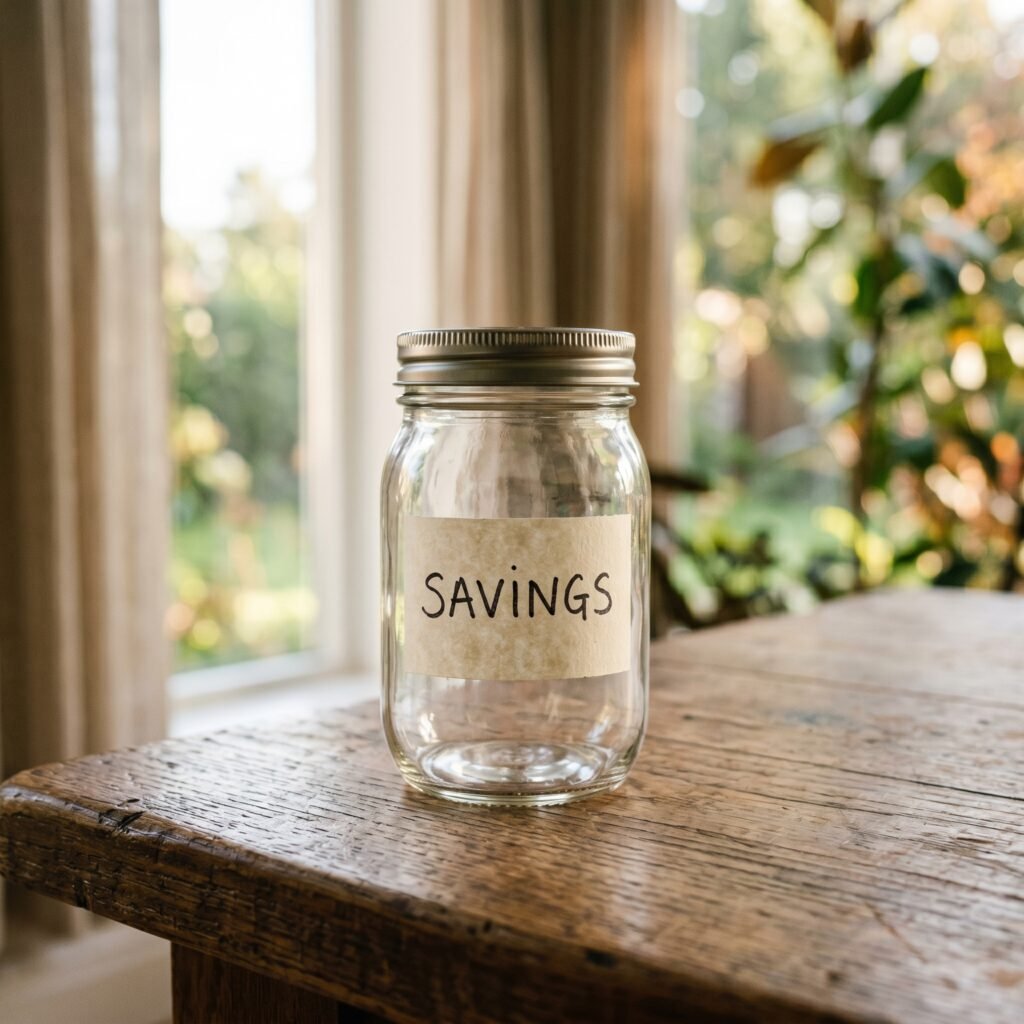
Financial experts generally recommend saving enough money to cover three to six months of essential living expenses. However, if you are starting with absolutely zero dollars, looking at a huge final goal can feel overwhelming.
The secret is to break your ultimate goal down into small, highly achievable milestones. Focus completely on your immediate target before worrying about the next one.
[Goal 1: $500 Starter Goal] ➔ [Goal 2: $1,000 Milestone] ➔ [Goal 3: 1 Month of Expenses] ➔ [Goal 4: 3-6 Months Full Cushion]
The Beginner Milestones
- First Milestone Goal: $500. This small amount can easily cover a basic car battery replacement, a minor plumbing issue, or a quick trip to an urgent care clinic.
- Second Milestone Goal: $1,000. A thousand dollars is a major psychological boundary. It can cover most standard car deductibles, major appliance replacements, or a sudden flight for family needs.
- Third Milestone Goal: One Month of Essential Expenses. This protects you from immediate eviction or utility shut-offs if your income stops for a short period.
- Long-Term Ultimate Goal: Three to Six Months of Expenses. This is your complete shield against major economic downturns or prolonged job searches.
For example, if your baseline monthly expenses total $3,000, your ideal long-term emergency fund will eventually range from $9,000 to $18,000. Do not let large numbers scare you away from starting. Building a financial safety net is a slow, gradual process. Every single dollar you add makes your shield stronger than it was yesterday.
Step 1: Calculate Your Essential Monthly Expenses
Before you can set an accurate savings target, you must figure out exactly how much money you need to survive each month. This means separating your needs from your wants.
Grab a notebook, open a simple spreadsheet, or look closely at your bank statements from the last 90 days. Divide your spending into two distinct lists.
What to Include (Essential Survival Needs)
- Housing: Your monthly rent payment or mortgage payment.
- Utilities: Electricity, gas, water, trash collection, and a basic internet plan.
- Groceries: Basic, raw food ingredients needed to feed your household (exclude alcohol and luxury treats).
- Insurance: Health insurance, auto insurance, renter’s or homeowner’s insurance premiums.
- Transportation: Public transit passes, or gas money and basic maintenance for a necessary vehicle.
- Minimum Debt Payments: The absolute minimum payments due on credit cards, student loans, or personal loans to avoid default.
- Healthcare: Necessary monthly prescription medications or ongoing doctor visits.
What to Exclude (Non-Essential Wants)
- Entertainment: Movie tickets, concerts, video games, and hobby spending.
- Dining Out: Fast food, coffee shop visits, work lunches, and food delivery apps.
- Vacation Spending: Flights, hotels, and travel weekend funds.
- Subscription Services: Multiple video streaming platforms, music apps, gym memberships, and premium delivery services.
Once you add up only your essential survival needs, you will find your baseline monthly survival cost. If your baseline number is $2,500, then your three-month emergency goal is exactly $7,500. Knowing this exact baseline number gives you a clear target to aim for.
Step 2: Open a High-Yield Savings Account (HYSA)

Where you choose to keep your money is just as important as how much you save. Keeping your emergency fund cash in your everyday checking account is a major mistake. When your emergency money is mixed in with your daily spending money, the temptation to spend it on non-emergencies is incredibly high.
To prevent this, you must open a separate account. However, traditional brick-and-mortar banks with physical branch locations are often a terrible deal for savers.
The Problem with Traditional Local Banks
On average, traditional local banks offer an incredibly low interest rate, often around 0.01% to 0.45% Annual Percentage Yield (APY). This means the bank calculates less than half a percent of what you have in your account over the year, adding just pennies to your balance each month.
Even worse, many traditional banks charge a monthly maintenance fee of $5 to $10 unless you maintain a high minimum balance.
- Example: If you open a traditional savings account with $25 and add $25 every single month for a full year, you will have personally put in $325.
- At a low 0.01% interest rate, you will earn only about $0.73 in interest for the entire year.
- If the bank charges you a $5 monthly fee, they will steal $60 in fees out of your account over those 12 months. Your $325 savings actually shrinks down to $265. You are literally losing money just for trying to save it.
The Solution: Online High-Yield Savings Accounts
To make your money work for you, open an online-only High-Yield Savings Account (HYSA). Because online banks do not have to pay for physical building locations or massive local staff, they pass those savings on to you in the form of much higher interest rates.
Excellent online banking options, such as the Capital 1 360 Savings Account (and similar online banking platforms), frequently offer APYs between 4.00% and 5.00%. Furthermore, the best online savings accounts have zero minimum balance requirements and zero monthly maintenance fees. You do not need any money at all just to open the account.
Let us look at that same example using an online high-yield account earning a 4.3% APY:
- You save $25 a month for 12 months ($325 total personal deposits).
- With zero monthly fees and a high APY, you earn nearly $7.00 in pure interest.
- Your total balance becomes $332, and you get to keep every single penny.
While seven dollars may not seem like a fortune at first, it proves a vital concept: your money is growing safely on its own rather than shrinking due to predatory bank fees. Always ensure that any online bank you choose is fully backed and insured by the Federal Deposit Insurance Corporation (FDIC). This guarantees that your money is 100% safe up to $250,000 if the bank ever goes out of business.
Step 3: Start Small With the 52-Week Money Challenge
One of the biggest mistakes people make when starting out is believing they must save massive blocks of money immediately. If you cannot afford to save $100 a week, you might feel defeated and choose to save nothing at all.
Consistency matters far more than the size of your deposit. A highly effective, fun, and easy way to build a strong savings habit from scratch is the 52-Week Money Challenge.
This method slowly builds your saving muscles over the course of one full year. The basic principle is simple: you save an amount of money that matches the specific number of the week you are currently in.
- Week 1: Save $1
- Week 2: Save $2
- Week 3: Save $3
- Week 4: Save $4
- Week 52: Save $52
Week 1 ($1) ➔ Week 2 ($2) ➔ Week 10 ($10) ➔ Week 26 ($26) ➔ Week 52 ($52)
Total Saved after 52 Weeks = $1,378
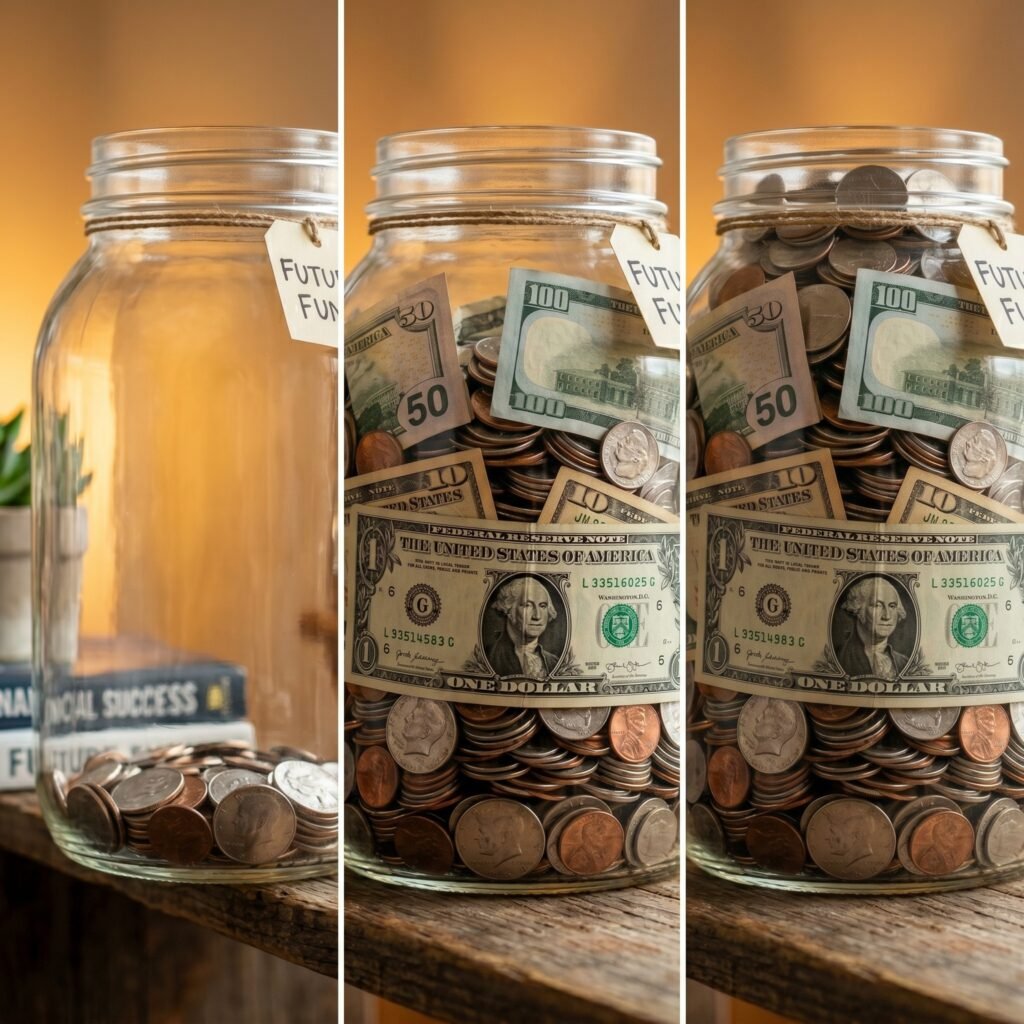
During the first few months of this challenge, the amounts are so incredibly small that you will barely notice the money leaving your wallet. If you prefer to save cash, you can simply drop these dollar bills into a dedicated emergency fund jar on your counter. Once the jar accumulates a decent amount, walk to your bank or transfer it online into your high-yield savings account.
By the final week of the year, your highest weekly savings amount will only be $52. But if you stick to the plan consistently for all 52 weeks, you will have saved exactly $1,378! If you currently have zero dollars in savings, hitting over $1,300 in one year is a massive financial win.
This challenge also gives you a long time window to slowly adjust your lifestyle, cut expenses, and find simple ways to increase your income as the weekly dollar amounts gradually rise.
Step 4: Automate Your Savings Process

Human willpower is limited. If you have to make a conscious decision to transfer money from your checking account into your savings account every single time you get paid, you will eventually find an excuse to skip a week. You might see a flash sale, an item you want, or just forget entirely.
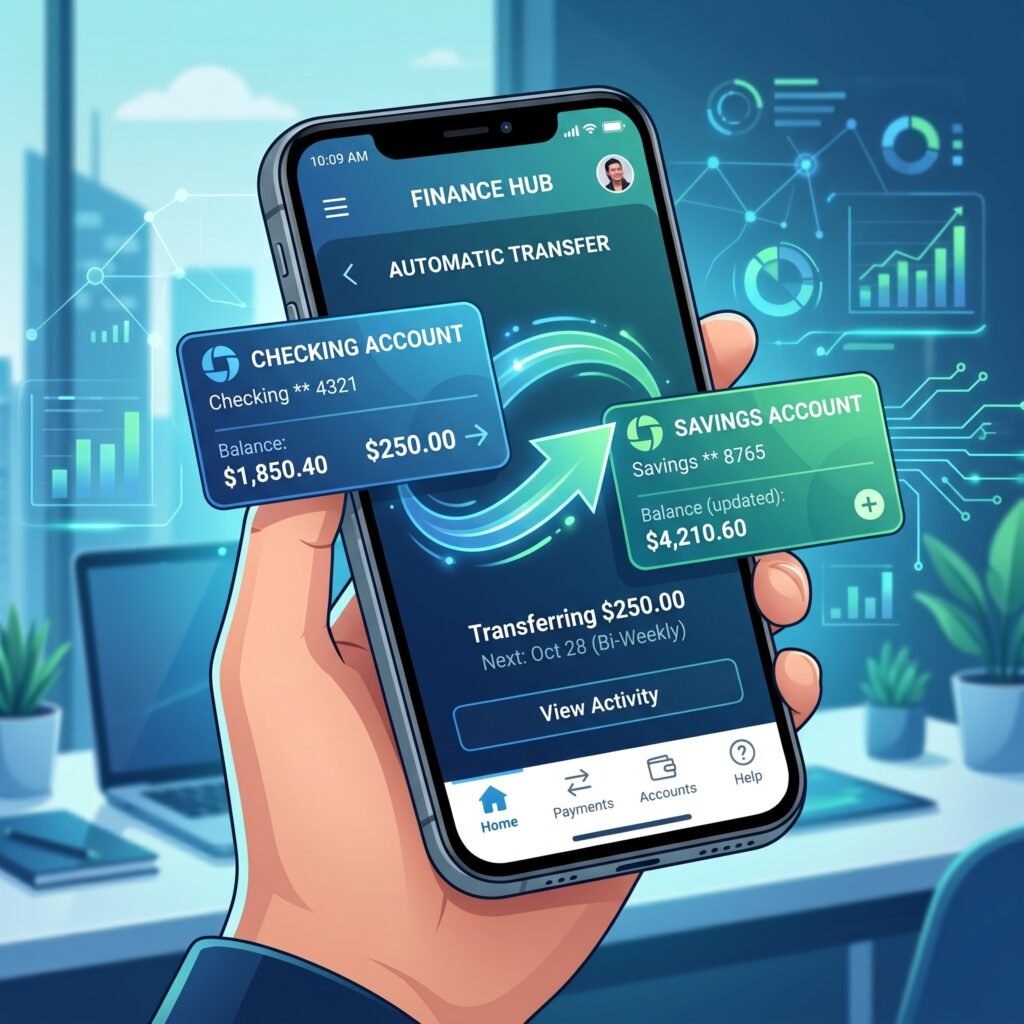
The easiest way to beat this human habit is to automate your savings completely. Automation acts like a personal assistant working for your wallet. It removes the need for daily decision-making and ensures your savings goal happens automatically.
How to Set Up a Foolproof Automation System
- Direct Deposit Allocation: Ask your employer’s payroll department if they can split your paycheck automatically. Have them send 95% of your pay to your regular checking account and automatically route 5% directly into your online high-yield savings account. You never see the money in your main account, so you never miss it.
- Automatic Bank Transfers: If your employer cannot split your check, log directly into your online banking portal. Set up a recurring, automatic transfer to happen the exact day after your paycheck hits your account.
- Choose a Realistic Schedule: Match your transfer schedule directly to how you get paid. If you get paid bi-weekly, set up a regular $25 transfer for every alternating Friday.
If you are highly nervous about your checking account balance running low, start with a very small automatic transfer, such as $5 or $10 every single week. You will quickly adjust to this new baseline. Treat this automatic transfer exactly like a mandatory monthly utility bill or a tax that you are forced to pay. You are paying your future self first before spending money on anyone else.
Step 5: Reduce Everyday Expenses Using a “Swap List”
Finding extra money to build your safety net usually starts with identifying areas where you are currently wasting cash. To uncover hidden money, you must track your exact expenses for 30 days. Look through your recent bank statements and identify non-essential purchases you can cut.
To make this process easy and practical, use a Swap List. Take a piece of paper and draw two columns. In the first column, write down a luxury or high-cost item you currently pay for regularly. In the second column, research and write down a much lower-cost or completely free alternative.
Example Financial Swap List
| Current High-Cost Expense | Smart Low-Cost Alternative | Monthly Cash Saved |
| Premium Coffee Shop Visit ($5 daily) | Brew Premium Coffee at Home ($0.50/cup) | $135.00 |
| Fast Food / Restaurant Lunches ($12/day) | Meal Prep Simple Rice, Beans, & Chicken | $240.00 |
| 3 Video Streaming Services ($45/month) | Keep 1 Service, Use Free Library Apps | $30.00 |
| Brand-Name Grocery Items | Buy Store-Brand / Generic Items | $50.00 |
| Name-Brand Cell Phone Plan ($80/month) | Switch to a Prepaid MVNO Carrier ($25/month) | $55.00 |
By executing just a few simple swaps from your list, you can easily unlock an extra $200 to $500 every month. The absolute secret to success here is to take that saved money and immediately transfer it into your high-yield emergency account. If you cut a subscription but leave the cash in your checking account, you will simply spend it on something else.
Step 6: Leverage Government Assistance and Community Programs
If you live on a tight budget or a low income, cutting back on coffee or streaming apps might not be enough to move the needle. In this situation, you should actively look into public benefits and community assistance programs to safely lower your core living costs.
Using government benefits is a smart, strategic way to free up cash room in your household budget so you can build a safety net.
Highly Effective Programs to Explore
- SNAP (Supplemental Nutrition Assistance Program): This program provides monthly funds via an EBT card to buy fresh groceries. For instance, in states like Pennsylvania, a family of four earning up to an annual income of $60,000 can qualify for SNAP benefits or free school meal programs for their children. Qualifying for food assistance instantly frees up hundreds of dollars from your monthly grocery budget that you can save.
- LIHEAP (Low Income Home Energy Assistance Program): This program helps low-income households cover their home heating and cooling utility bills. In many cold states, LIHEAP can completely cover a full month or more of electricity or gas costs during peak winter months when utility bills skyrocket.
- Affordable Connectivity Program (ACP) & Local Internet Alternatives: Look for low-cost internet options offered by large telecom providers like Xfinity or Spectrum for households receiving public assistance. You can often lower your high-speed internet bill down to just $10 to $15 a month.
- Lifeline Cell Phone Benefits: If you qualify based on your income or participation in programs like Medicaid or SNAP, you can receive a completely free smartphone along with free monthly talk, text, and data cell service.
To see a complete list of programs you might qualify for based on your location and specific household size, visit the official government website at usa.gov/benefits. Utilizing these completely legal resources allows you to protect your family while banking the cash you would normally have spent on survival needs.
Step 7: Boost Your Monthly Income
While cutting back on expenses is an excellent starting point, there is a hard limit to how much spending you can cut out of your life. You can only cut your expenses down to zero. However, there is absolutely no limit to how much you can potentially increase your income.
Combining expense cutting with an intentional income boost is the fastest way to accelerate your emergency savings growth. Even a temporary income boost for three to six months can fully fund your safety net.
1. Declutter and Sell Unused Items
Walk through your home with a critical eye. Look for old electronics, tools you rarely use, clothing in good condition, old baby gear, or furniture items gathering dust in your garage. Clean them up, take bright photos, and list them for sale on local platforms like Facebook Marketplace, OfferUp, or eBay. Turning unused physical clutter into immediate, cold cash can easily jumpstart your emergency fund with an initial $300 to $500 injection.
2. Start a Flexible Side Hustle
You do not have to commit to a permanent, rigid second job that ruins your schedule. Look for highly flexible freelance work or app-based gig jobs that allow you to work whenever you have spare time.
- Delivery Gigs: Deliver groceries or food via apps like Instacart, DoorDash, or Uber Eats on weekend mornings.
- Local Services: Offer basic services in your local neighborhood, such as pet sitting, dog walking, lawn mowing, or home cleaning.
- Online Freelancing: If you have marketable digital skills like writing, proofreading, graphic design, bookkeeping, or online tutoring, create a profile on websites like Fiverr or Upwork to take on small projects.
If you earn an extra $100 per week through a simple side hustle, you will bring in an extra $400 every single month. If you route 100% of that extra side income directly into your high-yield savings account, you will reach your milestone $1,000 emergency fund in just two and a half months.
Step 8: Use Financial Windfalls Wisely
Throughout the year, you will likely receive lump sums of unexpected cash. These are known as financial windfalls. When a windfall hits your account, it is highly tempting to treat it as “free money” and spend it immediately on a luxury purchase or an expensive night out.
If you want to break the cycle of living paycheck to paycheck, you must change your mindset regarding windfalls. Treat every unexpected influx of cash as an immediate opportunity to secure your life.
Common Examples of Financial Windfalls
- Annual Tax Refunds: The average American tax refund is often between $1,500 and $3,000. Receiving this check is the single fastest way to fully fund a starter emergency fund in one day.
- Work Bonuses: Any performance bonuses or holiday cash awards given by your employer.
- Cash Gifts: Birthday, holiday, or wedding cash gifts from family members.
- The Three-Paycheck Month: If you are paid bi-weekly, there are two months every single year where you will receive three paychecks instead of two. Because your regular monthly budget is built around two checks, that surprise third paycheck is a massive windfall that can go straight into your emergency savings without affecting your daily budget.
The 80/20 Rule for Windfalls
If saving the entire windfall feels too restrictive, use a balanced approach like the 80/20 rule. Take 80% of the unexpected money and send it straight into your online high-yield savings account to build your safety net. Take the remaining 20% and use it to treat yourself or your family to something nice. This allows you to celebrate your life while making massive, measurable progress toward permanent financial security.
Step 9: Establish Strict Rules for Using the Money

The hardest part of maintaining an emergency fund is keeping your hands off the money. A true emergency fund is not a slush fund for spontaneous weekend trips, nor is it a holiday shopping fund.
If you constantly dip into your savings for non-emergencies, your financial safety net will never grow. To protect your cash, you must establish crystal-clear rules for what constitutes a true emergency before a situation happens.
What is a True Emergency?
To determine if a situation justifies pulling money out of your high-yield savings account, run the scenario through this simple Three-Question Test:
- Is it completely unexpected? Did this event happen out of nowhere without warning? (An unexpected medical emergency or a sudden flat tire passes this test. Annual car registration or holiday gifts do not, as you know those are coming ahead of time).
- Is it absolutely necessary? Do you need to pay for this item to preserve your health, your home, or your ability to earn an income? (Repairing a broken transmission on your commuter car is necessary. Upgrading your functioning phone because a new model came out is not).
- Is it highly urgent? Does this issue require immediate financial payment right now to prevent a severe negative domino effect in your life?
[Unexpected?] + [Necessary?] + [Urgent?] = TRUE EMERGENCY (Okay to use funds)
If a situation cannot score a definitive YES to all three questions, it is not a true financial emergency.
- Example: Spotting a pair of high-quality leather riding boots on a 30% discount might feel incredibly exciting and urgent to your emotions. But it is not unexpected, it is not necessary for your survival, and it is not an urgent crisis. Leave your emergency fund completely alone.
- Example: If your tooth breaks on a Tuesday morning and causes immense physical pain, it is unexpected, highly necessary to fix for your physical health, and deeply urgent. This is exactly what you saved the money for. Use the cash proudly, fix your health, and then prioritize rebuilding that account balance back up with your regular savings plan as soon as possible.
Common Emergency Fund Mistakes to Avoid

As you embark on this financial journey, be on the lookout for these frequent traps that can derail your hard-earned progress:
1. Waiting for the Perfect Time to Start
There is no such thing as a perfect financial time. If you wait until you are completely debt-free, receive a massive raise, or have all your bills paid off, you will never start. The best time to start saving is today. Start with just five dollars this week to build the habit.
2. Investing Your Emergency Savings in the Stock Market
Never place your primary emergency fund cash into volatile investments like individual stocks, mutual funds, crypto, or real estate. While the stock market can grow your wealth over time, it can also crash heavily during an economic downturn—the exact time you are most likely to lose your job. Your emergency fund must remain stable, low-risk, and completely liquid in an FDIC-insured high-yield savings account so you can withdraw it in cash within 24 hours without penalty.
3. Forgetting to Replenish the Account After an Emergency
An emergency fund is meant to be used. When a real crisis occurs, do not feel guilty about spending the money you saved. That is its exact purpose! However, once the storm passes and your life stabilizes, you must instantly adjust your budget to focus completely on rebuilding your account balance back to its original target level.
How to Optimize Your Content to Rank in Google Search and AI Search Results (EEAT & SEO Blueprint)
To ensure this comprehensive guide ranks at the absolute top of traditional Google search pages and features prominently inside Google AI Overviews (Search Generative Experience), the content must align perfectly with modern SEO principles, semantic search intent, and the core pillars of E-E-A-T (Experience, Expertise, Authoritativeness, Trustworthiness).
1. Optimize for Google AI Overviews & Featured Snippets
Google’s AI engine extracts direct, clear, and structured text to answer user queries instantly. To be the source the AI chooses, use the following formatting rules throughout your digital articles:
- Use Clear Definitions: Use direct phrases like “An emergency fund is…” immediately beneath major headers. AI models excel at scanning text for direct definition matches.
- Include Structured Bullet Lists and Tables: Google AI heavily prioritizes pulling clean data tables, numbered step-by-step sequences, and bulleted summaries directly into the AI results box.
- Write Schema-Ready FAQ Sections: Answer common search questions with a direct, one-sentence answer first, followed by supporting context.
2. Embed Real-World Experience & Trustworthiness (E-E-A-T)
Modern algorithms penalize generic, robotic text that sounds like a standard AI output. To showcase deep human expertise and build reader trust, always weave in these elements:
- Provide Concrete Financial Proof Examples: Instead of writing “high-yield accounts earn more interest,” show the exact mathematical proof over 12 months using clear dollar figures ($325 vs $265) to demonstrate authentic financial expertise.
- Mention Legitimate Banking and Government Standards: Cite specific, trusted institutions like the FDIC and official government domains like usa.gov/benefits. This signals to search engine crawlers that your content is accurate, heavily researched, and completely safe for users to follow.
3. Maintain an Easy, Highly Readable Text Structure
High-retention articles require a clean, logical heading structure (H1, H2, H3) that makes the content easy to scan for both human eyes and search engine algorithms. Keep your paragraphs limited to 2-3 sentences max. Use bold text to highlight critical takeaways so readers can absorb the core lessons in under five seconds of scrolling.
Frequently Asked Questions (FAQ)
How much money should a beginner have in an emergency fund?
A beginner should focus entirely on a small starter goal of $500 to $1,000. This baseline amount is large enough to cover the vast majority of daily unexpected surprises, such as a basic car repair or an urgent medical co-pay, without forcing you to use a credit card.
Where is the absolute best place to keep my emergency fund cash?
The ideal place to keep your money is a dedicated online High-Yield Savings Account (HYSA) that is fully insured by the FDIC. These specialized accounts offer zero monthly fees, require no minimum balances, and pay interest rates that are 10 to 12 times higher than a traditional local neighborhood bank branch.
Is it a good idea to invest my emergency fund to get higher returns?
No. Your emergency fund should never be exposed to stock market volatility or high-risk investments. The primary purpose of this money is liquidity and safety, not aggressive wealth growth. Keep it in a secure savings account where the dollar value is completely guaranteed and accessible within 24 hours.
How can I build an emergency fund if my monthly income is extremely low?
You can build a great fund on a low income by automating very small weekly transfers (such as $5 a week), participating in the 52-Week Money Challenge, using a Swap List to cut hidden subscription costs, and applying for public programs like SNAP or LIHEAP on usa.gov/benefits to safely lower your core living costs.
What is the difference between regular savings and an emergency fund?
Regular savings are earmarked for planned, happy future expenses that you know are coming (such as a vacation, a new car down payment, or holiday gifts). Your emergency fund is a strict protection tool reserved exclusively for urgent, unexpected, and necessary survival crises.

Conclusion
Building a solid emergency fund completely from scratch may feel like a daunting challenge when you are looking at a zero balance today. However, it is one of the most valuable, life-changing financial habits you will ever develop in your lifetime.
Do not let the final long-term target numbers overwhelm your mind. Start small by aiming for a simple, realistic $500 milestone. Automate your weekly deposits so you never have to think about it, use a practical swap list to clear out hidden expenses, leverage public benefits strategically to free up cash room, and protect your savings by enforcing strict usage rules.
Remember, a world-class financial safety net is never built overnight. Every single dollar you save today actively moves you one step closer to absolute financial freedom, deep peace of mind, and total protection against life’s unexpected challenges. The absolute best time to start building your emergency fund shield is right now.