

A Cold Night in March
The March air was freezing. It felt like needles poking at my skin. I stood on the back steps of a small, dark house. The wood under my boots felt soft and rotten.
The delivery note on my phone was simple. It said: “Please knock loud.”
I looked at the house. No lights were on. It looked like nobody had lived there for years. I gripped the warm pizza box tighter. It was the only warm thing in the world right now.
I knocked hard. The sound echoed through the quiet street. My heart beat a little faster. Why was it so dark? Why was the air so heavy?
“Come in,” a weak voice said.
The voice sounded like dry leaves rubbing together. It was thin and tired. I pushed the door open. It wasn’t locked.
Inside, the house was colder than the street. It smelled like old paper and dust. I felt a shiver that had nothing to do with the wind.
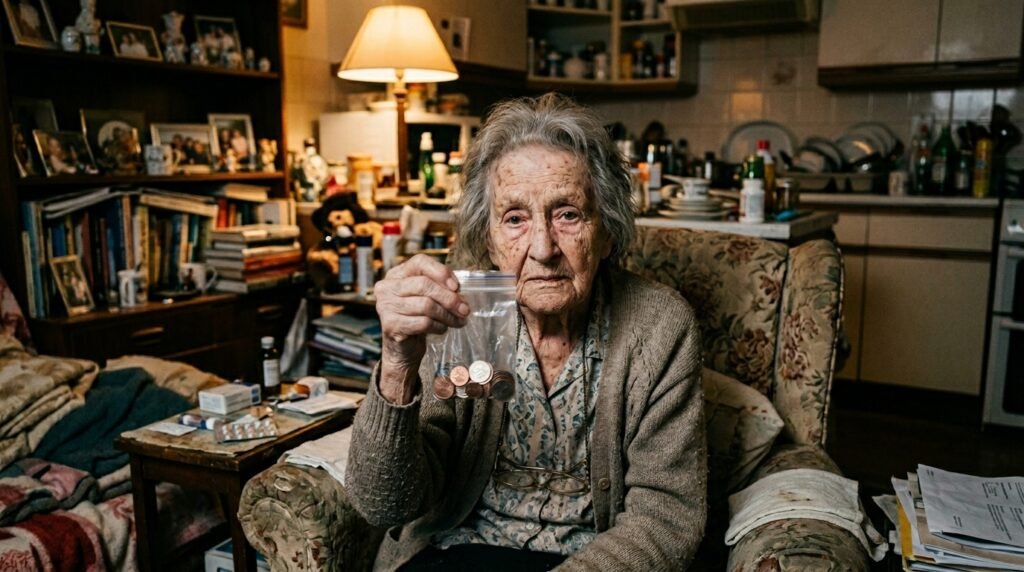
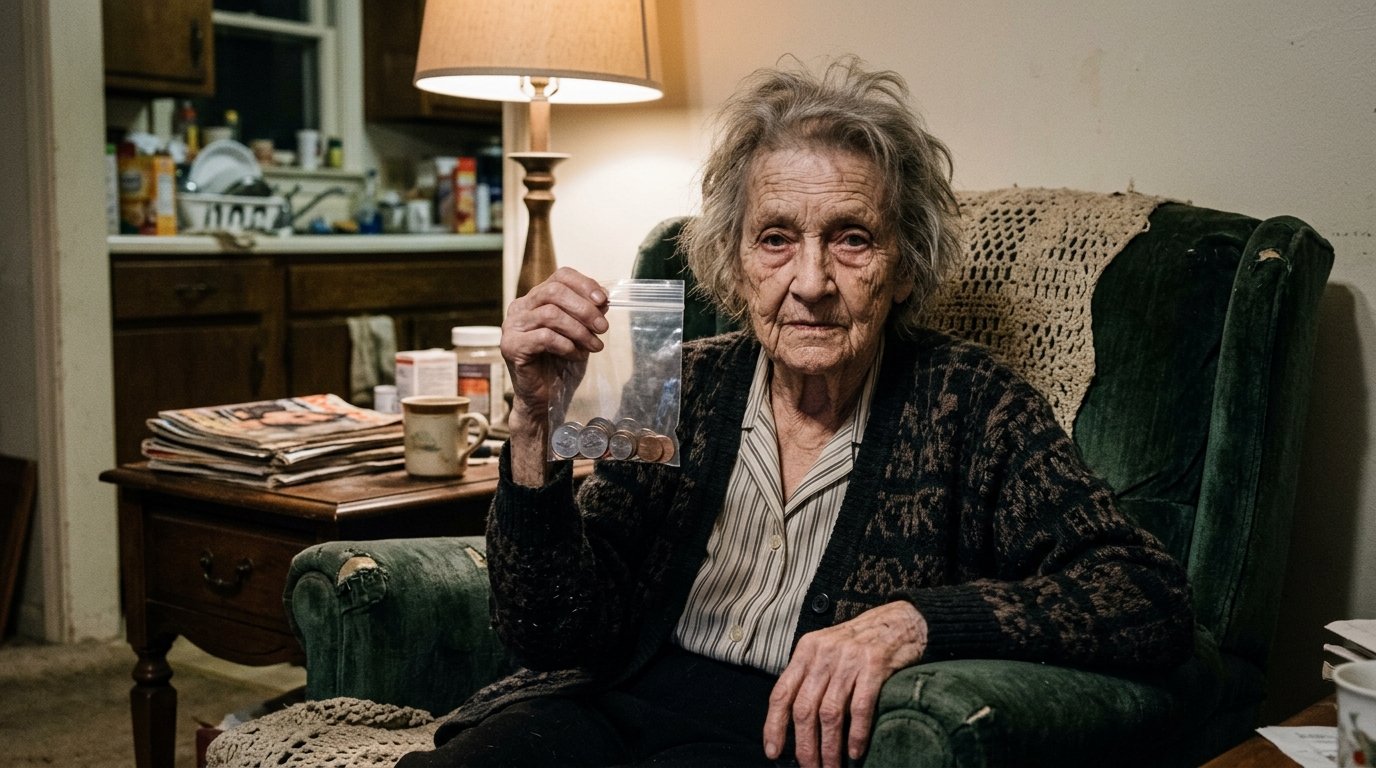
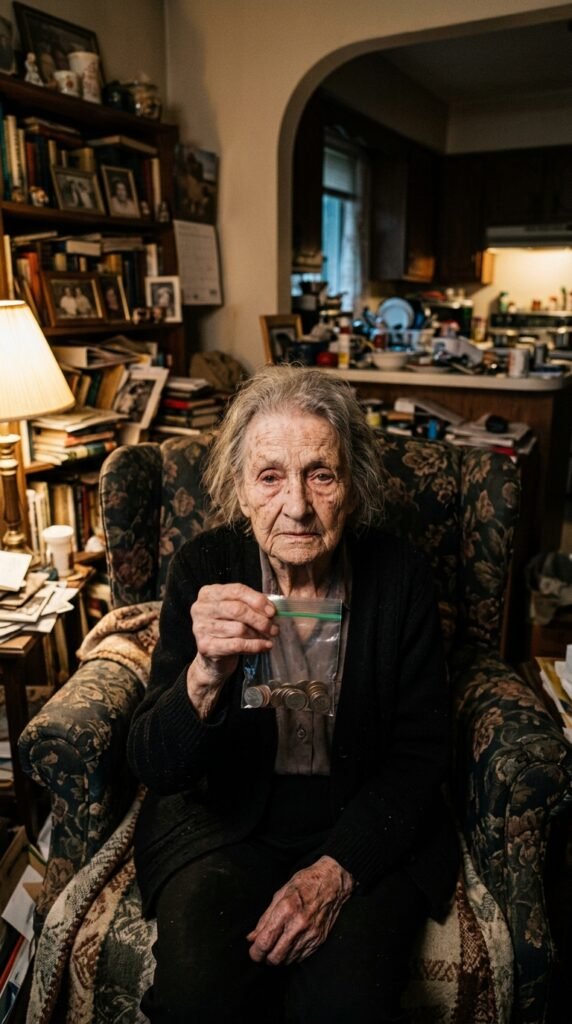
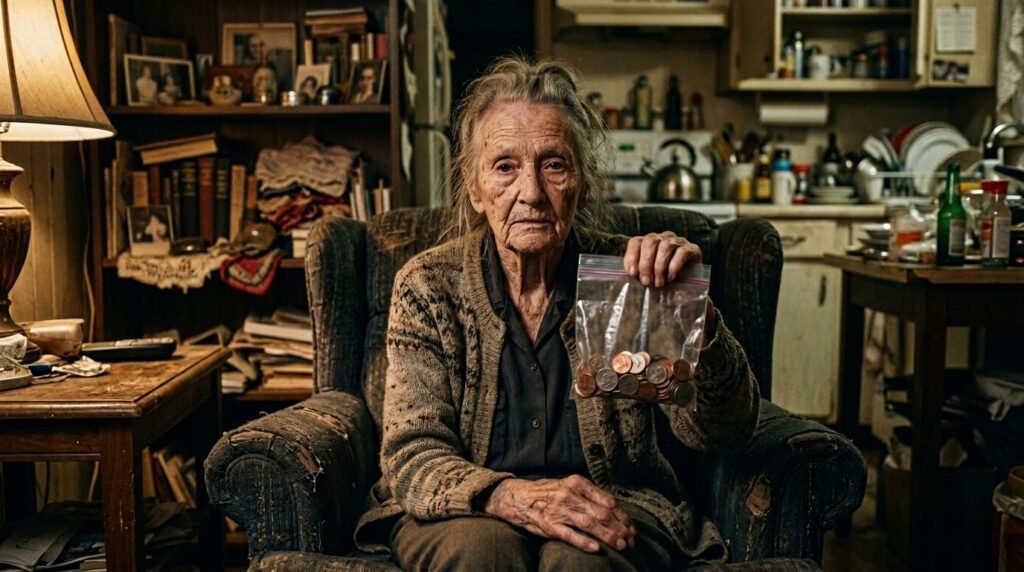
A small lamp flickered in the corner. In a worn-out chair, I saw her. An elderly woman sat there, buried under five or six heavy blankets. Only her face was visible.
Her skin was pale, almost like glass. Her eyes were large and watery. She looked at the pizza box in my hands. It was just a $15 pepperoni pizza, but she looked at it like it was a chest of gold.
“I keep the heat low,” she whispered. Her breath made a small cloud in the air. “The medicine costs too much. It is the only thing I cannot skip.”
She reached out with a shaking hand. She held a small plastic bag filled with coins. Pennies, nickels, and dimes.
“I think this should cover it,” she said. “I counted it twice. Please, take it.”
I looked at her hands. They were thin and blue from the cold. Then I looked past her into the kitchen.
The fridge door was hanging open. It was empty. There was only a bottle of water and a small white bag from the pharmacy. No bread. No eggs. Nothing.
She wasn’t buying pizza because she wanted a treat. She was buying it because she was starving and couldn’t walk to the store.
“It is already paid for,” I said. My voice sounded thick in my throat.
“Oh, no,” she gasped. “I didn’t pay online. I don’t have a computer.”
“The shop… we had a promotion,” I lied. “The 100th customer of the month gets a free meal. You are the winner.”
She froze. Her eyes filled with tears. “Really? Are you sure?”
“I own the place,” I said, telling a second lie. “It’s fine. Keep your change.”
I set the box on her lap. When she opened the lid, the steam hit her face. She closed her eyes and took a deep breath. She looked peaceful for the first time.
I walked back to my car, but I couldn’t drive away. I sat in the dark. My chest felt tight. I thought about my own mother.
Memories of a Different Life
As I sat in the car, I remembered my mom. We didn’t have much when I was a kid.
I remembered one winter when the heater broke. Mom wrapped me in her own coat. She told me stories to make me forget the cold.
“We are explorers in the Arctic,” she would say, laughing even though her teeth were chattering.
She always put me first. She worked two jobs just to buy me new shoes for school. She never complained.
But then, she got sick. The bills piled up. I watched her get smaller and weaker, just like the elderly woman in that house.
I remember the day she died. I was only twenty. I held her hand. It was cold, just like the air in that house tonight.
I never got to say thank you properly. I never got to buy her a house or a warm meal when she was old.
I looked at the house in my rearview mirror. I couldn’t just leave.
I took out my phone and texted my boss. Flat tire. Need 45 minutes.
I got out of the car. I didn’t go back to the shop. I went to the grocery store around the corner.
I bought eggs, milk, bread, soup, and a warm roasted chicken. I bought a small electric heater too.
I went back to her door and knocked.
The Conflict: A Secret in the Shadow
When I walked back in, she was eating a slice of pizza. She looked surprised to see me.
“I forgot your drink,” I said, holding up the bags of groceries.
I spent the next hour cleaning her small kitchen. I plugged in the heater. The room began to glow with a warm, orange light.
“You are a good boy,” she said. Her name was Rose.
“I’m just doing my job, Rose,” I replied.
“No,” she shook her head. “Nobody does this for nothing. Why are you helping an old woman like me?”
“My mother was like you,” I said softly. “I wish someone had helped her.”
Rose looked at me for a long time. Then she looked at a dusty photo on the side table. It was a picture of a young girl with bright eyes.
“That is my daughter, Elena,” Rose said. Her voice went cold.
“Does she live nearby?” I asked.
Rose looked away. “She is busy. She has a big life in the city. She doesn’t have time for a mother who is waiting to die.”
I felt a flash of anger. How could someone leave their mother in a freezing house with no food?
“I haven’t seen her in twenty years,” Rose whispered. “Not since the day her father died.”
“I’m sorry,” I said.
“Don’t be,” Rose said. “There are secrets in this family. Heavy secrets. They weigh more than those blankets.”
She reached under her chair and pulled out a wooden box. It was locked.
“If something happens to me,” Rose said, “I want you to take this. Promise me.”
“Rose, don’t talk like that. You’ll be fine.”
“Promise me!” she raised her voice. Her eyes were desperate.
“I promise,” I said.
I left that night feeling like the world was a strange place. I went back to Rose’s house every day for a week. I brought her soup. I fixed her leaky sink.
We became friends. She told me about her garden. She told me about how she used to love dancing.
But she never talked about the secret again.
Until the morning I arrived and found the door wide open.
The Discovery: The Empty Chair
The air was still. The heater I bought was still humming, but the house felt empty.
“Rose?” I called out.
No answer.
I walked into the living room. Rose was still sitting in her chair. But her eyes were closed. She looked like she was sleeping, but there was no sound of breathing.
The pizza box from a week ago was neatly folded on the table.
She was gone.
I called the ambulance, but I knew it was too late. I felt a deep, hollow sadness. I had only known her for a short time, but she felt like the family I had lost.
While I waited for the police, I remembered my promise. I reached under the chair. The wooden box was there.
I tucked it under my coat. I didn’t know why, but I felt like I had to protect it.
The Funeral Scene
The funeral was three days later. It was a gray, rainy day.
I was the only person there at first. I stood by the grave with a single rose in my hand.
Then, a black car pulled up. A woman stepped out. She was wearing expensive clothes and large sunglasses. She looked like she belonged in a magazine, not a muddy graveyard.
This was Elena.
She didn’t cry. She stood far away, looking at her watch. She looked annoyed to be there.
“Are you the delivery driver?” she asked, walking over to me. Her voice was sharp.
“I was her friend,” I said.
“She was a difficult woman,” Elena said, looking at the casket. “I hope she didn’t leave a mess in that house. I want to sell it quickly.”
“She was starving, Elena,” I said. I couldn’t keep the anger out of my voice. “She was freezing to death while you were ‘busy’ in the city.”
Elena laughed, but it wasn’t a happy sound. “You don’t know anything. You saw a sweet old lady. I saw a woman who ruined my life.”
“She loved you,” I said. “She had your picture by her bed.”
“That picture was a lie,” Elena snapped. “Everything in that house is a lie.”
She turned around and walked back to her car without saying goodbye to her mother.
I stood there in the rain. I felt the wooden box heavy in my hand. It was time to find out the truth.
The Revelation: The Letter in the Box
I went home and sat at my kitchen table. I used a screwdriver to pop the lock on the wooden box.
Inside, there were old letters, a set of keys, and a large yellow envelope.
The envelope said: To the person who stayed.
I opened it. Inside was a long letter written in Rose’s shaky handwriting.
“My dear friend,
If you are reading this, I am finally at peace. You gave me warmth when I was cold. You gave me food when I was hungry. But most of all, you gave me your time.
You asked about Elena. You saw her at the funeral, didn’t you? I know how she looks. I know what she thinks.
Twenty years ago, Elena’s father—my husband—died. Everyone thought it was a heart attack. Even the police.
But Elena knows the truth. She saw me do it.
He was a cruel man. He hurt us for years. That night, he was going to hurt Elena. I did what I had to do to save my daughter. I put his heart medicine in his drink. All of it.
I killed him to keep her safe.
But Elena couldn’t look at me after that. She didn’t see a hero. She saw a monster. She ran away and never looked back.
I stayed in that house as a prison. I lived in the cold and the dark because I felt I deserved to suffer. I didn’t want to spend money on heat or food because I felt the money belonged to the life I took.
But then you came.
You showed me that I was still a human being. You showed me that even a sinner deserves a warm slice of pizza and a kind word.
In this box, you will find the keys to a safe deposit box at the bank. Inside is the money I saved for twenty years. It is over $200,000.
I cannot give it to Elena. She would hate it.
I am giving it to you. Use it to open your own restaurant. Call it ‘Rose’s Place.’ Feed the people who are cold. Feed the people the world has forgotten.
Please, do not feel guilty. You saved me in my last days. You gave me the courage to die without fear.
With love, Rose.”
I dropped the letter. My hands were shaking.
The elderly woman wasn’t just a victim of poverty. She was a woman carrying a mountain of guilt. She had sacrificed her soul for her daughter, and her daughter had paid her back with silence.
I thought about the empty fridge. I thought about the plastic bag of change.
She had thousands of dollars in the bank, but she was counting pennies for a pizza. She was punishing herself every single day.
The Ending: Rose’s Place
Six months later, the air was turning cold again.
I stood in front of a small building on the corner of the street. Above the door, a bright neon sign glowed: Rose’s Place.
It wasn’t a fancy restaurant. It was warm and filled with comfortable chairs.
On every table, there was a small sign: If you are hungry and cannot pay, just ask for the Rose Special.
I walked to the back of the kitchen. I was the owner now. I didn’t have to deliver pizzas in the snow anymore.
A bell rang at the front door.
I walked out to see who it was. A young man stood there. He looked tired. His clothes were thin, and he was shivering.
“How much for a slice?” he asked, reaching into his pocket for a few coins.
I looked at him and smiled. I remembered the elderly woman in the blankets. I remembered the cold house.
“It’s already taken care of,” I said. “Sit down. Let me get you something hot.”
He looked confused, just like Rose had.
“Why?” he asked.
“Because someone once did it for me,” I said.
As I walked back to the kitchen, I looked at the wall. There was a photo of Rose. Not the tired woman in the blankets, but a photo I found in the box—Rose as a young woman, dancing in a garden.
She was smiling.
I realized then that the secret wasn’t just about the murder or the money. The real secret was how much a small act of kindness could change a person’s life.
I had tried to save an elderly woman with a pizza. In the end, she was the one who saved me.
I picked up a fresh, warm pizza and headed toward the young man’s table.
The world was still cold outside, but inside Rose’s Place, it was finally warm.