

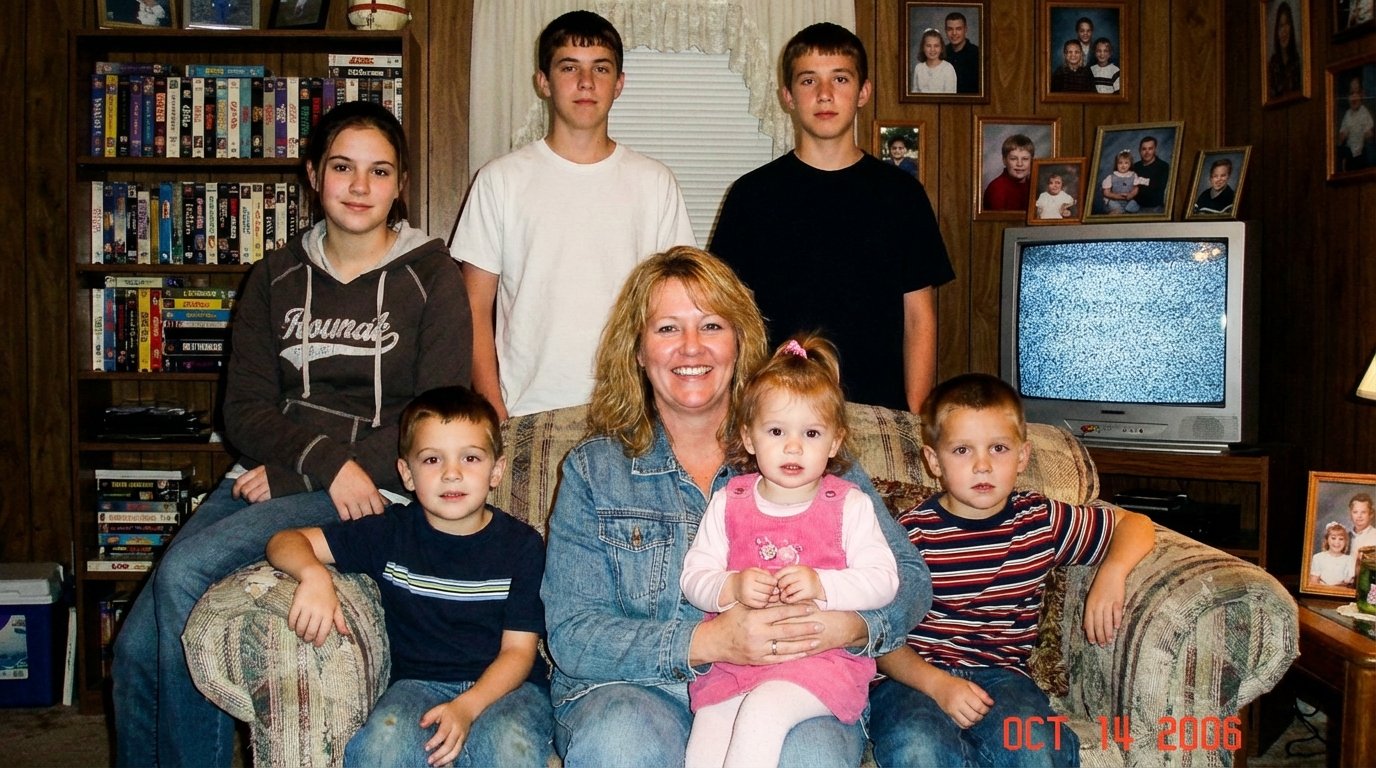
The silence in the house wasn’t just quiet; it was heavy. It felt like a physical weight pressing against my chest, making every breath a chore.
I looked at the clock. It was 6:00 PM. I had been ready since noon.
For my 60th birthday, I didn’t want a cruise or a fancy piece of jewelry. I didn’t want a party filled with neighbors I barely knew or distant cousins I hadn’t seen in a decade. I wanted my children. I wanted the six people who were once my entire universe to sit around my table one more time.
The table was a sea of porcelain and silver. I had ironed the linen napkins until they were crisp enough to cut paper. I had polished the wine glasses until they caught the fading afternoon light.
In the kitchen, the lasagna I’d made for Mark was staying warm in the oven. The roast chicken for Jason was resting under foil. The apple pie—the one Sarah loved with the extra dusting of cinnamon—sat cooling on the counter, filling the air with the scent of sugar and home.
I sat at the head of the table. I smoothed my dress, a navy blue silk I’d bought on clearance three years ago and had never found an occasion to wear.
The minutes ticked by like hammer blows.
6:15 PM. 6:30 PM.
I checked my phone. No missed calls. No “running late” texts. Just the cold, black screen reflecting my own anxious face.
The Long Road to This Empty Room
I closed my eyes and for a moment, the house wasn’t silent. I could hear the echoes of the past—the chaotic, beautiful symphony of a house full of children.
I remembered the early years with David. He used to sweep me off my feet in this very kitchen, spinning me around while the radio played low.
“I want a big family, Mary,” he’d whisper into my hair. “A loud house. A table that’s never empty. I want to look around and see pieces of us in every chair.”
We made that dream come true. Six children in ten years.
There was Mark, the eldest, who always tried to be the man of the house even when he was five. Jason, the athlete. Sarah, my sensitive soul. Then the triplets—Leo, Mia, and Toby—who were a whirlwind of sticky handprints and constant laughter.
I remembered the nights I spent rocking them to sleep, my back aching, my eyes burning with exhaustion. I remembered the scrape of chairs on the linoleum and the way the house smelled of laundry detergent and grass.
Then came the day the music stopped.
David didn’t leave because we fought. He didn’t leave because we ran out of love. He left because he decided the dream was too loud.
“I need to find myself, Mary,” he told me as he zipped his suitcase. “The noise… it’s drowning me out. I can’t breathe here anymore.”
He hadn’t found himself in a mountain retreat or a quiet library. He had found a woman online. She lived overseas, in a place where the sun always shone and there were no mortgages or muddy shoes.
Within months, he was gone. He didn’t look back.
I was left with a mortgage, a broken heart, and six children who didn’t understand why Daddy wasn’t coming home for dinner.
The Years of Sacrifice
I became a ghost in my own life to ensure theirs was bright.
I worked the early shift at the grocery store, scanning cans of beans while the sun was still a gray smudge on the horizon. When the kids went to bed, I put on a different uniform and cleaned office buildings until 2:00 AM.
I learned the language of survival.
I learned how to fix a leaking sink with a wrench and a prayer. I learned how to stretch a single roast chicken into three nights of meals—roast the first night, tacos the second, soup the third.
I never went to the doctor for my own aches. I wore shoes with thin soles until they literally fell apart. Every cent went to school trips, soccer cleats, piano lessons, and college funds.
“One day,” I would tell myself as I sat upright at the kitchen table at 3:00 AM, folding laundry by the light of the stove, “one day they will see. They will understand how much I love them.”
But as they grew, the world pulled them away.
College took Mark to the West Coast. Jason’s job took him to Chicago. Sarah married a man from London. The triplets scattered like dandelion seeds in the wind.
The phone calls grew shorter.
“Hi Mom, happy Sunday, gotta go, the kids have practice.” “Hey Mom, sorry I missed your call, work is crazy.”
I told myself it was natural. I told myself I raised them to be independent. But deep down, the silence of the house started to feel like a judgment.
A Birthday of Shadows
The clock hit 7:30 PM. The candles on the table had burned down halfway, the wax dripping like slow, white tears onto the tablecloth.
I stood up and walked to the window. The street was dark. No headlights turned into my driveway.
I thought about the last time we were all together. It was five years ago, at my mother’s funeral. They had been so busy, checking their watches, taking work calls in the hallway of the funeral home.
Even then, they seemed like strangers who shared a last name.
I went back to the table and picked up a piece of bread. It was cold.
I thought of Elena.
Elena was David’s sister—my former sister-in-law. She was the only one who had stayed in touch after the divorce. But our relationship was strained. She had always been cold, always looking at my house and my life with a hint of pity.
Two weeks ago, I had called her, excited about my 60th.
“I’m inviting them all, Elena,” I’d said. “I’ve sent the plane tickets. I’ve saved for a year to fly them all home. It’s going to be like the old days.”
Elena had been silent on the other end. “Mary, don’t get your hopes up. They have their own lives now. You can’t force them to be the children they used to be.”
“They’ll come,” I had insisted, my voice trembling. “They love me.”
Now, sitting in the dark, her words echoed in my head like a haunting melody. You can’t force them.
8:30 PM.
The lasagna was a dried-out brick in the oven. The house was cold. I felt a sudden, sharp anger flare up in my chest.
How could they? After everything?
I had missed my own life to give them theirs. I had worked until my fingers bled. I had lived in this drafty house alone for years, waiting for the pings of their text messages like a beggar waiting for coins.
I grabbed the edge of the tablecloth. I wanted to rip it off. I wanted to see the porcelain shatter. I wanted the noise back—even if it was the noise of destruction.
Then, a knock at the door.
The Messenger at the Door
My heart leaped into my throat. They’re here, I thought. They’re all together, and they wanted to surprise me. They’re standing on the porch with a cake and a song.
I smoothed my hair and wiped the tears from my cheeks with the back of my hand. I forced a smile onto my face and hurried to the foyer.
I opened the door.
The smile died instantly.
It wasn’t a group of laughing adults. It was a single man. A police officer.
He was young, with a face that looked too soft for the uniform he wore. He held his hat in his hands, and his expression was one I had seen before—the look of a man who was about to break someone’s world.
“Mrs. Miller?” he asked softly.
“Yes,” I whispered. My knees felt weak. “Is it… is it my children? Has there been an accident? Mark? Sarah?”
My mind raced through a thousand horrors. A plane crash. A pile-up on the highway. I felt the air leave the room.
“No, ma’am,” the officer said, stepping into the entryway. “There hasn’t been an accident.”
He reached into his pocket and pulled out a thick, cream-colored envelope. It was slightly crumpled at the edges.
“I was asked to deliver this to you tonight. Personally. At this exact time.”
He handed me the note. My name was written on the front in a handwriting I didn’t recognize. It wasn’t Mark’s bold print or Sarah’s elegant cursive. It was sharp, jagged, and unfamiliar.
“Who gave this to you?” I asked, my voice cracking.
“I can’t say, ma’am. I was just told it was a matter of extreme importance.”
He tipped his hat and backed away, leaving me alone with the silence and the envelope.
I walked back to the dining room. I sat in my chair at the head of the table. My hands were shaking so violently I could barely catch the edge of the paper.
I tore it open.
The first line made the blood turn to ice in my veins.
“Mary, you were never supposed to know the truth about why your children stopped calling.”
The Revelation of the Hidden Debt
The letter was long—three pages of dense, frantic writing. As I read, the world around me began to dissolve.
It wasn’t from my kids. It was from Elena.
“By the time you read this, I will be gone. The cancer has finally won, and I couldn’t take this secret to the grave. I couldn’t let you sit in that house thinking your children are ungrateful monsters.”
My eyes blurred. I wiped them and kept reading.
“Ten years ago, shortly after Toby graduated, David came back. Not to you. To me. He didn’t come back for love; he came back because he was in trouble. He had gambled away everything in Europe. He owed people—dangerous people—more money than you can imagine.”
I felt a cold shiver. David had always been a gambler at heart. He gambled on our marriage, on his career, on his flight to another country.
“He didn’t have the money. But he knew you did. He knew about the inheritance your father left you—the one you were saving for your retirement, the one you never touched so you could stay in that house. He tried to get to it, but he couldn’t. So he went to the kids.”
I stopped. My breath was coming in short, shallow gasps.
“He lied to them, Mary. He told them you were the one in trouble. He told them you had a secret debt, a massive legal problem from your years of working under the table. He told them that if they didn’t pay, you would go to prison. He made them sign a pact of silence. He told them that if they ever mentioned it to you, the ‘authorities’ would find out and take you away.”
I looked at the empty chairs.
“For ten years, Mark has been sending sixty percent of his salary to a shell account he thought was saving you. Sarah took out a second mortgage. The triplets worked extra jobs, sending every penny to ‘the lawyers.’ David was taking it all. He was living off your children’s love for you, turning that love into a weapon.”
The room seemed to spin. All those years I thought they were being distant… they were actually working themselves to the bone to “save” me. They didn’t call because they were ashamed they couldn’t do more. They didn’t visit because they couldn’t afford the flights after David took their money.
“But that isn’t the reason they aren’t there tonight, Mary. This is the part that breaks my heart.”
I turned to the final page.
“Three days ago, Mark found out. He tracked a wire transfer. He confronted David. The truth came out in a scream of rage. All of them—all six of your children—finally realized what had happened. They realized they hadn’t been saving you; they had been funding their father’s sins while you lived in poverty.”
I began to sob. Not the quiet, polite crying of an old woman, but a guttural, soul-wrenching wail.
“They aren’t at your house because they are currently at the police station in the city. They are filing charges. They are reclaiming what was stolen. But more than that… they are terrified. They are terrified to look you in the eye because they feel they failed you by believing his lies. They feel they let you spend ten years alone when they should have been there.”
The letter ended with a final, chilling sentence:
“Look outside, Mary. Don’t look for their cars. Look for the lights.”
The Return of the Light
I stood up, my legs trembling so much I had to lean on the table. I stumbled to the front door and threw it open.
The street was no longer dark.
A long line of cars was turning onto my block. One, two, three… six cars.
They didn’t park on the street. They pulled right onto the lawn, into the driveway, blocking the path.
The doors opened almost in unison.
Mark was the first one out. He looked older, grayer, his face lined with a fatigue I now understood. Behind him was Sarah, her face tear-streaked. Then Jason, and the triplets.
They didn’t say a word at first. They stood at the edge of my porch, looking at me with a mix of profound guilt and overwhelming love.
“Mom,” Mark whispered, his voice breaking.
I didn’t wait. I ran.
I ran down the porch steps as if I were twenty years younger. I crashed into Mark, and then Sarah’s arms were around me, and then the rest of them. We were a huddle of bodies in the driveway, a tangle of limbs and tears under the pale glow of the streetlamps.
“We’re so sorry,” Sarah sobbed into my shoulder. “We thought we were protecting you. We thought we were keeping you safe.”
“I know,” I whispered, holding them as tight as I could. “I know everything now.”
We stayed there for a long time, the six of them surrounding me like a fortress. The anger I had felt an hour ago was gone, replaced by a fierce, burning pride.
They hadn’t forgotten me. They had been fighting for me in the dark for a decade.
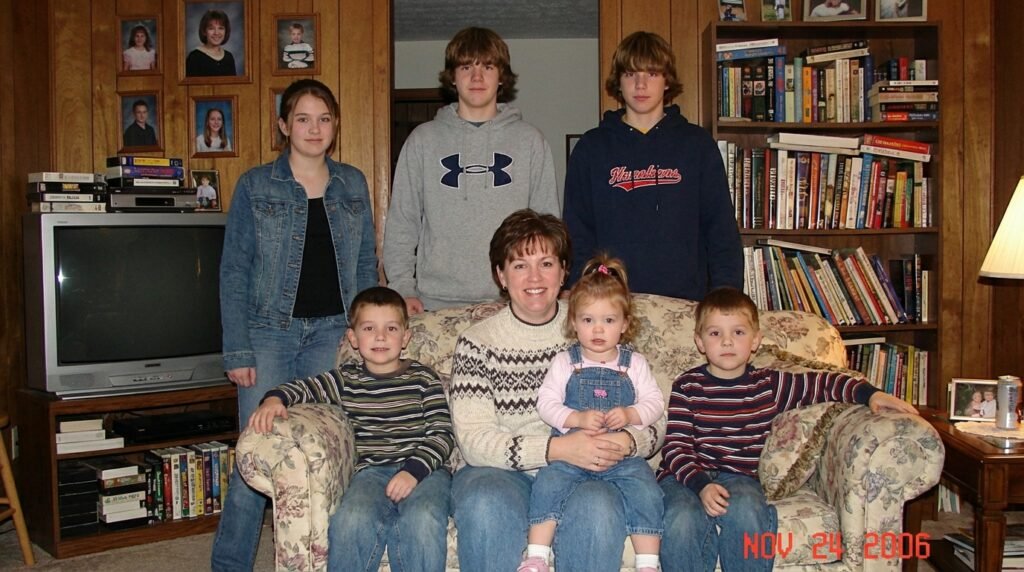
A Table That Is Never Empty
We eventually made our way inside.
The house was no longer quiet. It was filled with the sounds I had missed for so long—the scrape of chairs, the clinking of silverware, the overlapping voices.
We sat at the table. I served the cold lasagna and the room-temperature chicken. No one cared.
Mark sat to my right. Sarah to my left.
“The money is being frozen,” Jason said, his jaw set firm. “We’re getting it back, Mom. Every cent he took from us, and every cent he took from your peace of mind. You’re never going to have to worry about a mortgage again.”
“I don’t care about the money,” I said, looking around the table. “I have my children. That’s all I ever wanted.”
As the night wore on, the weight that had been on my chest for years finally lifted. The secrets were out. The predator was gone.
I looked at the empty chair at the end of the table—the one David used to sit in. It didn’t feel lonely anymore. It felt like a space that was finally, truly vacant, making room for the people who actually mattered.
We stayed up until the sun began to peek through the kitchen curtains. We laughed about childhood memories—the time Leo fell in the mud right before church, the way Sarah used to hide her peas in the piano.
For the first time in sixty years, I felt completely seen.
The sacrifice hadn’t been in vain. The love hadn’t been lost. It had just been redirected by a man who didn’t deserve it, only to find its way back home in the end.
As I blew out the last candle on my birthday cake, surrounded by the beautiful, tired faces of my six children, I realized that a loud house isn’t about the number of people in it.
It’s about the truth that lives in their hearts.
And my house was finally, wonderfully loud.