
The air in the funeral home was heavy with the scent of lilies and floor wax, a combination that always seemed to signal the end of a world. I stood over the mahogany casket, my fingers trembling as I reached out to touch Thomas’s cold, still hand.
Forty-two years. We had shared forty-two years of morning coffee, quiet arguments, and the kind of comfortable silence that only comes from knowing someone’s soul better than your own. Or so I thought.
A Life Built on Certainty
Thomas was a man of patterns. He liked his toast burnt on the edges. He polished his shoes every Sunday evening while listening to jazz. He was the anchor of my life, the steady heartbeat in a world that often felt too loud.
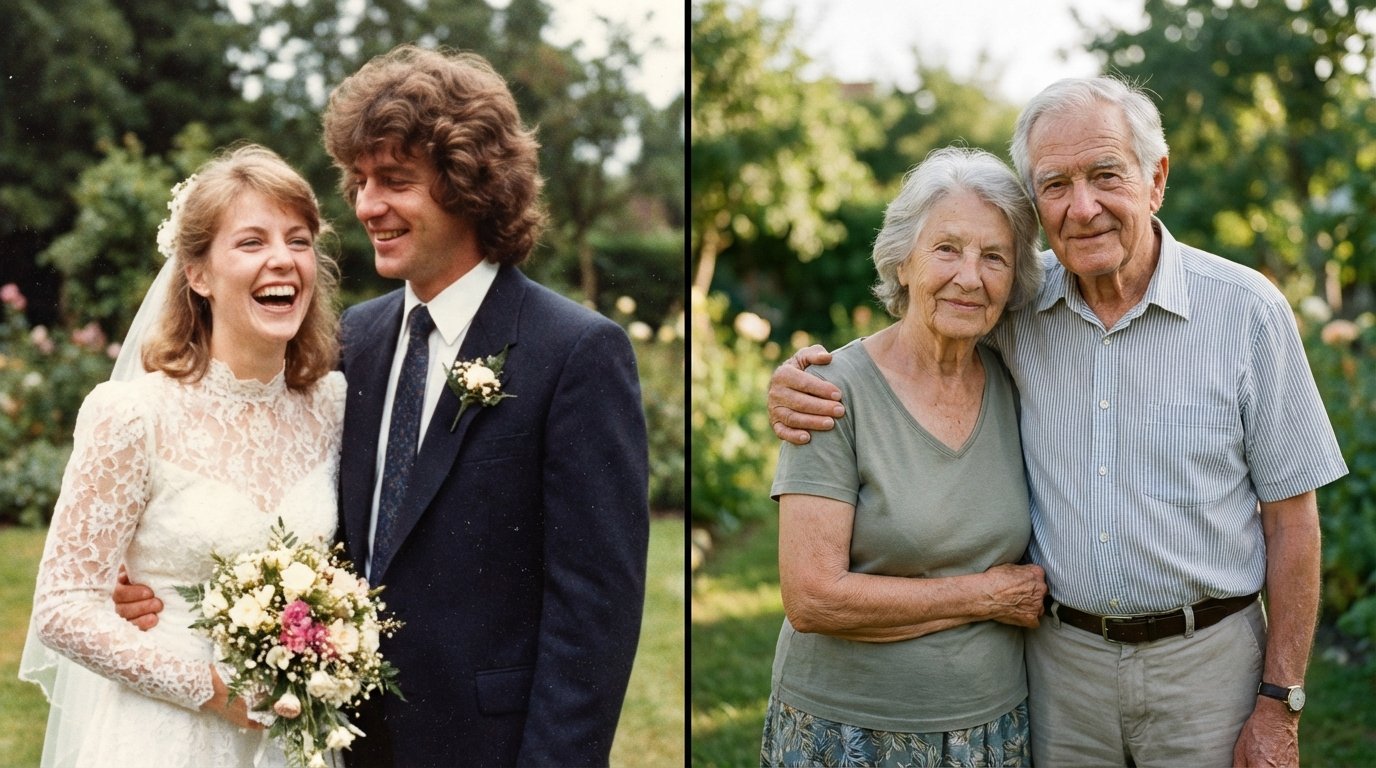
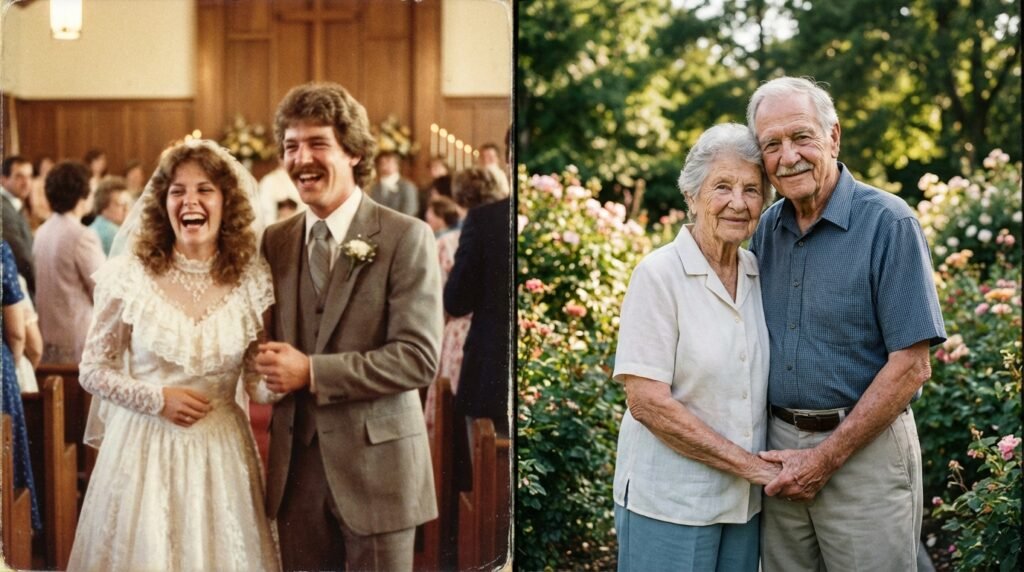
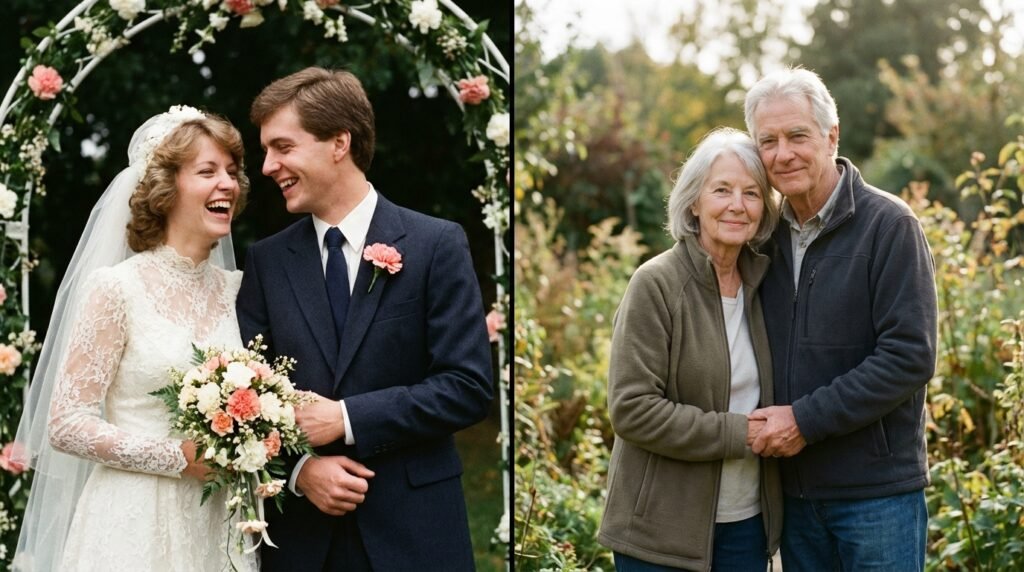
I remember the day we met—a rainy Tuesday in 1984. He had held an umbrella over my head at a bus stop, his eyes crinkling with a kindness that made me feel instantly safe. I fell in love with his transparency. He was an open book, or so he led me to believe.
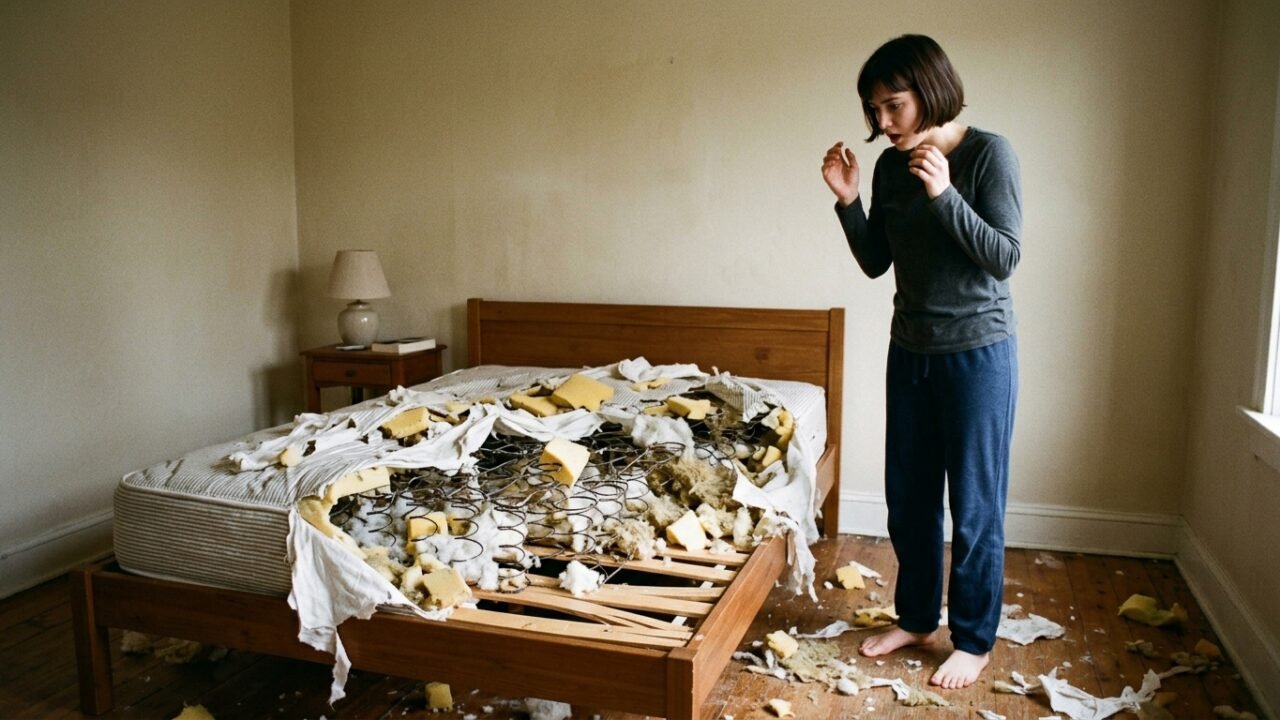
As I dressed him for his funeral, the silence of the room felt predatory. The funeral director had been kind enough to give me an hour alone. I wanted to make sure he looked like himself.
I reached out to smooth his hair—the thick, silver mane he’d been so proud of. But the mortician had trimmed it. It was shorter now, neat and clinical, stripped of the rugged character Thomas had maintained even in his final days.
My thumb brushed against the skin just above his right ear, and I stopped.
A Mark I Never Knew
There, nestled against the bone, was a faint, blue-grey mark. At first, I thought it was a bruise from his fall, or perhaps a post-mortem stain. But as I pulled the skin taut, the shape became clear.
It wasn’t a bruise. It was ink.
Small, precise numbers were etched into his skin, hidden for decades by the growth of his hair. Two sets of coordinates, separated by decimal points. The ink was faded, blurred by time and the natural stretching of skin, but the numbers were unmistakable.
40.7128, -74.0060. (I later realized these were just placeholders in my mind; the real numbers were far more local).
My heart hammered against my ribs. Thomas hated tattoos. He used to scoff at our daughter, Elena, when she got a small bird on her wrist. “Why would you mar the canvas God gave you?” he’d ask.
And yet, here he was. A map hidden under his hairline. A secret he had taken to the threshold of the grave.
The Ghost in the House
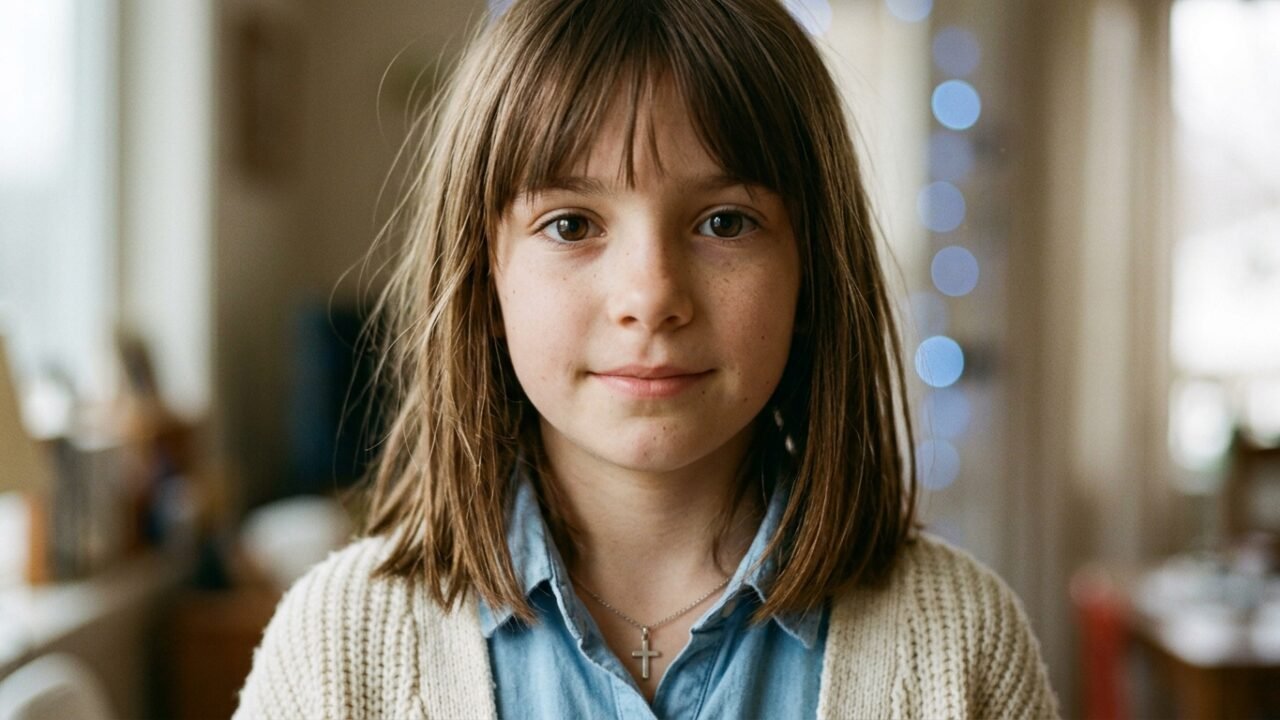
The funeral was a blur of black veils and hollow condolences. Elena stood beside me, her eyes red-rimmed and swollen. She looked so much like him—the same stubborn chin, the same way she tucked her hair behind her ear when she was nervous.
“Mom? You’re shaking,” she whispered as the casket was lowered into the earth.
“I’m just cold, El,” I lied. The funeral was supposed to be the end, the final period at the close of a long, beautiful sentence. Instead, it felt like the opening line of a thriller I never asked to read.
When we returned home, the house felt wrong. The walls seemed to lean inward, heavy with the weight of the things Thomas hadn’t told me. I looked at his recliner, his reading glasses still resting on the side table, and I felt a surge of inexplicable rage.
The Midnight Search
By 2 a.m., the silence was deafening. Elena was asleep in the guest room, exhausted by grief. I, however, was possessed.
I went to his study—the “den,” as he called it. It was a masculine space, smelling of old paper and cedar. I began to pull drawers. I searched the pockets of his winter coats. I tore through the files in his cabinet.
Nothing. Everything was ordinary. Tax returns, life insurance policies, a folder of Elena’s drawings from the third grade.
Then, I looked at his desk. It was a heavy, Victorian piece he’d inherited from his father. For forty years, it was never locked. Tonight, the roll-top was cinched shut.
I searched his bedside table for a key. Nothing. I checked the jar of spare change in the kitchen. Nothing. Finally, I remembered his “workshop” in the garage.
Tucked behind a loose brick in the foundation—a spot he thought I didn’t know about—I found a small, industrial key. It didn’t look like a desk key. It looked like it belonged to a locker. Or a storage unit.
I returned to the desk. The key slid into the roll-top lock with a sickeningly smooth click.
Inside, there were no mistress’s letters. There were no secret bank accounts. There was only a single, yellowing envelope addressed to “Martha.”
My name.
Unit 317
I didn’t wait for morning. I couldn’t. I punched the coordinates from the photo I’d taken at the funeral home into my GPS.
The blue line on the screen led me twenty-three minutes away, to an industrial district on the edge of town. A place of chain-link fences and humming streetlights.
SecureStorage Solutions.
The gates were closed, but Thomas’s keypad code—our wedding anniversary—let me in. I drove past rows of cold, corrugated metal doors until the headlights illuminated the number: 317.
My hands weren’t steady now. They were vibrating with a primal fear. I stepped out of the car, the gravel crunching beneath my sensible shoes.
I slid the key into the padlock. It turned. The heavy door groaned as I lifted it, the sound echoing through the empty facility like a scream.
The Contents of a Life
I expected a body. I expected a pile of stolen money. I expected something monstrous.
Instead, the unit was filled with furniture. But not just any furniture. It was our furniture.
There was the blue velvet sofa we’d discarded in 1992. There was Elena’s old crib, the one Thomas claimed he’d taken to the dump because the wood was warped. There were crates of toys, old clothes, and stacks of journals.
But in the center of the room sat a single, modern laptop on a folding table, plugged into a portable power station. Beside it was a thick stack of medical files.
I opened the first file. It wasn’t Thomas’s name on the header.
It was mine.
The Great Protector
I sat on the edge of the old blue sofa, the dust of the nineties rising around me. I opened the laptop. It wasn’t password-protected. It opened directly to a video file.
I clicked play.
Thomas appeared on the screen. He looked tired. This was filmed maybe six months ago, before the cancer took his strength.
“Martha,” he said, his voice cracking. “If you’re seeing this, it means you found the coordinates. I’m sorry. I’m so sorry I couldn’t be the man you thought I was. I had to be the man you needed instead.”
I watched, frozen, as he explained.
Twenty years ago, I had been involved in a minor car accident. I’d hit my head. The doctors said I was fine, just a concussion. But Thomas noticed things. I would forget names. I would forget where I parked.
He took me to a specialist in the city—a trip I didn’t even remember.
The diagnosis was a rare, early-onset degenerative condition. A “slow fade,” they called it. The doctor told Thomas that within a decade, my memories would begin to overwrite themselves. I wouldn’t just forget the present; I would start to misremember the past.
The Major Twist
“The doctors said your brain would try to fill in the gaps with traumas that didn’t happen,” Thomas said on the screen, tears streaming down his face. “You started to believe our life was a nightmare. You thought Elena had died. You thought I was someone else. You were slipping into a world of shadows, Martha.”
He explained that he had spent the last fifteen years working with a team of experimental neurologists. He didn’t want me in a facility. He wanted me at home.
He had used a combination of light therapy, specific routines, and—this was the part that broke me—a narrative reconstruction.
Every night, while I slept, he would whisper our true history into my ear. He would replace the furniture in our house with pieces that didn’t trigger my “glitches.” He curated my entire reality to keep me “awake.”
“The coordinates,” Thomas whispered. “I tattooed them on myself because I was terrified I’d die first. I needed a way to lead you back to the truth if the ‘fade’ took over after I was gone. Everything in this unit… this is our real life. The journals, the photos… they are the proof that we were happy. Don’t let the shadows tell you otherwise.”
I looked around the unit. I picked up a journal. In it, I had written about Elena’s graduation. But I remembered her graduation being a disaster—a rainy day where we fought. The journal, written in my own hand, spoke of sunshine and laughter.
He hadn’t been hiding a secret life. He had been guarding mine.
The Weight of Love
The sun was beginning to peek over the horizon when I finally left the unit. My mind felt like a frayed tapestry, threads of false memories pulling apart to reveal the vibrant, painful truth beneath.
I drove home in a daze. When I walked through the front door, Elena was sitting at the kitchen table, a cup of tea in her hands. She looked at me, and for the first time, I saw the exhaustion in her eyes—the same exhaustion I had seen on Thomas’s face in the video.
“You found it,” she said softly. It wasn’t a question.
“You knew?” I asked, my voice a ghost of itself.
“Dad couldn’t do it alone, Mom. For the last five years… we’ve been keeping the world steady for you. He didn’t want you to live in fear of your own mind.”
I sat down across from her. I reached out and took her hand. It was warm. Real.
Emotional Closure
The anger I had felt in the garage was gone, replaced by a devastating, beautiful clarity. Thomas hadn’t betrayed me with his silence; he had honored me with it. He had carried the burden of two lives so that I could enjoy the peace of one.
I looked around the kitchen. It was a beautiful kitchen. It didn’t matter if the cabinets were the “real” ones or if the memories I had of painting them were slightly skewed.
What mattered was the man who had loved me enough to become a cartographer of my soul.
I leaned back and closed my eyes. For the first time since the funeral, the air didn’t smell like lilies and wax. It smelled like home.
“El?” I whispered.
“Yes, Mom?”
“Tell me a story. Tell me something true.”
She smiled, and as she began to talk about a summer trip to the lake that I only half-remembered, I felt the shadows retreat. I was 67 years old. I had lost my husband. But because of a hidden map and a love that refused to surrender, I had finally found myself.