
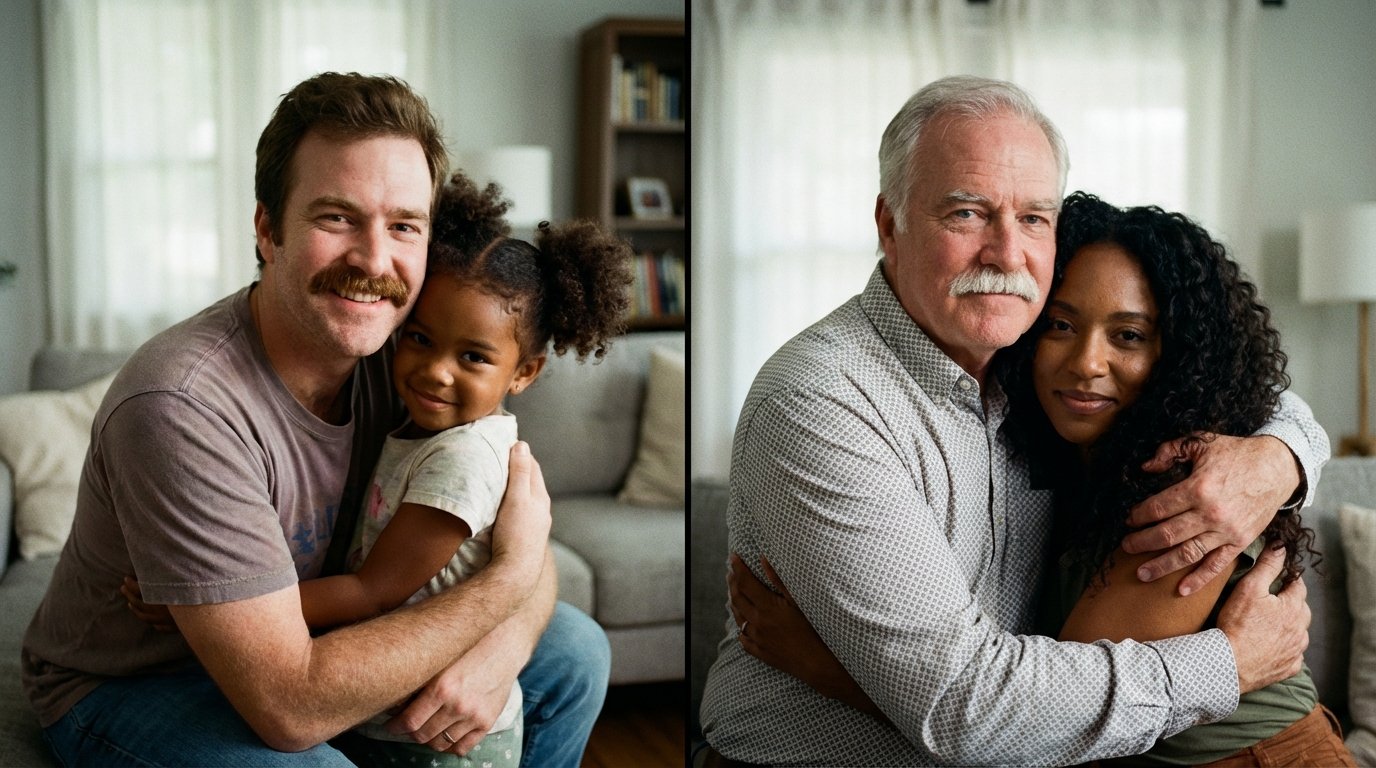
The Silent Passenger had been living in my house for twenty years, though I never realized she was there. She sat at our dinner table, tucked into the corners of my granddaughter’s smiles, and lingered in the hallways during the long, icy winters of upstate New York.
I am seventy years old now. My bones ache when the wind picks up, a physical echo of the internal fractures I’ve carried since the night the world went quiet. For two decades, I believed in a story. It was a story made of ice, bad luck, and a sharp curve on a rural road. It was a story that allowed me to survive.
But stories, I’ve learned, are often just bandages over wounds that refuse to heal.
The Beginning: The Night the Music Stopped
I remember the smell of cinnamon and pine that afternoon. It was mid-December, twenty years ago. My son, David, was laughing as he loaded the car. He was thirty-two, full of life, and possessed a laugh that could fill a room even when he wasn’t trying.
His wife, Elena, was fussing with the kids’ coats. She was a woman of checklists and safety measures. “Check the tires, David,” she had said. “The clouds look heavy.”
“I did, El. We’re fine. It’s just a dusting,” he’d replied, kissing her temple.
My grandson, Leo, was seven. He was clutching a new toy truck I’d given him—an early Christmas present. Emily, just five, was already strapped into her car seat, her thumb in her mouth, her eyes heavy with sleep.
“See you in a week, Dad,” David said, gripping my hand. “Thanks for the early dinner.”
I watched their taillights fade into the gray twilight. The snow wasn’t falling yet, but the air felt brittle. I went inside, washed the dishes, and felt the kind of peace only a grandfather knows.
Three hours later, the phone rang. It didn’t sound like a normal ring. It sounded like a scream.
A Childhood Lost in the Snow
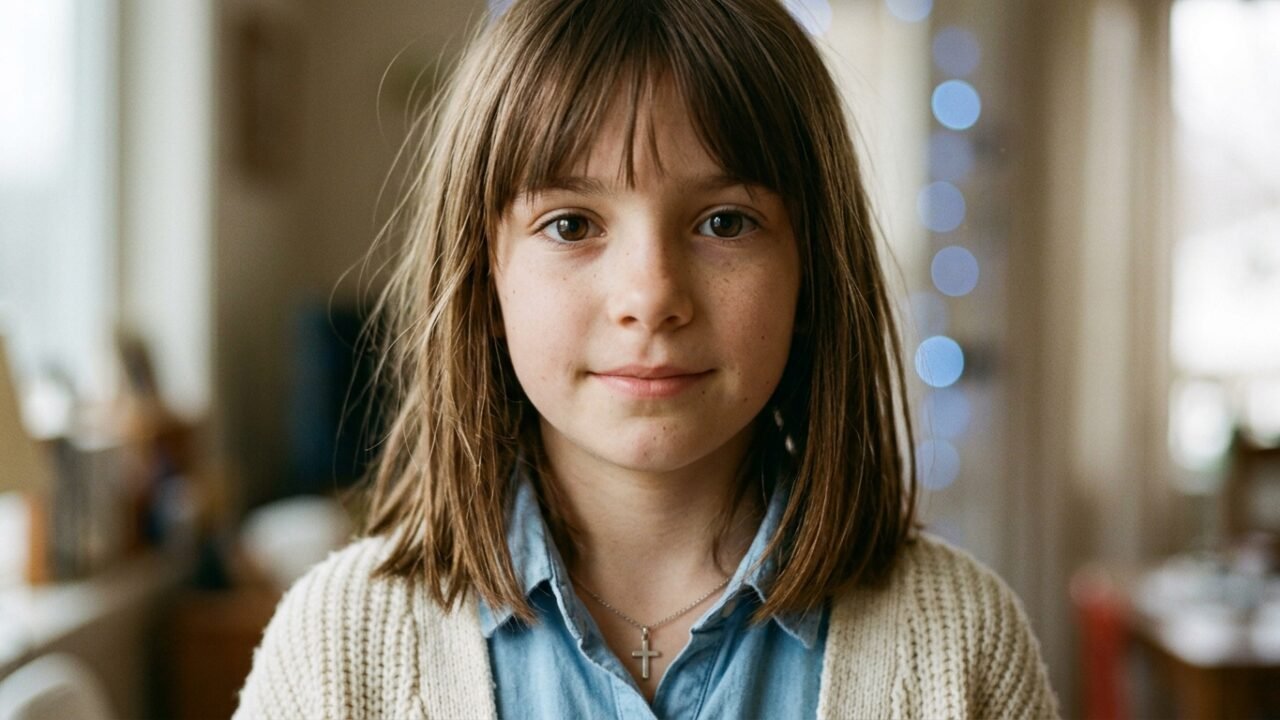
Emily was a vibrant child before the crash. She was the kind of girl who chased butterflies until she tripped and then laughed at her own grass-stained knees. She and Leo were inseparable, a pair of echoes running through my garden.
Leo was the protective older brother. He used to hold her hand when they crossed the street, his small face set in a mask of immense responsibility.
“I’ve got her, Grandpa,” he’d say.
That memory is the one that cuts the deepest. Because on that rural road, tucked between a stand of ancient oaks and a frozen creek, Leo couldn’t protect her. No one could.
The Weight of Three Caskets
The funeral was a blur of black wool and frozen breath. The ground was too hard for the shovels, or so it felt.
I stood there, a man in his fifties who had suddenly become an orphan of his own lineage. Three closed caskets. David. Elena. Leo. The pastor spoke of “God’s plan” and “miracles.”
He called Emily the miracle.
She sat in a wheelchair, her small frame swallowed by a black coat. Her head was bandaged, her ribs taped, her face a map of purple and yellow bruises. She didn’t cry. She just stared at the wood of the caskets with an intensity that unnerved me.
“She’s in shock,” the doctors told me. “The trauma is too much for a five-year-old. She’s repressed the memory. Don’t push her. Let her find her way back in her own time.”
Raising a Ghost
So, I didn’t push. I became a father again at an age when most men are looking toward retirement. I traded my quiet evenings for school runs, lunchboxes, and bedtime stories.
We lived in a house of unspoken rules. Rule number one: We don’t talk about the night of the crash.
When she was seven, she asked, “Grandpa, why did they go away?”
I knelt in front of her, my heart hammering against my ribs. “It was an accident, Emily. A bad storm. The road was slippery. Nobody’s fault.”
She nodded, her eyes wide and dark. “Nobody’s fault,” she repeated. It sounded like a prayer. Or a sentence.
As she grew, she became the perfect daughter. She was diligent, quiet, and fiercely loyal. But there were moments—small, fractured moments—where I’d catch her staring at the car keys on the counter, or trembling when the wind rattled the windowpanes.
Shadows in the Research
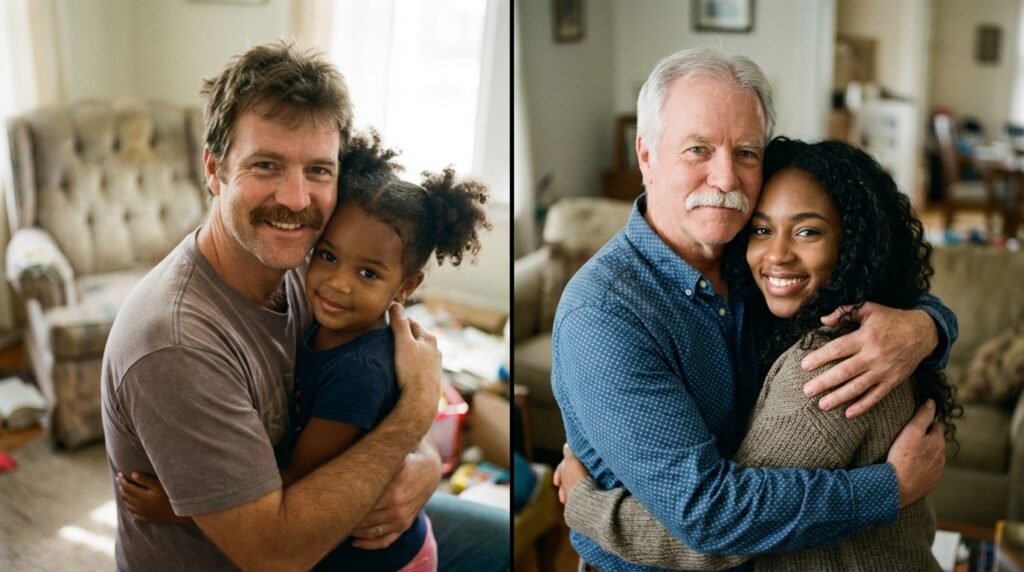
Emily moved back in after college. She took a job as a legal researcher, a role that required her to dig through old files, transcripts, and police reports. She was good at finding things that stayed hidden.
A few weeks ago, the air in the house changed. The “anniversary” was approaching—twenty years since the silence began.
Emily grew distant. She’d sit at the dinner table, moving her food around the plate without eating. Her eyes were bloodshot, as if she were spending her nights staring into the dark.
“Is work okay, Em?” I asked one night.
“Fine,” she said, her voice tight. “Grandpa… do you remember if Mom and Dad were arguing before they left?”
The question caught me off guard. “Arguing? No. They were happy. Why would you ask that?”
“I just… I have fragments,” she whispered. “Voices. Not like the storm. Different.”
I felt a chill that had nothing to do with the winter. “The police report said it was weather-related, Emily. The black ice. Don’t do this to yourself.”
She didn’t respond. She just looked at me with a pity that frightened me.
The Paper in the Entryway
Last Sunday, the sun was setting, casting long, orange shadows across the hardwood floors. I was in the kitchen, making tea, when I heard the front door open.
Emily didn’t call out a greeting. She didn’t drop her keys in the bowl.
I walked into the entryway. She was standing there, still in her heavy wool coat. Her face was pale, her lips trembling. In her hand, she held a yellowed, folded piece of paper. It looked old, yet handled with a terrifying level of care.
“Emily? You’re home early.”
She didn’t look at me. She looked at the paper. “I went back to the old archives, Grandpa. Not for work. For me. I found the personal effects box that was never claimed. The one the police marked as ‘non-essential evidence’ after the case was closed.”
“Emily, why would you—”
“I need you to read this,” she interrupted. Her voice was steady, but her hands were shaking so violently the paper rattled. “I have to make a confession. IT WASN’T AN ACCIDENT!”
The words hit me like a physical blow. “What are you talking about? The ice…”
“Read it,” she whispered, sliding the paper across the small foyer table. “Read what Elena wrote. Read what she was holding when the car hit the tree.”
I unfolded the paper. My vision blurred. It wasn’t a police report. It was a letter, written in Elena’s frantic, elegant script.
The Letter from the Grave
David,
I can’t do this anymore. I can’t pretend. Every time I look at you, I see the lie we’ve built. I saw the bank statements. I know about the gambling debts. I know you sold the house equity without telling me.
But that’s not the worst part. The worst part is what I found in your bag. The pills. The ones you’ve been taking to ‘stay awake.’ You’re not safe, David. You’re not the man I married.
I’m taking the kids. I’m leaving tonight, after we visit your father. I’ll tell him we’re staying at a hotel because of the weather, but we’re not coming back. I’m going to my sister’s. Don’t try to stop me.
If you try to drive us home tonight, I will tell the police everything. I will tell them you’re driving under the influence. I will tell them you’ve ruined us.
Please, for once in your life, think of Leo and Emily. Let us go.
The Twist of the Knife
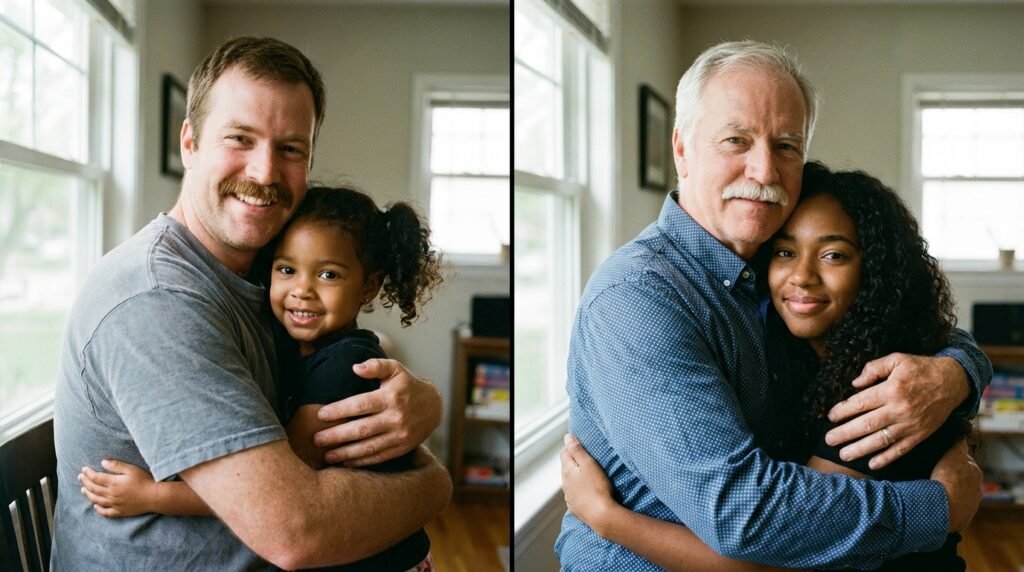
I felt the world tilting. “She was leaving him?” I whispered. “But… they left together. I saw them.”
“They were fighting in the car,” Emily said, her voice cracking. “I remember now. I don’t remember the ice. I remember the screaming. I remember Dad reaching over, trying to grab her purse—trying to grab this letter.”
She stepped closer, her eyes burning with a twenty-year-old fire.
“He wasn’t trying to steer into the skid, Grandpa. He was trying to take the evidence. He was looking at her, not the road. He was screaming that she couldn’t take us away.”
I leaned against the wall, my heart laboring. “So it was… it was his fault?”
“No,” Emily whispered. “That’s not the confession.”
She took a deep breath, and a tear finally escaped, trailing through the dust on her cheek.
“I remember the moment before the impact. Leo… Leo saw it coming. He unbuckled his seatbelt. He didn’t try to save himself. He threw himself across me. He shielded me with his own body.”
She choked back a sob.
“But Grandpa… I saw the speedometer. Dad wasn’t slowing down. He sped up. He saw the trees and he sped up. He didn’t want us to leave him. He chose this.”
The Final Truth
The room was silent. The “miracle” of Emily’s survival wasn’t a fluke of physics or a gift from God. It was the final, desperate act of a seven-year-old boy who knew his father had lost his mind.
“I found the toxicology report in the same file,” Emily said, her voice dropping to a hollow whisper. “The police suppressed it. They knew David’s family—your friends on the force—didn’t want the scandal. They called it an accident to spare you. To spare me.”
I looked at my granddaughter—this woman who had carried the weight of a murdered family for two decades without even knowing the shape of the burden.
“Why tell me now?” I asked, my voice a ghost of itself.
“Because I’ve spent twenty years feeling guilty for being the only one who lived,” she said, reaching out to take my hand. “I thought I was lucky. But I wasn’t lucky. I was loved. Leo loved me. Elena loved me.”
She squeezed my hand.
“And I needed you to know that you didn’t raise the daughter of a tragic accident. You raised the survivor of a choice. We don’t have to hide anymore, Grandpa. We don’t have to protect his memory.”
I looked at the letter, then at the girl who was the only piece of my heart left beating. I took the matches from the mantel—the ones I used to light the fire every night to keep the cold away.
“You’re right,” I said.
I held the corner of the letter to the flame. We watched together as the lies of the last twenty years curled into black ash and rose up the chimney.
The weight didn’t vanish, but for the first time in twenty years, the air in the house felt clean. The silent passenger was finally gone.