



A House Buried in the Graveyard of Autumn
They laughed so hard the sound echoed off the peeling stucco of the town square. It was a cruel, sharp sound—the kind of laughter that doesn’t just mock a choice, but mocks a person’s very right to exist.
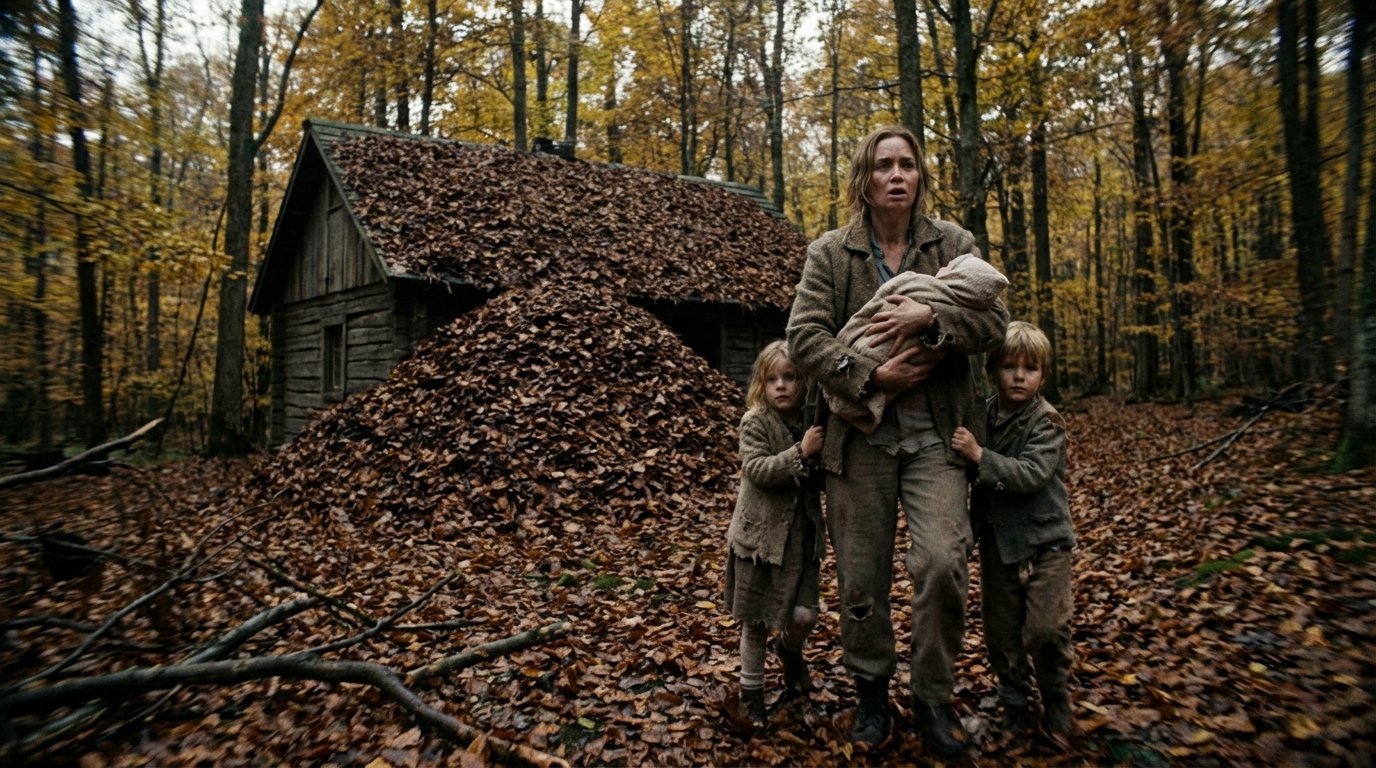
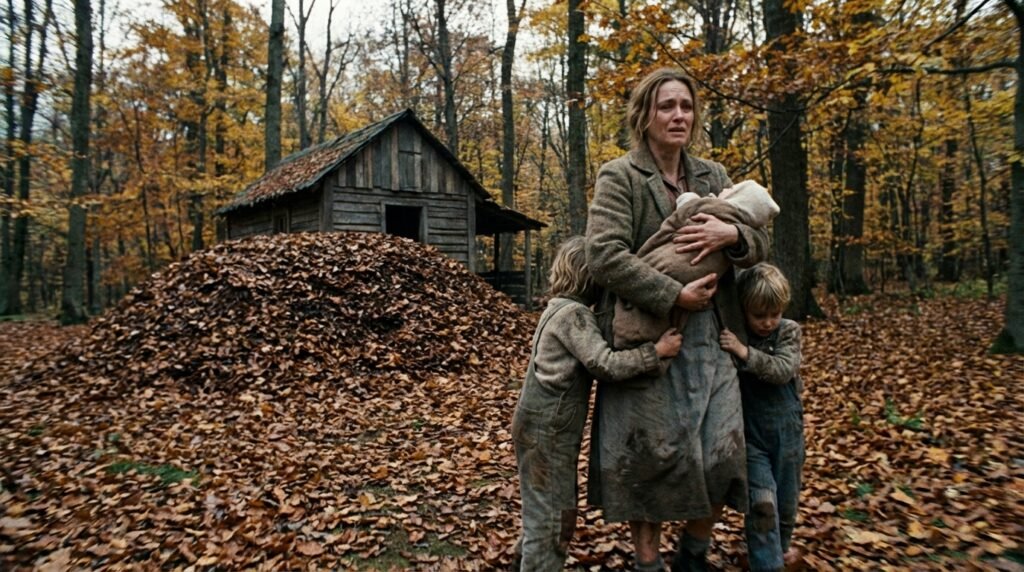
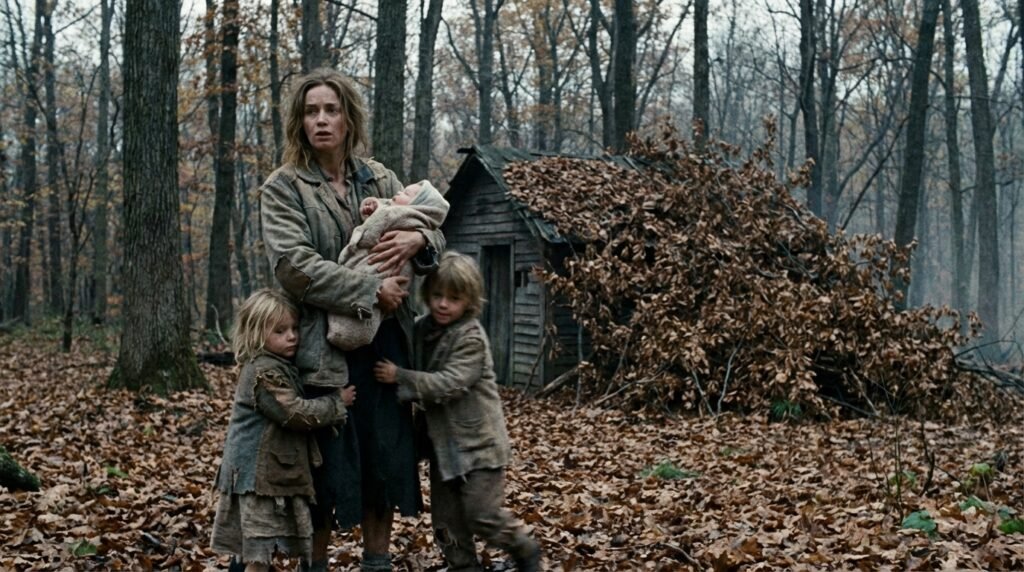
Flora Fernández stood in the center of the notary’s office, her fingers trembling as she clutched a rusted iron key. Behind her, her three children stood like silent sentinels of sorrow. Pedro, only nine, held his breath, his eyes already carrying the weary weight of a man three times his age. Little Ana clung to Flora’s skirts, and baby Luna was a heavy, warm weight in the sling against Flora’s chest.
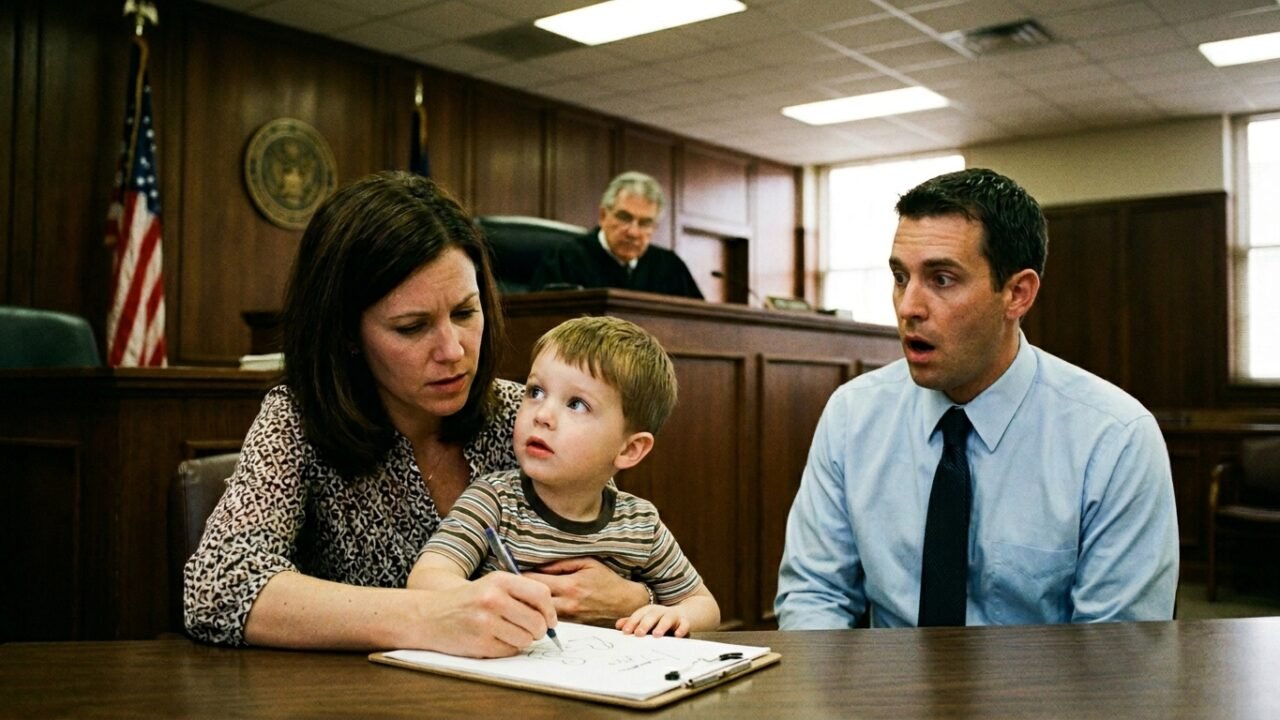
“You’re really taking it?” Elena, the eldest niece of the late Doña Remedios, sneered. She adjusted her silk scarf, looking at Flora with a mixture of pity and disgust. “That house is where beauty went to die, Flora. It’s a ruin. It’s a pile of rot buried under ten years of dead leaves and mountain mold. We wouldn’t even send our dogs to sleep there.”
The other relatives chuckled. They had already divided the “real” inheritance—the jewelry, the city apartment, the bank accounts. They had left Flora the “worthless” mountain property near Mazamitla as a joke, a way to clear their conscience without giving away a single cent of actual value.
Flora didn’t cry. She couldn’t afford the moisture. Since her husband Rodrigo had died six months ago, she had learned that tears didn’t pay the bank and they didn’t fill bellies.
“I accept it,” Flora said, her voice a low, steady hum.
“Enjoy the rats, then!” Elena called out as Flora walked away. “Maybe you can boil the dry leaves for soup!”
As Flora stepped out into the bright Jalisco sun, the memory of her father’s voice brushed against her mind like a cool breeze. “Dignity isn’t inherited, Florita. It’s earned with the calluses on your palms.” She looked at her hands. They were raw from scrubbing floors for women who didn’t know her name. She looked at her children. They were homeless, living out of plastic grocery bags.
She had no choice. She had to find the life hidden beneath the rot.
The Conflict: The Ghost of a Man and the Weight of Debt
The journey to the mountain house was a slow ascent into a fog that felt like a shroud. As the old bus groaned up the winding roads of the Sierra del Tigre, Flora stared out the window, her mind drifting to Rodrigo.
She remembered the way he used to smell of sawdust and orange blossoms. She remembered their wedding day, how he had promised her a kingdom. But the kingdom was built on sand. After the heart attack took him in the middle of a Tuesday afternoon, the truth came out like a flood.
Rodrigo hadn’t been successful; he had been drowning. He had borrowed from men with cold eyes and long memories. He had mortgaged their small home twice over. When the bank took the keys, they didn’t just take the roof; they took Flora’s memories.
“Mama?” Pedro whispered, breaking her trance. “Is the new house going to have a bed?”
Flora squeezed his hand. “We are going to make it a home, Pedro. No matter what.”
When they finally reached the property, even Flora’s resolve wavered. The house sat at the end of a choked path, nearly invisible beneath a massive, suffocating blanket of brown. It looked as though autumn had died there a decade ago and never been buried. Knee-high piles of dead leaves, grey moss, and fallen pine needles pressed against the walls. The roof sagged like a tired shoulder.
Inside, it was worse. The air was thick with the scent of damp earth and neglect. Shattered glass from broken windows crunched under her boots.
“It’s scary,” Ana whispered, lip trembling.
“It’s just sleeping,” Flora lied, her heart hammering against her ribs.
She spent the first night huddled on a damp blanket on the floor with her children, listening to the wind howl through the cracks. She thought of Elena’s laughter. She thought of the debt collectors. Most of all, she thought of Doña Remedios’s final words to her in the hospital.
“The land is good, Flora. And the walls are strong… even if it doesn’t look like it. Everything inside is yours. Everything.”
The Discovery: What the Broom Revealed
The next morning, Flora didn’t wait for the sun to fully crest the peaks. She tied her shawl tight around her waist, grabbed a sturdy, fallen pine branch, and began to sweep.
She started in the center of the main room. At first, it felt futile. For every pile of rot she pushed away, more dust seemed to rise. Her back ached. Her hands, already scarred, began to bleed at the knuckles. But she didn’t stop. She swept with a rhythmic, desperate violence, as if she were sweeping the memory of the debt collectors and the mocking laughter of the town right out of her life.
Swish. Swish. Swish.
“Mama, look!” Pedro called out. He had found an old, rusted shovel in the shed and was helping her clear the heavy mounds of leaves near the hearth.
Flora stopped. She wiped the sweat from her brow with a grimy forearm. As the dust settled, she looked down at the patch of floor she had just cleared.
It wasn’t plain wood.
She knelt, using the hem of her apron to scrub away a thick layer of oily grime. Beneath the filth lay a section of floor made of exquisite, hand-laid parquetry. But it wasn’t just the craftsmanship that stopped her heart.
Embedded in the wood was a circular brass inlay, polished by the very friction of her scrubbing. It was a sunburst design, intricate and strange. In the center of the sunburst was a small, hexagonal indentation—a hole that looked like it was meant for a very specific key.
Flora’s mind raced. She looked around the room. The house was supposed to be a ruin, yet this floor… this was the work of a master. She began to sweep faster, moving toward the corners of the room.
As the “worthless” leaves were cleared away, the truth began to emerge. The entire floor was a map. Deep, dark mahogany lines traced the mountain ranges, and shimmering bits of mother-of-pearl marked the rivers.
But it was the letter she found tucked into the hollow of the sunburst that changed everything.
The Revelation: A Letter from the Grave
Hidden beneath a loose slat of the sunburst, protected by a velvet wrap, was a thick envelope. The paper was yellowed, smelling of cedar and old secrets. It was addressed simply: To the woman who isn’t afraid to get her hands dirty.
Flora sat on the floor, her children gathered around her in the dim light. Her fingers shook as she broke the wax seal.
“My Dearest Flora,
If you are reading this, it means you didn’t sell this place for scrap. It means you stood in the dust and you fought for a home.
My husband, Alejandro, was a man of many secrets. The town thought he was a simple clockmaker, but he was a guardian. Years ago, during the unrest, many families in this region feared their wealth would be seized. They brought their gold, their silver, and their records to him.
He didn’t hide them in a bank. He hid them in the bones of this house.
The relatives who laughed at you… they only look at the surface. They see the leaves; they don’t see the soil. They see the rot; they don’t see the foundation.
Look at the sunburst, Flora. The key I gave you—the iron one—it is not for the front door. The front door was never locked. That key is for the heart of the house.”
Flora looked at the rusted key she had used to enter. She had assumed the lock was just broken when it turned easily. She crawled back to the sunburst and pressed the key into the hexagonal hole.
It fit perfectly.
With a heavy, grinding sound of stone on stone, a section of the floor beneath the hearth slid back.
It wasn’t a chest of gold that met her eyes. It was something far more valuable in the eyes of the law. It was a collection of original land deeds, lost for generations, and a ledger of private debts owed to the Alcántara family—debts that had never been settled by the very people who had mocked her.
But there was a second letter inside the vault, specifically for Flora.
“Flora, there is one more thing. Your husband, Rodrigo… he wasn’t the failure they said he was. He came to me a month before he died. He knew he was sick. He didn’t borrow money out of greed; he borrowed it to buy back your father’s old farm in secret. He wanted to surprise you.
The ‘debt’ you owe isn’t to the bank. I bought that debt, Flora. You owe nothing. You are the owner of this mountain, and you are the owner of your father’s land.
You are not a broke widow. You are the wealthiest woman in this valley, not because of the gold, but because of your heart.”
The Ending: The Widow’s Revenge and Redemption
The confrontation happened a week later. Elena and the other nephews arrived in a shiny black car, intent on “reclaiming” the property after hearing rumors that Flora had cleaned it up. They expected to find her starving.
Instead, they found a woman standing tall on a porch that had been scrubbed until it shone.
“Get off this property,” Elena barked, stepping out of the car. “We’ve decided to sell the land to a developer. We’re revoking your ‘gift’.”
Flora didn’t flinch. She stepped forward, holding the ledger she had found beneath the floor.
“You can’t revoke what is legally mine, Elena,” Flora said, her voice like iron. “And if you try, I will start reading from this book. I think the town would be very interested to know that your father embezzled the town’s pension funds forty years ago, and that Doña Remedios held the proof.”
Elena turned white. The sneer vanished, replaced by a cold, hollow terror.
“You wouldn’t,” Elena whispered.
“Try me,” Flora replied. “Or leave, and never speak my name or my husband’s name again.”
They left. They drove away so fast the tires kicked up the very dust Flora had worked so hard to clear.
Flora stood on her porch and looked out over the mountains. For the first time in years, the air didn’t feel heavy with debt. It felt light. It felt like pine and possibility.
She walked back inside, where Pedro was teaching Ana how to read by the light of the fire. She sat on the golden floor, the sunburst glowing beneath her. She wasn’t the broke widow anymore. She was a woman who had found the treasure hidden beneath the dead leaves of life.
She picked up her broom and gave the floor one last, gentle sweep. Not because it was dirty, but because she finally liked the sound of it.
The sound of a clean start.