




A Verdict in Silver and Rain
The wife Henrique Valença once claimed to love stood in the center of his mahogany-row office, looking like a ghost in a storm.
Lívia Tavares didn’t cry. Her eyes were wide, luminous, and terrifyingly steady.
She reached into her pocket and pulled out a silver pendant—a delicate vine they had bought on their honeymoon in Amalfi.
She let it drop. It hit the plush carpet with a dull thud and rolled until it kissed the tip of Henrique’s Italian leather shoes.
“I’m pregnant,” she whispered.
The words should have been a bridge. Instead, they became a match dropped into a pool of gasoline.
Henrique didn’t move. He didn’t reach for her. He simply looked down at the positive test she had placed on his desk as if it were a piece of contaminated evidence.
Then, he laughed. It wasn’t the sound of joy. It was sharp, empty, and cruel—the sound of a man who had already decided to be a villain.
“Two months?” Henrique snapped. He began flipping through a digital calendar on his tablet like a prosecutor looking for a hole in an alibi.
“Funny timing, Lívia. You were in Maceió for your cousin’s wedding while I was closing the merger in Dubai. Do the math.”
Lívia felt the air leave her lungs. “Henrique, what are you implying?”
He didn’t answer. Instead, he slid a manila folder across the desk. It spilled open to reveal grainy, long-lens photographs.
There was Lívia at a seaside restaurant. She was smiling. Across from her sat Davi, the lead accountant for Henrique’s mother, Elena.
In one photo, Davi’s hand was near hers. The angle made it look like an intimate caress. To a jealous mind, it was a confession.
The truth was mundane. They had been discussing Elena’s estate taxes. But Henrique didn’t want the truth; he wanted a reason to burn his world down.
“How much do you want to disappear?” he spat, his voice vibrating with a cold, jagged edge.
Lívia reached for his hand, her fingers trembling. “Henrique, look at me. Look into my eyes. I have never touched another man. This is your child. Our child.”
He recoiled as if her touch were acid. He didn’t see the woman who had nursed him through pneumonia. He didn’t see the woman who knew his coffee order by heart.
He saw an obstacle.
“Security!” he roared into the intercom.
Minutes later, Lívia was being marched toward the elevator. The last thing she heard was the heavy oak door of his office slamming shut. It sounded like a gunshot.
The Conflict: A Flight Into the Shadows
The rain in Belo Horizonte didn’t fall; it punished.
Lívia arrived at the Aglomerado da Serra with four suitcases and a heart that felt like it had been put through a meat grinder.
She knocked on a faded blue door. Her Aunt Eunice, a woman with skin like wrinkled parchment and eyes like warm honey, opened it.
Eunice didn’t ask for explanations. She saw the hollow look in Lívia’s eyes and the way she shielded her stomach.
“Come in, child,” Eunice said. “The tea is already on.”
Those first few weeks were a blur of nausea and grief. Lívia would wake up reaching for a side of the bed that was no longer occupied.
She remembered her childhood in this same neighborhood. She remembered her mother, a seamstress who died with calloused fingers and a smile on her face.
“Lívia,” her mother used to say, “a woman’s strength isn’t measured by what she carries, but by how she walks when the load is heavy.”
The load was about to get much heavier.
At the public clinic, the air smelled of floor wax and old paper. The ultrasound technician, a tired woman named Maria, moved the transducer over Lívia’s belly.
Suddenly, Maria went still. The rhythmic thump-thump of the monitor changed.
“Is something wrong?” Lívia asked, her voice rising in panic. “Is the baby…?”
“No,” Maria whispered, her eyes fixed on the screen. “Not the baby. The babies.”
She turned the monitor. Lívia saw them.
One. Two. Three. Four.
Four tiny flickers of light. Four hearts pounding like a frantic drum circle.
Lívia’s knees buckled. She sank into the plastic chair, gasping for air. Four children. Four lives she had to protect in a world that had just turned its back on her.
“God help me,” she sobbed into her hands.
The pregnancy was a marathon of pain. Her blood pressure spiked. Her ankles swelled until she couldn’t walk.
She tried to keep working at the local sewing shop, the needle humming a frantic rhythm, but eventually, her body gave out.
Bed rest became her prison. She spent months staring at the cracked ceiling of Eunice’s spare room, praying to a God she wasn’t sure was listening.
When the labor finally came, it was a chaotic explosion.
Three girls—Nina, Lara, and Bia—and one boy, Caio.
They were so small. They were translucent, their skin like fine silk draped over bird bones.
They were rushed to the NICU. For two months, Lívia lived behind glass.
She watched the machines breathe for them. She listened to the beep of the monitors, a digital lullaby that signaled life was still holding on by a thread.
She had no money. She had no husband. She had no home of her own.
But when she finally held all four of them in her arms, she felt a tectonic shift in her soul. The sadness for Henrique died. In its place, a cold, diamond-hard resolve was born.

The Discovery: From Ashes to Empire
Life became a clock with no hands.
There was no “day” or “night.” There was only the cycle of bottles, diapers, crying, and the soul-crushing weight of bills that never stopped coming.
One Sunday, Lívia sat on a park bench, her quadruple stroller parked in front of her like a small bus. She looked exhausted. Her hair was pulled back in a messy knot, and her shirt had a formula stain on the shoulder.
A woman stopped in front of her. She was dressed in a sharp linen suit, her presence commanding and sophisticated.
This was Celeste Ferreira, the CEO of a rising beauty conglomerate.
Lívia braced herself for the usual look of pity. People usually looked at her as if she were a tragic accident.
But Celeste didn’t look at her with pity. She looked at her with fascination.
“You’re real,” Celeste said. “I’ve spent millions on marketing campaigns trying to find ‘real.’ And here you are, surviving a war zone with four soldiers.”
“I’m just a mother,” Lívia replied defensively.
“No,” Celeste countered. “You’re a voice. People are tired of the polished lies on social media. They want to see the struggle. They want to see the woman who doesn’t break.”
Celeste offered her a job. Not as a model in the traditional sense, but as a brand ambassador for a new line of skincare for overworked mothers.
Lívia began filming videos from her cramped kitchen.
She didn’t use filters. She didn’t hide the dark circles under her eyes.
She talked about the loneliness of being a discarded wife. She talked about the terror of the NICU. She talked about the beauty of a baby’s first smile.
The videos went viral. Within months, she wasn’t just a voice; she was a movement.
Women across Brazil saw themselves in her. They saw that you could be broken and still be beautiful.
By the second year, Lívia launched her own brand: Força de Mãe (Mother’s Strength).
She moved into an airy apartment in Savassi. She hired a team. She became a powerhouse.
She also found peace.
She met Gustavo Arantes, a soft-spoken university professor with kind eyes and a laugh that reached his soul.
He didn’t try to be a savior. He didn’t try to replace a father who was never there. He simply showed up. He read books to the kids. He held Lívia’s hand when the memories of the office door slamming returned to haunt her.
But the past wasn’t dead. It was just waiting for the right moment to strike.
The Revelation: The Return to the Lion’s Den
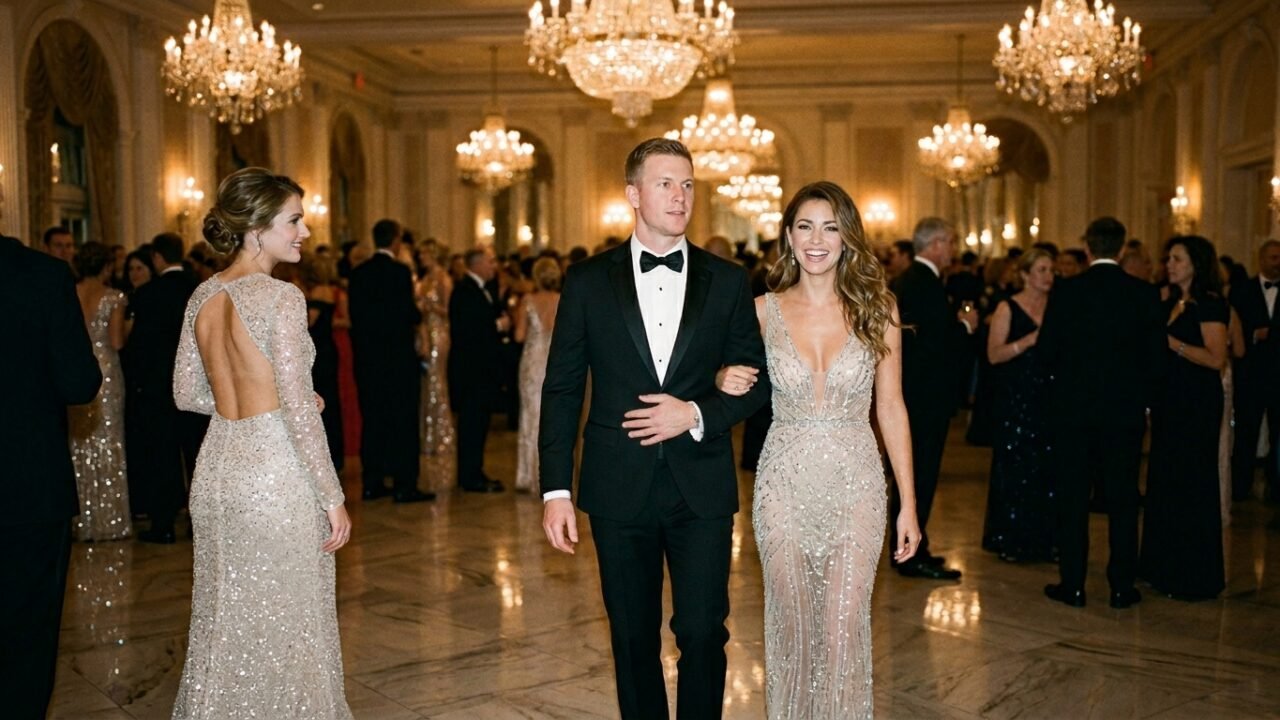
The invitation was gold-embossed: The 50th Anniversary of the Valença Group.
Lívia looked at the card. Her first instinct was to burn it.
But then she looked at her children. They were seven years old now. They were vibrant, intelligent, and fierce.
They deserved to walk through the front door of the empire their father had tried to deny them.
She arrived at the gala in a private jet. The cameras flashed like a thousand tiny suns as she stepped onto the tarmac.
She wore a gown the color of midnight. Beside her stood Gustavo, and in front of her walked the four children.
Henrique Valença stood on the balcony of the ballroom, a glass of expensive scotch in his hand. He looked older. His hair was silver at the temples, and his face was etched with a bitterness that no amount of money could mask.
He watched the arrivals on the monitors downstairs.
Then, he froze.
He saw a woman he thought he had buried in the dirt of the slums.
But it wasn’t Lívia who stopped his heart. It was the children.
Caio walked with a slight limp in his left step—a trait Henrique’s father had.
Nina’s eyes were the exact shade of amber that Henrique saw in the mirror every morning.
Lara raised her chin with a defiant, aristocratic tilt that was the hallmark of the Valença bloodline.
Bia laughed, and the sound echoed a sister Henrique had lost in childhood.
The scotch glass slipped from his hand. It shattered on the marble floor.
“My God,” he whispered.
He didn’t need a DNA test. He didn’t need a confession. The truth was written in their bones.
He hadn’t just kicked out a pregnant wife. He had discarded his own legacy. He had thrown away four versions of himself.
He tried to approach her in the VIP lounge. The crowd parted like the Red Sea.
“Lívia,” he gasped, his voice cracking.
She turned. Her gaze was like ice. “Mr. Valença. I don’t believe you’ve met my family.”
“They… they are mine,” he stammered, his eyes darting to the children.
“No,” Lívia said, her voice low and dangerous. “They are mine. You paid for them to disappear, remember? Well, they didn’t. They grew.”
Before he could respond, a hand fell on his shoulder. It was his mother, Elena. She looked pale, her eyes darting nervously.
“Henrique, come away,” Elena hissed. “Don’t make a scene.”
Lívia looked at Elena. She saw the guilt blooming in the older woman’s cheeks.
“No, Elena,” Lívia said. “Let’s stay. I have something for you. Both of you.”
Lívia reached into her clutch and pulled out a yellowed envelope.
“I found this in my Aunt’s attic two weeks ago,” Lívia said. “It was sent to her by mistake years ago. It was meant for me, but I was too busy surviving to read the mail.”
The Letter: A Legacy of Lies
Lívia opened the letter. The handwriting was elegant, frantic, and unmistakably that of Henrique’s father, the late Alberto Valença.
He had written it on his deathbed, just days after Henrique had thrown Lívia out.
To my daughter-in-law, Lívia,
I am writing this because I am a coward. I have watched my wife, Elena, orchestrate a masterpiece of destruction, and I said nothing.
The photos you saw—the ones of you and Davi—were a setup. Elena paid Davi to lure you to that restaurant. She hired the photographer. She manipulated the angles.
Why? Because she knew you were strong. She knew that if you stayed, you would eventually see what she was doing to the company funds. She has been draining the Valença accounts for years, hiding her gambling debts and bad investments.
She knew Henrique’s jealousy was his greatest weakness. She used it like a scalpel to cut you out of his life so she could keep her grip on him.
Henrique is a fool, but he is my son. And the child you carry is the only thing in this family that isn’t tainted by greed.
I have left a trust in your name. It is hidden in the Maceió properties. Use it. Run. Don’t let my wife or my son ruin another soul.
Forgive me, Alberto.
The silence in the room was deafening.
Henrique turned to his mother. His face was a mask of horror. “Mother? Is this true?”
Elena tried to scoff, but her voice failed her. “He was senile, Henrique. He didn’t know what he was saying.”
“The bank records don’t lie, Elena,” Lívia said, stepping forward. “I had my legal team look into the Maceió holdings. I found the trust. And I found the trail of where the rest of the money went. You didn’t just ruin my marriage. You robbed your own son.”
Henrique looked at the four children. He looked at the boy who had his eyes.
He reached out a hand toward Caio. “I… I didn’t know. I was told…”
Caio didn’t move. He simply looked at Henrique with a calm, analytical gaze. “Who are you?”
The question was a blade.
“I’m your father,” Henrique whispered.
Lívia stepped between them. “No. You are the man who paid for us to disappear. You are the man who chose a lie over a wife. You are a stranger.”

The Ending: The Weight of Silence
The fallout was spectacular.
The Valença Group didn’t collapse, but Henrique’s world did.
Elena was forced into a quiet, disgraceful retirement, facing a mountain of litigation for embezzlement.
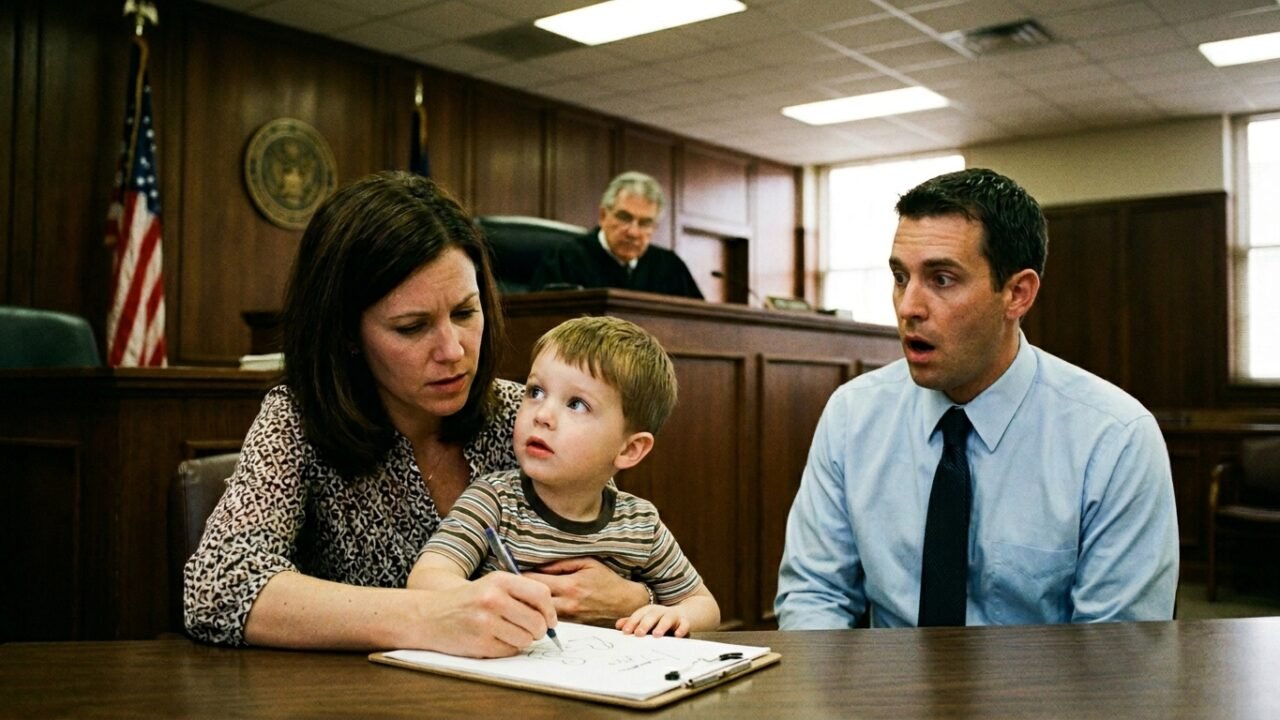
Henrique tried to sue for visitation. He hired the best lawyers in the country.
But Lívia was no longer the girl with four suitcases. She was a titan.
She fought him in every court, in every hearing. Not out of malice, but out of protection.
In the end, the judge looked at the history—the abandonment, the denial of paternity, the years of silence—and denied Henrique’s claim.
One evening, months after the gala, Lívia sat on the balcony of her apartment.
The sun was dipping below the horizon, painting the sky in bruises of purple and gold.
Gustavo came out and placed a jacket over her shoulders. “You’re thinking about him,” he said gently.
“I’m thinking about the girl I was,” Lívia replied. “The one who stood in that office and thought her life was over.”
From the living room, she heard the chaotic, beautiful sound of her children. Nina was arguing about a book; Caio was building something with blocks; Lara and Bia were choreographing a dance.
They were loud. They were whole. They were happy.
Lívia looked at the silver pendant, which she had kept all these years.
She didn’t feel anger anymore. She didn’t even feel the sting of the betrayal.
She felt a profound, quiet relief.
Henrique Valença had everything—the towers, the cars, the name—and yet, he had nothing. He lived in a silent mansion, surrounded by the ghosts of the family he threw away.
Lívia had started with nothing, and she had built a universe.
She took the silver pendant and dropped it into a small box of things to be donated. It didn’t belong to her anymore. It belonged to a past that no longer had the power to hurt her.
She turned back toward the light of her home, toward the man who loved her and the children who defined her.
“Let’s go inside,” she said to Gustavo. “It’s time for dinner.”
Behind her, the city lights twinkled like a billion tiny hearts, all beating in time with the woman who refused to be broken.