




The Silent Orbit of Valeria Montoya
My name is Alex Cruz, and for three years, I was a ghost in my own life.
I worked at Cruz & Associates Financial Group in Midtown Manhattan—a world of polished marble, glass walls, and people who wore ambition like armor. In that building, every second had a price tag. I was the man who made sure the bills were paid and the math was perfect, but I was invisible.
I lived in a small apartment in Astoria, Queens, where the morning air smelled of coffee carts and the night air carried the scent of roasted nuts. My life was a series of safe choices. My mother, a woman who had worked three jobs to put me through college, lived in Philadelphia and called me every Sunday with the same two questions.
“When are they going to promote you, Alex?”
“When are you bringing a girl home to meet me?”
I would always dodge the questions. I didn’t have answers. I was 28, “reliable,” and utterly forgettable. Or so I thought until the Monday morning the air in the conference room turned to ice.
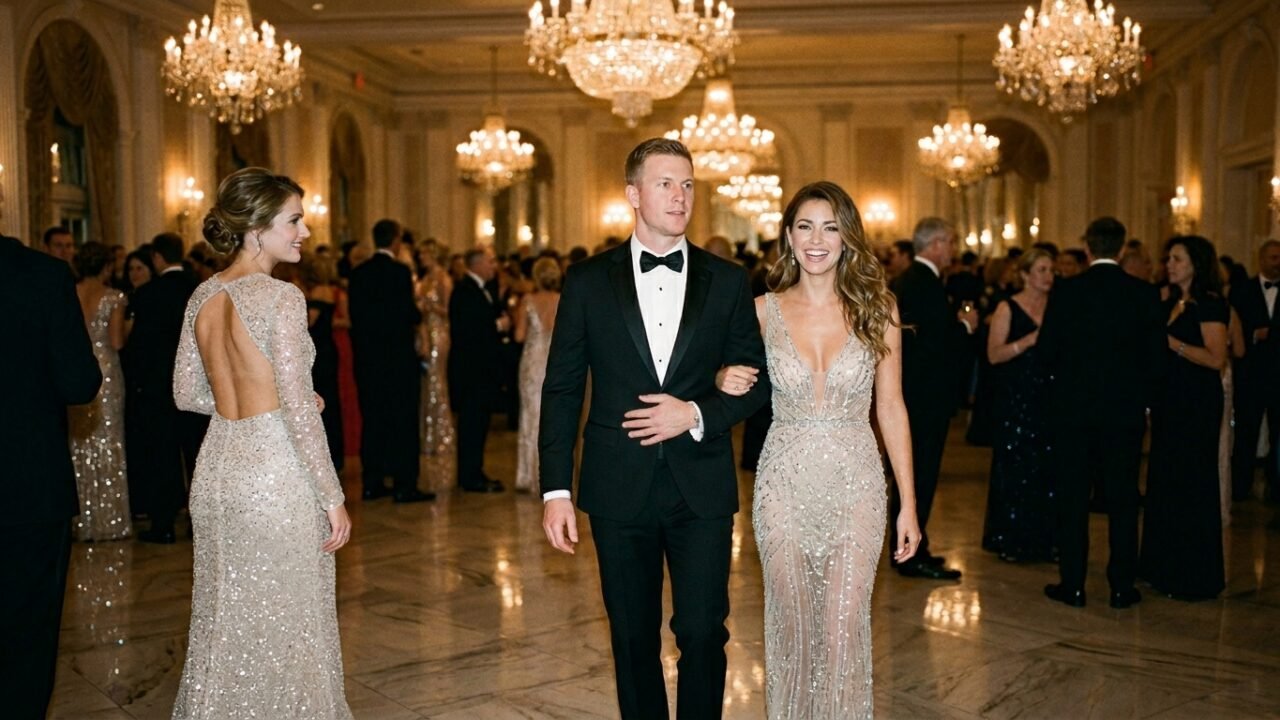
Valeria Montoya, our CEO, walked in. At 35, she was a titan. She didn’t walk; she commanded the floor. She never wasted words. She wore her hair in a tight, dark bun and her suits were tailored with a lethal precision.
“Project Dallas,” she said, her voice a low, steady hum. “A three-day negotiation. I need someone with me.”
Richard, the CFO, practically tripped over himself to volunteer. Valeria didn’t even blink. Her eyes scanned the room, bypassing the loud, the bold, and the senior partners. They landed on me.
“Alex Cruz will go.”
The silence was deafening. I felt the heat crawl up my neck. Why me? I was the guy who checked the spreadsheets, not the guy who sat at the table with the CEO.
“Your report was clean,” she added, her gaze never wavering. “Your numbers match. And you don’t talk too much.”
I didn’t know then that this wasn’t about my talent for mathematics. It was about a secret that had been rotting in the foundation of my life for nearly three decades.
The Conflict: One Room, Two Worlds
The flight to Dallas was a study in tension. Valeria sat across from me in the private cabin, her eyes fixed on a tablet. She smelled of expensive sandalwood and cold determination.
“If they try to corner me, you speak,” she instructed, her voice cutting through the hum of the jet. “If they lie with numbers, you correct them. Do not hesitate.”
“Yes, ma’am,” I stammered.
She looked up then, her eyes a piercing, dark amber. “Don’t call me ma’am.”
We landed in a heatwave. By the time we reached the hotel, it was nearly midnight. The lobby was a chaotic swarm of a tech convention. When we finally reached the front desk, the clerk looked like he wanted to crawl into a hole.
“I’m sorry, Ms. Montoya,” he stammered. “A system error. We’re overbooked. We have… one room left. A King suite.”
I felt my heart hammer against my ribs. I opened my mouth to offer to sleep in the lobby, but Valeria was already taking the key.
“Fine,” she said. “We take it.”
The elevator ride was the longest thirty seconds of my life. Inside the suite, the opulence felt suffocating. A single, massive bed sat in the center of the room like a challenge.
“The couch pulls out,” Valeria said, throwing her blazer onto a chair. She looked tired—more than tired. She looked haunted. “Get some sleep, Alex. Tomorrow is a war.”
I didn’t sleep. I watched the shadows of the Dallas skyline dance on the ceiling. I listened to the rhythmic breathing of the most powerful woman I knew, lying only ten feet away. Around 3:00 AM, I heard her whisper in her sleep.
“I’m sorry, Elena,” she murmured. “I’m so sorry.”
The name hit me like a physical blow. Elena was my mother’s name.

The Discovery: The Cracks in the Armor
The negotiations the next day were brutal. The Texas consortium tried to bury us in fine print, but Valeria was a shark. She dismantled their arguments with a flick of her pen. I did my part, catching a decimal error that would have cost us four million dollars.
For a moment, as we walked out of the boardroom, Valeria caught my eye. She didn’t smile—she didn’t do something as common as smiling—but she nodded. It was the first time in my life I felt seen.
But the triumph was short-lived.
My phone vibrated in my pocket. It was a call from a hospital in Philadelphia.
My mother had collapsed. A stroke.
The world tilted. I remember stumbling toward a chair, the sound of the busy hallway fading into a dull roar. Suddenly, a hand was on my shoulder. It wasn’t the cold, professional hand of a CEO. It was warm. Firm.
“Alex? What is it?” Valeria asked.
“My mother,” I choked out. “She’s… she’s in the ICU.”
Without a word, Valeria signaled her assistant. “Cancel the afternoon session. Get the jet ready. We’re going to Philadelphia.”
“You don’t have to do that,” I said, shaking. “The contract—”
“The contract can wait,” she snapped, her voice returning to its steel-like edge. “Family doesn’t wait.”
The flight to Philly was a blur of grief and terror. Valeria stayed with me. She didn’t offer platitudes. She didn’t tell me it would be okay. She just sat there, a silent anchor in my storm.
When we reached the hospital, the smell of antiseptic and despair hit me. I ran to the room, but I was too late. My mother, the woman who had been my entire world, was gone.
I collapsed into a plastic chair in the hallway, my head in my hands. The silence of the hospital was worse than the noise. Then, I felt Valeria sit down next to me. She didn’t say anything. She just let me break.
The Funeral Scene
The funeral was small. Rain turned the Philadelphia cemetery into a grey, weeping landscape. I stood by the grave, clutching a handful of dirt, feeling utterly untethered. My mother had no siblings, and my father had died before I was born—or so I had been told.
As the casket was lowered, I noticed a figure standing at the back of the small crowd, shielded by a black umbrella. It was Valeria.
She shouldn’t have been there. She was the CEO of a multi-billion dollar firm. She had no business at a middle-class funeral in a rainy suburb.
After the service, she approached me. She handed me an old, yellowed envelope.
“I found this in her bedside drawer while you were talking to the doctor,” she said, her voice trembling for the first time. “I think… I think you need to read it before we go back to New York.”
“How did you know where to look?” I asked, a seed of suspicion finally sprouting in the garden of my grief.
Valeria looked at the headstone, where the name Elena Cruz was freshly carved.
“Because I’ve been looking for that letter for fifteen years,” she whispered.
The Revelation: The Letter from the Past
I went back to my mother’s empty house. The silence was heavy with the scent of her lavender laundry detergent. I sat at the kitchen table, the yellowed envelope in front of me.
My heart felt like it was trying to escape my chest. I tore the seal.
Inside was a letter dated twenty-eight years ago. The handwriting was my mother’s—elegant, but shaky.
My Dearest Alex,
If you are reading this, it means I am no longer here to protect you from the truth. All your life, I told you your father was a good man who died in an accident. That was a lie born out of fear and love.
Your father didn’t die. He walked away. But not before he built an empire. His name was Mateo Montoya.
The paper nearly fell from my hands. Montoya. > He was a powerful man, Alex. But he was also a man who didn’t want a “distraction” from his mistress. When I told him I was pregnant, he offered me money to disappear. I took it—not for me, but to give you a life. But I never touched his millions. I earned every cent we ever spent.
There is one more thing you must know. Mateo had another family. A legitimate one. A daughter named Valeria. She was seven when you were born. She found out about us years ago. She reached out to me, Alex. She wanted to make amends for her father’s sins.
I told her to stay away. I didn’t want you to grow up in the shadow of that cold, corporate world. But she never stopped watching over us. If you are reading this, she is likely the one who gave it to you.
You are not a Cruz, my son. You are a Montoya. And you are not alone.
I looked up, and Valeria was standing in the doorway of the kitchen. She looked at the letter, then at me.
The Emotional Confrontation
“You’re my sister,” I whispered, the words feeling like glass in my mouth.
Valeria walked into the room, her composure finally shattering. Tears tracked down her cheeks, ruining the perfect mask of the CEO.
“I’ve known since I was twenty,” she said, her voice cracking. “I hated my father for what he did to you and Elena. He was a cold, miserable man who cared only for power. When he died, he left everything to me, but I knew half of it belonged to the brother I wasn’t allowed to meet.”
“Why the trip to Dallas?” I demanded, standing up. My grief was being overtaken by a white-hot spark of betrayal. “Why the ‘one room’ stunt? Why the job?”
“I had to know who you were, Alex!” she cried. “I hired you three years ago. I watched you from the executive floor. I watched you be kind, be diligent, be invisible. I wanted to see if you were like him. If the Montoya blood had made you cold.”
She stepped closer, reaching out a hand but hesitating before touching my arm.
“The hotel room… I wanted to tell you that night. I was going to tell you. But then I saw how much you respected me, how much you looked up to the ‘CEO,’ and I was terrified that if you knew the truth, you’d hate me for being his daughter.”
“I don’t hate you for being his daughter,” I said, my voice thick with emotion. “I hate that you let me be a ghost in my own father’s company for three years while I struggled to pay my mother’s medical bills.”
“I was paying them, Alex,” she whispered. “The ‘insurance’ bonuses you got? The ‘anonymous’ grants for your mother’s care? That was me. I couldn’t give you the name yet, but I tried to give you everything else.”

The Ending: A New Legacy
The weeks that followed were a whirlwind of legal filings and emotional exhaustion. The “safe, invisible guy” was dead.
I didn’t take the Montoya name. I stayed Alex Cruz. But I didn’t stay a junior analyst.
Valeria and I spent long nights in that Midtown office—not as CEO and employee, but as siblings. We talked about the childhoods we had lived on opposite sides of a golden fence. I told her about the pizza smells in Queens; she told me about the lonely mansions in Greenwich.
We decided to liquidate the majority of our father’s personal estate. We turned the Montoya family trust into a foundation for single mothers and education—the things our father had viewed as “distractions.”
Emotional Closure
I stood on my balcony in Astoria one last time before moving closer to the office—and closer to my sister. The city lights were still a glowing circuit board, but they didn’t look like a trap anymore.
I looked at a photo of my mother on the mantel. She had kept the secret to protect my peace, but in the end, the truth had given me a family I never knew I had.
My phone buzzed. It was a text from Valeria.
Dinner at 7? And bring that report on the foundation. I want to see the numbers.
I smiled. Some things never changed. She was still the boss. But for the first time in my life, when I looked in the mirror, I didn’t see a ghost. I saw a man who belonged.
The contract negotiation in Dallas had changed everything. It hadn’t just been a business trip; it had been a homecoming.